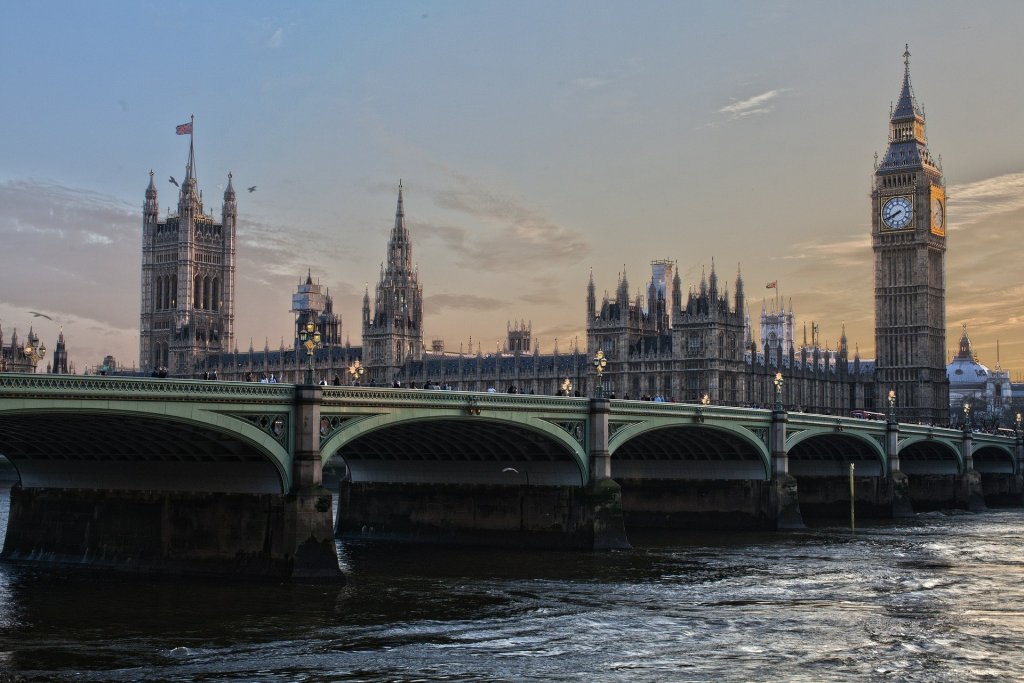
Westminster leader Stephen Flynn plans to stand to become an MSP at the 2026 Holyrood elections. Flynn intends to remain an MP, if he wins the Scottish Parliament seat of Aberdeenshire South and North Kincardine, implying he would hold a dual mandate by representing seats in both Holyrood and Westminster until 2029.
Dual mandates – no matter which party holds them, and Scotland’s four main party’s have held them at one time or another – are bad for representative democracy.
Being an MSP or and MP is a full-time job. Constituents deserve representatives working full-time for them, not juggling multiple mandates and travelling across the country all the time. No matter which party they come from, whether it is the Conservatives’ Douglas Ross, the SNP’s Stephen Flynn or any of the former Labour and Lib Dem dual mandates holders at Holyrood.
Westminster has rightly banned MPs from holding elected office in the Northern Irish Assembly. And there is an effective ban of MP-MSs for Wales with exceptions in the case of an impending Senedd election.
More widely, dual mandates are banned in many democracies across the world. Even France, long known for its representatives holding dual mandates – and even triple mandates – has clamped down on the practice in recent years.
Members of the European Parliament are also forbidden from holding roles in their national parliament alongside their MEP roles.
Stephen Flynn MP has every right to stand for the Scottish Parliament. But it’s surprising he’s made the decision to do so while explicitly saying he’s remain an MP if he were to be elected.
Westminster’s Modernisation Committee has an opportunity here to recommend preventing MPs from holding seats in the Scottish Parliament concurrently.
In the meantime, Stephen Flynn MP should reconsider his intentions to hold his Westminster seat if elected to Holyrood.
When Humza Yousaf was elected as SNP leader by party members then first minister by MSPs early last year, the prospect of another change in first minister before the next election was seen as only a fringe possibility. Not anymore. The first minister’s unilateral decision to tear up the Bute House Agreement with the Scottish Greens could very well lead to his political downfall.
The Greens are furious. Alba are opportunistic. The SNP are divided.
Instead of adding more speculation to the state of play above, I want to address the mechanics of Holyrood’s democracy and how we can improve the status quo.
A change in government leader during a parliamentary term isn’t uncommon. And in theory it shouldn’t significantly alter the trajectory of a government if parties base their government policy on their most recent manifesto. But as much as we may want to keep the personality out of politics, the real world renders this impossible. We do not have a presidential system but voters do often cast their ballots with party leaders in mind, especially in the age of televised debates, the 24-hour news cycle and social media. Furthermore, when the leader of a government is replaced, in practice this can lead to significant policy changes, deviating from manifesto promises, without any citizen input. The most extreme example of this in modern times is the rise and fall of disgraced former Prime Minister Liz Truss. The Truss government set out to chart a very different course to the one her party was elected to deliver.
We live in a representative democracy where citizens elect a legislature which determines the government. Thankfully, MSPs do elect the first minister in parliament, unlike the chaotic conventions at Westminster. But when government leaders change, and crucially change policy direction from that set during the post-election government formation period (without any direct citizen input) we have to consider how accountable to voters this really is.
A province across the Atlantic offers a democratic mechanism that could be replicated at Holyrood, and indeed Westminster. The Canadian province of Newfoundland and Labrador has a landmass larger than the UK but a population smaller than Glasgow’s. Its House of Assembly has 40 members usually elected once every four years. However, when a premier is replaced between elections, an election is automatically triggered to take place within a year of the change. This happened most recently in 2021 after Liberal Andrew Fury took over from outgoing premier Dwight Ball.
Now there are drawbacks to this solution. Voter apathy resulting from multiple elections in a short space of time would be a possibility, not to mention costs of mandated additional elections. But a safeguard such as this would ensure that a change in government leadership has some input from the voters.
Of course, a third first minister in one parliamentary term has happened before. The death of Donald Dewar then the downfall of Henry MacLeish led to Jack McConnell becoming Scotland’s third first minister only a couple of years into devolution. The solution being proposed arguably would have added a layer of unnecessary chaos to the situation but it may have been less necessary back then. The Scottish Parliament had limited powers in those days and was still in its experimental phase. But now things are different. Devolution is a necessary part of our democracy, one to be protected and improved when necessary. Not to mention, the Scottish Parliament and Scottish Government both have real teeth and should be held accountable by voters when there are major leadership changes.
And while we’re on the subject of accountability, Holyrood’s five-year terms are too long. Scotland switched away from four-year terms to avoid clashes with Westminster votes under the Fixed-term Parliaments Act. With the act now repealed, Holyrood should follow Wales and return to four-year terms.
The events taking place this week may very well lead to an extraordinary general election later this year. That would be an extraordinary development but if we do end up with our third first minister in just over a year then an election would give much needed input from citizens.
What happens in Newfoundland and Labrador would need tweaking for a Scottish context. It’s not perfect and I’m not wholly committed to it as a solution, but it recognises the need to strike a balance between accountability and stability. With Holyrood currently tilted away from stability, an election trigger in the event of a changed first minister might just be a long-term solution.
UPDATE APRIL 2026: The answer to this is very much a resounding no. There’s a chance Scottish Labour will edge out Reform UK and come second, but they’re likely to do so on fewer seats than they won in 2021. The SNP are all but guaranteed to win the most number of seats, and by some mile at that.
Until 2023, the last time Scottish Labour led a Holyrood poll was in 2014. Since then, our politics have shifted dramatically. The UK voted to leave the EU, Nicola Sturgeon took over from Alex Salmond before being replaced by Humza Yousaf and Covid-19 changed the world – to mention some of many major changes. Over the past decade, the SNP have established their hegemony, winning election after election in Scotland, but is that starting to wane?
From these polls alone, Scottish Labour look likely to reverse their decline. The party has only ever lost seats at Scottish Parliament elections so this would be a major improvement. But the extent of any reversal is far from clear. I would put money on Anas Sarwar’s party gaining seats in 2026 but significant hurdles remain.
There are three clear things to watch over the coming two and a half years until the 2026 election (yes, two-and-a-half years, which is why we need to re-introduce four-year terms at Holyrood):
1. Labour in Westminster
Unless something goes terribly wrong for Labour – which is entirely possible in election campaigns, just look at Theresa May’s poor 2017 election – the party is on course to win a majority of seats at Westminster. If Labour do well in Scotland, there’s every chance that translates into Labour votes at Holyrood.
The party has been polling better in Scotland for Westminster votes for Holyrood votes, likely as that is a contest between Labour and the Conservatives on a UK-wide scale, squeezing out the SNP. If Labour show they’re back in 2024 then that can help their chances at Holyrood in 2026.
However, this does come with risks. Labour’s UK-wide strategy of being small-c conservative on radical policy commitments may win them the election but if that continues in government, the SNP will certainly take advantage of that. If Labour do well in Scotland in 2024, I suspect there will be an immediate polling bounce in Holyrood voting intentions but whether that continues will very much depend on what a Starmer government looks like in practice. Not to mention how much distance Anas Sarwar can put between his party in Scotland and Starmer’s in Westminster when it matters.
We can make Scotland the best place to work, live and thrive.
Despite significant political turmoil since 2014, the dial has barely moved on independence. The country is split roughly 50-50, with polls swinging back and forth between ‘yes’ and ‘no’. With the Conservatives looking like they’re on their way out, that can only help Scottish Labour’s case with the message that independence isn’t the only way to get rid of the Conservatives. However, this again is reliant on the assumption that Starmer governs differently from Sunak. There will surely be far more professionalism, integrity and accountability from Starmer but if the party sticks to its cautious, conservative approach then that can only give ammunition to the SNP.
On the other side, there’s also the independence dilemma for the SNP. Their strategy to achieve independence has stalled. As things stand, the practical route to independence – another referendum – is unlikely to happen this side of a Holyrood election. The question is, can they sustain their hegemony while failing to deliver what they’ve been promising since 2011? Maybe they will, but Salmond and others will be waiting for an opportunity to take advantage of the situation.
So far in this article I’ve taken the assumption that Conservatives will go backwards at the next election. I’d be surprised if that wasn’t confirmed in 2026. Johnson, Truss and Sunak have inflicted considerable damage on their party. There’s a base-level they won’t go below in Scotland but as things stand they may well approach it.
That is of course if they don’t carve out a distinct narrative ahead of 2026 and shoulder up some of the unionist support they secured in recent years. Again, with Labour likely to do well in Westminster and with the SNP lacking in Nicola Sturgeon, they will be less likely to feed off the independence-unionist split that empowered them under Ruth Davidson and Douglas Ross. Nonetheless, there’s always the possibility of them changing leader trying something different in 2026. A Scottish Conservative resurgence looks unlikely, but Labour should be wary of any developments.
As ever there are a range of factors in determining how a country will vote. In addition to these things to watch out for in the coming two-and-a-half years, there’s also the election campaign itself. As policies fall apart and candidates face mishaps in the heat of an election campaign, the views of the public can change quickly.
Put simply, no one can tell which way Scotland will vote in 2026 but signs currently point to a Scottish Labour party on the up. Any increase in seats will be a win in itself, reversing a decline since the start of devolution way back in 1999. Supplanting the Scottish Conservatives as the second largest party is surely achievable as things stand. But as for leapfrogging both them and the SNP to become the largest party (and likely take Bute House) that is objectively a tough ask. It is of course certainly possible. With a charismatic leader in Anas Sarwar in the face of a tired SNP after seventeen years in government and a chaotic Conservative party in need of a reboot, the stars could well align.
Back in 2011, Canada’s NDP supplanted the Liberals in a dramatic election that saw the Leader of the Opposition Michael Ignatieff lose his seat. In the immediate aftermath of that election the Liberals looked certain to be picking up the pieces for a long time. But four years later, under Justin Trudeau the Liberals surged by over 20 percentage points to win a majority of seats, leapfrogging both the governing Conservatives and the opposition NDP.
Now of course, Scotland isn’t Canada but the pieces are moving into place for Scottish Labour to make the biggest leap of all.
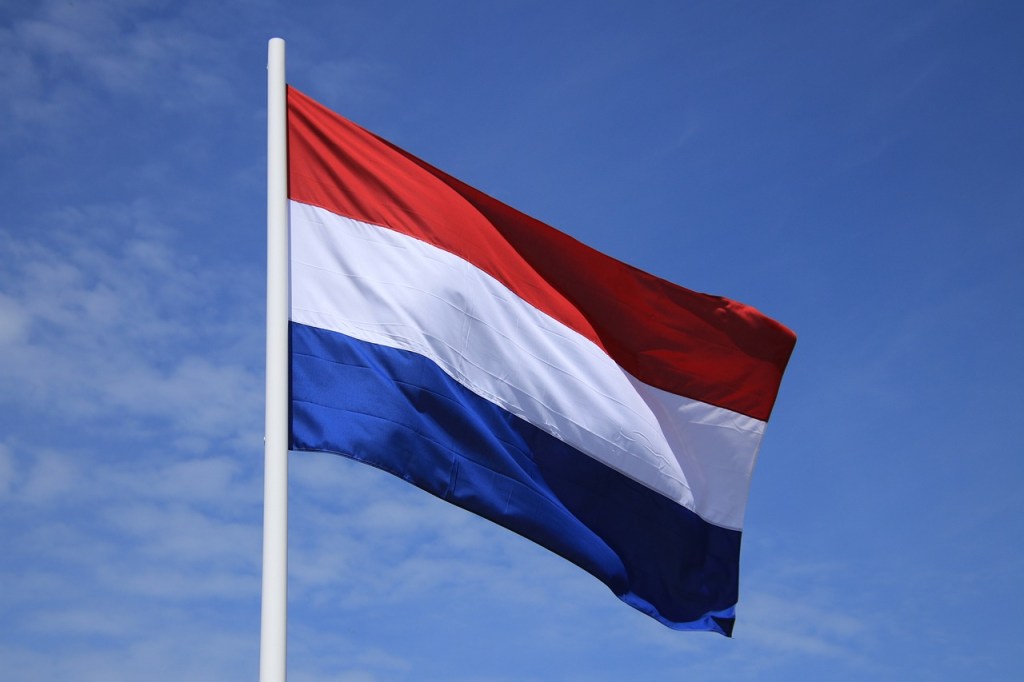
This week the Netherlands went to the polls to elect members of its House of Representatives. The far-right Party for Freedom (PVV) secured the highest vote share (23.6%) and subsequently the most seats (37 out of 150). This is a deeply worrying development for European politics but it’s worth remembering that over three-quarters of voters didn’t back the PVV. I understand that Wilders gets the first shot at forming a government, but other parties can lock him out of power.
The Dutch parliament is incredibly fragmented due to the specific voting system it uses. Rather than having multiple multi-member constituencies as is the case with most proportional electoral systems, elections in the Netherlands use a single constituency to elect representatives.
With 150 seats up for grabs, the effective threshold for a seat is 0.67% of the vote. This results in an incredibly fragmented party system – fifteen parties won seats in 2023’s election. Consequently, this also leads to political instability and prolonged coalition negotiations. Israel uses a similar system, albeit with a legal rather than effective threshold.
🇳🇱#Netherlands, general election results (99,2 % counted):
To be clear, there are no mainstream electoral reform advocates arguing for such a system to replace First Past the Post (FPTP) and the Additional Member System (AMS) in Westminster and Holyrood respectively (feel free to correct me if I’m wrong!). A proportional system must strike a balance between overall proportionality and local representation. The Netherlands’ system fails to do that.
It’s no wonder that the newly formed New Social Contract party, which surged from nowhere to win 20 seats, has a plan to adopt a more Scandinavian system of PR.
A Netherlands-style PR system would be a step in the wrong direction for the Scottish Parliament but let’s see what would have happened if Holyrood went Dutch. Of course, this comes with the usual caveat the voting systems are a factor in how people vote and how elections play out so this is purely hypothetical.
Here’s how the Scottish Parliament would look (based on regional vote share, the standard 129 seats, with changes from the 2021 election in brackets).
The Scottish Parliament under the Dutch system would have a familiar feel but a few key distinctions. The SNP would lose out the most while Labour and the Greens would make marginal gains. The Lib Dems would be up two seats while Alex Salmond’s Alba would enter parliament with two seats and George Galloway’s All for Unity would narrowly get a seat.
Had I gone even further and used the 150 seats of the Dutch Parliament rather than the 129 at Holyrood, the same number of parties would have won seats (with slightly different total shares) and the Scottish Family Party would be within an inch of having won a seat. If Holyrood did adopt such a system, Holyrood would likely drift to a party system with more elected parties due to the low effective threshold.
As stated, the Dutch system’s main flaw is that it leads to extremely fragmented party politics and lengthy coalition negotiations. That said, the Scottish Parliament needs reform. But not this one. AMS is flawed by not being as proportional as it could be, has the two-vote problem and limits voter choice. An alternative such as the Single Transferable Vote (STV) or a Scandinavian-style PR system would be preferable.
Edinburgh Eastern MSP Ash Regan defected from the SNP to Alex Salmond’s Alba party on Saturday 24 October 2023. This immediately prompted an age-old question, one that was also asked following the surprise defection of Lisa Cameron MP to the Conservatives earlier in the month. How do we solve a problem like defecting parliamentarians?
An obvious solution is a by-election – one that’s often called for by the party that an MSP or MP has left. How dare these representatives defect from the party banner that they were elected under? – so the argument goes. That’s one answer but it quite quickly conflicts with reality: an MSP wanting to leave their party but keep their position as an elected politician (which let’s be honest they’d be unlikely to want to give up) results in them being trapped in a party machine they oppose, creating an inherent conflict of interest. Maybe our politicians should have stronger principles in general and under such a system do the right thing and resign, but realpolitik suggests that’s not the case. What’s more, politicians are human – like voters they are allowed to change their minds.
The immediate triggering of a by-election is one possible answer for constituency MSPs (and MPs) but what about list MSPs? By-elections are impossible in this case, so the answer is they would just have to resign and let the next person on the list move up. Again we hit the same problem of political ambition and MSPs. Of course, Holyrood’s voting system needs replaced but until then this problem remains.
So what’s the answer? It’s not perfect, but Wales offers a solution.
The compromise position is a mechanism that allows MSPs to show dissatisfaction with their party but doesn’t insult the voters that elected them (to an extend at least).
Had these rules been in place in the Scottish Parliament, Ash Regan would have been allowed to leave the SNP but she would have to sit as an independent not an Alba MSP. Of course, there’d be nothing stopping her declaring allegiance to Alba and attending their conference committed to championing their values in parliament. But it might be the best solution to a perennial problem.
While there’s no right answer that squares every circle, this solution strikes a fair balance between party and individual interests and would maintain some credibility with voters. The Scottish Parliament is overdue reform. When reform happens, this should be considered.
The final Scottish Parliament results came in on Saturday night after a roller-coaster two-day count (please let’s never have that again!). The Scottish Parliament was created with a broadly proportional voting system to ensure that seats match votes but how proportional was the election?
The Additional Member System (AMS) ensures that the link between seats and votes is far more representative than Westminster’s First Past the Post (FPTP).
A good voting system should have a strong link between votes and seats. That a party can win a majority on 43% of the vote (2019) – let alone 35% of the vote (2005) – is a clear sign that First Past the Post fails to facilitate proper representative democracy. There are a number of ways to measure how representative an electoral system is but the most widely-known method is the Gallagher Index. There is no need to go in the maths behind it here but a low Gallagher Index score shows good proportionality while a higher one indicates bad proportionality.
The Gallagher Index scores for the previous Scottish elections, according to Electoral Reform Society calculations, are shown below.
On their own the Gallagher index scores do not how much but compared to UK election scores we can see that the Scottish Parliament is far fairer than First Past the Post used at Westminster. Take the 2015 election for example, which had the Conservatives win a majority on 37% of the vote and UKIP winning 13% of the vote but only one seat. The Gallagher score on that occasion was 15, with all other elections since 1974 having Gallagher indices with double digits.
The 2016 election was therefore the most proportional since the advent of devolution in 1999 but what about the most recent 2021 election? Upgrade Holyrood’s own 2021 Gallagher index calculations gets a figure of 7.8, making the 2021 election the second most proportional election since 1999. (Update: Ballot Box Scotland has a figure of 7.3 so I will need to revisit my calculations but either way we’re in the same rough area).
Here's what the new political map of Scotland looks like following #SP21#BBS21
SNP ~ 64 Seats (+1), split 62 Constituencies, 2 List Conservative ~ 31 (nc), split 5C, 26L Labour ~ 22 (-2), split 2C, 20L Green ~ 8 (+2), all 8L Lib Dem ~ 4 (-1), all 4C pic.twitter.com/I0cEozr655
— Ballot Box Scotland (@BallotBoxScot) May 8, 2021
This can be seen from the performances of each party: SNP (regional vote share 40.3%, seat share 49.6%), Scottish Conservatives (23.5%, 24%), Scottish Labour (18%, 17.1%), Scottish Greens (8.1%, 6.2%) and the Scottish Lib Dems (5.1%, 3.1%). Overall, this is broadly proportional although the SNP outperform due to their constituency dominance.
The final results from the Scottish Parliament election.
— BBC Scotland News (@BBCScotlandNews) May 8, 2021
As mentioned, the Additional Member System, despite being far more representative in terms of proportionality than First Past the Post, has its flaws. Alba’s plan to game the system, by explicitly calling on voters to vote SNP in constituencies and Alba on the list, shows one clear fault: the risk of so-called satellite parties standing in the regions with an explicit intention of artificially exaggerating the support of one party. Had a supermajority materialised, the Gallagher index would likely have rivalled UK election scores. The same goes with All for Unity which had a similar strategy for unionist voters.
The system may not have been successfully gamed by Alba on this occasion but the party has certainly exposed a key flaw of the system, highlighting the need for reform.
This is compounded by the fact that AMS is far from perfect in other aspects. The ratio of constituency to regional seats creates a constituency bias – a party could win a majority on constituency seats alone on less than half the vote (the SNP were three away from doing so in 2021). The version of AMS in Wales is even worse in this respect with 40 constituency seats and 20 regional ones. Mark Drakeford’s Welsh Labour won 30 seats but on less than 40% of the vote.
Furthermore, there is no direct mechanism to ensure national proportionality. Measures to ensure regional proportionality accumulate to deliver broadly nationally proportional results, however, they stop short of explicitly doing so.
In addition to that, another problem of AMS is the continued existence of FPTP seats which encourages tactical voting. Tactical voting will always happen in any system to some degree, but as many people as possible should be able to vote for their first choice, not their least favourite option.
Lastly, voters have limited choice over candidates within different parties – the list component of AMS ensures better overall representation but the fact that it is closed means that voters get what parties present. There are other flaws too which can be read about here.
It cannot be said enough that AMS is an improvement on FPTP. The UK needs proroportional representation. AMS results are broadly proportional and constituents are represented by a diverse range of parties but that doesn’t mean there are not better alternatives.
A sticking plaster approach to improving on AMS would be to retain the current system and add levelling seats like in Germany to ensure that seats overall match the regional vote. This would improve proportionality but voters are unlikely to support more politicians. An open-list element could be added to the regional list which would ensure voter choice like on Bavaria. In theory this would be an excellent improvement but adding a potential third ballot risks complicating things.
A better alternative would be the Single Transferable Vote, which would involve multi-member constituencies where voters rank candidates by order of preference. STV would deliver proportional outcomes while give voters a significant amount of power over candidates and parties. It is currently supported by the SNP, Lib Dems and Greens, as well as leading reform groups such as the Electoral Reform Society.
There is also the less talked about system of open-list PR with levelling seats, which is used in the likes of Denmark, Iceland and Sweden, and is advocated by Ballot Box Scotland (who has been an invaluable resource during the 2021 election it must be said!). Under such a system there would be multi-member systems where voters choose one party but get to vote for candidates within that party. Once seats are distributed there would then be a mechanism to allocate additional seats to ensure proportional outcomes overall.
Overall, the 2021 Scottish election delivered a broadly proportional outcome, which should be commended. the fact that Westminster still uses First Past the Post is a travesty, putting us at odds with most democracies. That said we should learn still from the flaws exposed from the likes of Alba and All for Unity and reform Scotland’s voting system for the better.
Scotland’s five main political parties have unveiled their manifestos for the 2021 Scottish Parliament election. Upgrade Holyrood is committed to improving Scottish representative democracy but what have each of the main political parties pledged to do on this issue?
Scottish Greens
The Greens were the first of the five main parties to release their manifesto, launching their plan for Scotland on Wednesday 14 April. The manifesto focuses on green issues, restructuring the economy and Scottish independence. It also has a section on “Local democracy and communities” with the party pledging to:
Deliver empowered, genuinely local councils (more powers and an overall restructuring)
Oppose Ministerial vetoes over local decisions
Promote more diverse local representation
More local, democratic ownership
Additional participatory democracy with citizens assembly to be formalised at both local and national levels
The Scottish National Party (SNP)
The SNP are expected to remain the largest party at Holyrood and were second to launch their manifesto (Thursday 15 April 2021). The party is pledging to:
Create a Citizens’ Assembly for under 16s
Extend the entitlement to stand for election to all those entitled to vote
Introduce a Local Democracy Bill to further empower local communities and to ensure that decisions are most closest to those who they will impact the most
Willie Rennie’s Scottish Liberal Democrats launched their manifesto on Friday 16 April, hoping to build on the five MSPs they won in 2016. The party’s manifesto is brimming with policies designed to improve Scottish democracy. The party has pledged to:
Introduce a new fiscal framework to improve council funding, as well as more powers for local councils including the ability to set domestic and business taxation areas
Create a New Contempt of Parliament rule so minority governments cannot ignore the Scottish Parliament as a whole
Replace the Additional Member System with the Single Transferable Vote for Scottish Parliament elections
Return to four-year parliamentary terms
Work with other parties to further a culture of respect and use the pandemic experience go make Holyrood more flexible and Family friendly
Introduce a recall system for MSPs
Strengthen and expand the public’s right to information and introduce a new duty to record so the public can access information on important ministerial meetings
Increase usage of Citizens’ Assemblies
Scottish Conservatives and Unionists
Scottish Conservatives’ launched their own manifesto on Monday 19 April. The proposal to introduce a recall rule is the most eye-catching of all. The party proposes to:
Introduce a recall rule for MSPs (Mackay’s law) – this would allow the public to re MSPs who have broken the law, grossly undermined trust or failed to contribute to parliament for over six months
Retain votes at 16 for all Scottish elections
Implement a cross-party commission on improving how the Scottish Parliament operates and to improve Scottish Government scrutiny
Explore how to modernise the working practices of the Scottish Parliament to make them more suitable for MSPs with young families
Cut the cabinet from 12 to six members and freeze MSP and ministerial pay across the next parliament
Scottish Labour were the last of the main five parties in Scotland to launch their manifesto. Anas Sarwar’s party unveiled their policy priorities on Thursday 23 April and are hoping to take second place from the Scottish Conservatives. The party’s main proposals on Scottish democracy are to:
Devolve further powers to Holyrood (borrowing and employment rights)
Introduce a Clean Up Holyrood Commission
Elect Holyrood committee conveners via the whole Scottish Parliament
Give Holyrood committees more powers
Further devolve powers to local government
Introduce a “Right to Space” to ensure communities have places to meet and funding to build the capacity to participate as active citizens
Upgrade Holyrood is committed to improving representative democracy in Scotland. This blog supports a better voting system for the Scottish Parliament, an end to dual mandates and restrictions on second jobs for MSPs, a return to four-year parliamentary terms, more local democracy and a permanent hybrid parliament even after the pandemic ends, as well as more deliberative democracy where appropriate.
Only the Scottish Liberal Democrats commit to upgrading Scotland’s Additional Member System by replacing it with the Single Transferable Vote. However, it is worth noting that the Greens and the SNP do favour STV as a fairer alternative to AMS.
The Scottish Lib Dems are also the only party committing to a return to four-year parliamentary terms in order to improve frequent democratic accountability.
No parties have pledged to abolish dual mandates although as shown by dual mandate restrictions for Wales and Northern Ireland, this was done by the House of Commons highlighting that this would be a responsibility of Westminster. Therefore such a pledge would likely be out of the scope for manifestos for the Scottish Parliament. That said, the Scottish Lib Dems oppose dual mandates and the SNP’s Alyn Smith MP has proposed a bill on banning dual mandates from Westminster.
The parties all generally pledge to give more powers to local government or reform the way local government operates, which is most welcome, however, this varies from party to party.
Other welcome commitments include recall rules for MSPs in extreme cases (as proposed by the Lib Dems and the Conservatives), as well as more deliberative democracy in the form of citizens assemblies (the Lib Dems, Greens and SNP).
Overall, there are a range of welcome policy proposals from across the parties but whether they will be delivered remains to be seen.