Kate Forbes is stepping down in 2026. A record number of MSPs aren’t standing again

By Richard Wood

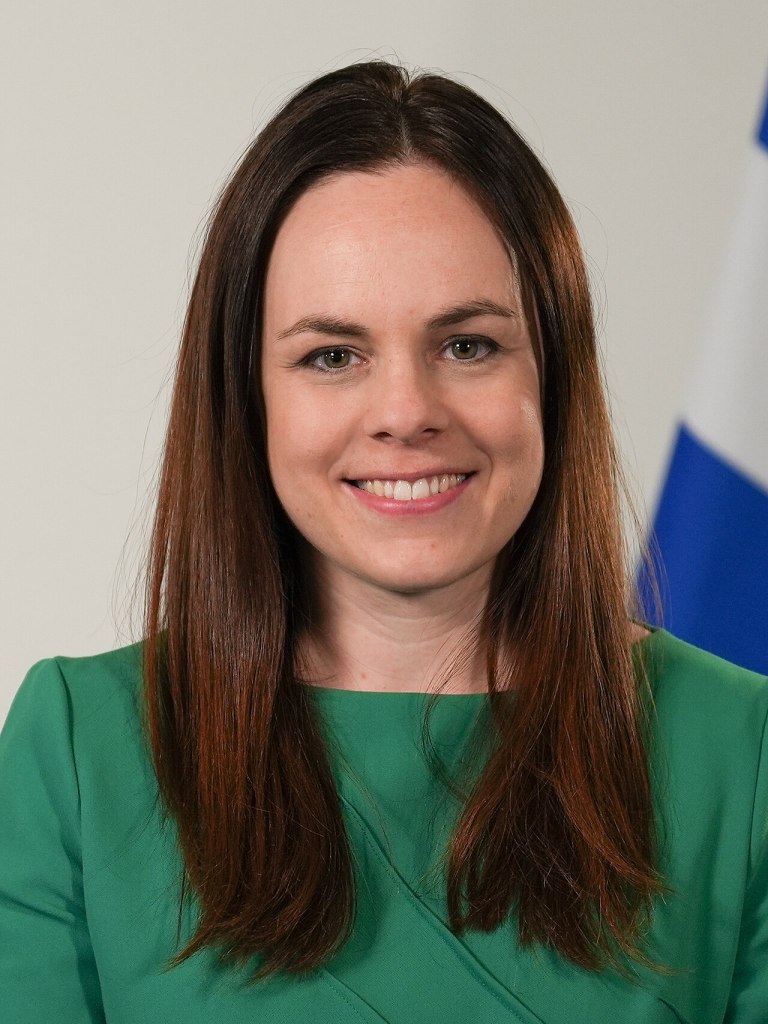
Deputy First Minister Kate Forbes is stepping down as an MSP at the next Scottish Parliamentary election.

Her upcoming departure marks a record number of MSPs standing down at any Holyrood election.

The announcement came as a shock to much of the Scottish political scene after she contested the 2023 SNP leadership election and secured Scotland’s second top job under First Minister John Swinney last year.

In a letter to the FM on 4 August 2025, the DFM said she does not wish to “miss any more of the precious early years of family life.

READ MORE: Minority mayors and unrepresentative local government: England can learn from Scottish councils

How many MSPs have stood down at each election?

So far, the total for 2026 is 35 MSPs (as of 8 July 2025). This beats the previous high of 34 in 2021, which included former Scottish Conservative leader Ruth Davidson.

And back in 2016, there were 25 MSPs who stood down (23 who retired and 2 who were deselected by their parties). Among the retirees at this election were former First Minister Alex Salmond, former Scottish Conservative leader Annabelle Goldie and the Presiding Officer Tricia Marwick.

A similar number stepped down at the election before. Among the 20 who retired in 2011 were former Deputy First Minister Nichol Stephen and former Scottish Green co-convenor.

Just 13 MSPs retired in 2007 including independent MSP Dennis Canavan and former Deputy First Minister Jim Wallace.

And in 2003, there were 10 MSPs who stepped down including our shortest-serving First Minister Henry McLeish and Westminster’s 1967 Hamilton by-election winner, the SNP’s Winnie Ewing.

Each year the number has gone up:

2026 – 35

2021 – 34

2016 – 25

2011 – 20

2007 – 13

2003 – 10

READ MORE: Dual mandates ban passed unanimously in Scottish Parliament

IMAGE: Via Scottish Government (lisence)

How many MSPs are retiring in 2026? Is it a record number?

By Richard Wood

UPDATE: There are now 42 MSPs stepping down as of March 2026, according to BBC analysis.

The late June 2025 announcement of Presiding Officer Alison Johnstone’s retirement from Holyrood means that 34 MSPs are stepping down from the Scottish Parliament in 2026.

This figure matches the number of retiring MSPs in 2021. That was the record-high number, meaning that any further announcements will ensure that 2026 has the highest number of retiring MSPs in Holyrood history. Considering the last retirement announcements for 2021 were in March that year, it’s almost certain that 2026 will mark a new record.

That’s perhaps not surprising, with the number of long-standing MSPs from the so-called 1999 club calling it a day, including Nicola Sturgeon, Richard Lochead, Rhoda Grant, Fiona Hyslop and Christine Graeme all stepping down. But it also includes newer MSPs including Humza Yousaf, Mairi Gougeon and Beatrice Wishart.

Age plays a role for some of these MSPs in both categories. As does arguably scandal, with Michael Matheson set to retire as well. Then there’s the wholly valid reason of some MSPs saying they want to spend time raising their young families, away from the demanding nature of a parliamentary role.

READ MORE: Minority mayors and unrepresentative local government: England can learn from Scottish councils

How many MSPs have stood down at each election?

So far, the total for 2026 is 34 MSPs (as of 3 July 2025). This matches the previous high of 34 in 2021, which included former Scottish Conservative leader Ruth Davidson.

And back in 2016, there were 25 MSPs who stood down (23 who retired and 2 who were deselected by their parties). Among the retirees at this election were former First Minister Alex Salmond, former Scottish Conservative leader Annabelle Goldie and the Presiding Officer Tricia Marwick.

A similar number stepped down at the election before. Among the 20 who retired in 2011 were former Deputy First Minister Nichol Stephen and former Scottish Green co-convenor.

Just 13 MSPs retired in 2007 including independent MSP Dennis Canavan and former Deputy First Minister Jim Wallace.

And in 2003, there were 10 MSPs who stepped down including our shortest-serving First Minister Henry McLeish and Westminster’s 1967 Hamilton by-election winner, the SNP’s Winnie Ewing.

Each year the number has gone up.

  • 2026 – 34*
  • 2021 – 34
  • 2016 – 25
  • 2011 – 20
  • 2007 – 13
  • 2003 – 10
  • 1999 – N/A

*As of July 2025.

READ MORE: Dual mandates ban passed unanimously in Scottish Parliament

Which MSPs are stepping down in 2026?

As of late June 2025, the following 32 MSPs are stepping down:

SNP

Annabelle Ewing, Audrey Nicoll, Bill Kidd, Christine Grahame, Elena Witham, Evelyn Tweed, Fergus Ewing, Fiona Hyslop, Gordon MacDonald, Graeme Dey, Humza Yousaf, James Dornan, Joe FitzPatrick, Mairi Gougeon, Michael Matheson, Michelle Thomson, Natalie Don-Innes, Nicola Sturgeon, Richard Lochead, Rona Mackay, Ruth Maguire, Shona Robinson, Willie Coffey.

Conservatives

Douglas Ross, Edward Mountain, Liz Smith, Maurice Golden, Oliver Mundell.

Labour

Alex Rowley, Richard Leonard.

Liberal Democrats

Beatrice Wishart.

Greens

Alison Johnstone.

Independents

John Mason.

What about 2031?

We’re still along way from the election after 2026. Much will depend on the make-up of the new parliament – with big questions still to be answered like how well will Reform do next year? Will there be a coalition or a confidence and supply arrangement? And if John Swinney emerges as First Minister will he step down before 2031 (when he’ll be 67)?

But with so many of the 1999 club now having left Holyrood’s benches, there’s a decent chance that 2031 will be the first election where the number of retiring MSPs is lower than the previous one.

READ MORE: Scotland’s STV council elections show England a better way of doing local democracy

Dual mandates ban passed unanimously in Scottish Parliament

By Richard Wood

The Scottish Parliament has today (Tuesday 17 December 2024) unanimously passed amendments to ban dual mandates, also known as double jobbing, in Scotland. The amendments were proposed by Graham Simpson MSP who has been pushing the issue for sometime.

The changes will not be immediate. But regulations are set to be introduced in 2025 followed by consultation ahead of a ban in time for the 2026 Holyrood elections.

READ MORE: MSP retables amendment to ban dual mandates by 2026

A win for Scottish democracy campaigners

This is a major win for improving Scottish democracy and effective representation that almost happened by accident.

Dual mandates are ultimately unfair on constituents who deserve full-time dedicated representatives at Holyrood. Not part-time MSPs.

Had Stephen Flynn MP not announced his intentions to double job, we have to wonder if we’d be here?

READ MORE: Why we need to ban dual mandates

Dual mandates ban by 2026 backed by the Scottish Government

By Richard Wood

Rules preventing MSPs from also holding seats in Westminster are now almost certain to come into force.

The Scottish Government has backed a ban proposed by a Conservative MSP and supported by a Green MSP.

After Graham Simpson MSP retabled his amendments to the Scottish Elections (Representation and Reform) Bill, the Scottish Government has worked with him to table new amendments which state that “Scottish Ministers must lay before the Scottish Parliament a draft of a Scottish statutory instrument containing regulations which (a) make provision to the effect that a person is disqualified from membership of the Scottish Parliament if that person is a member of the House of Commons.

READ MORE: Scottish Elections (Representation and Reform) Bill set to return on 17 December 2024

What does this mean?

Simply put, it’s a victory for the campaign to ban dual mandates though there’s still some time before the ban is implemented.

Dual mandates are bad for effective representation. Constituents deserve representatives working full-time for them in parliament. Not part-time MSPs.

What next?

If the amendments pass, the Scottish Government will be introducing a consultation in 2025, with a ban set to come into force ahead of the 2026 elections if all goes to plan.

READ MORE: Patterns of dual mandates in the Scottish Parliament from 1999 – 2021

Scottish Elections (Representation and Reform) Bill set to return on 17 December 2024

By Richard Wood

The third stage of the Scottish Elections (Representation and Reform) Bill will be debated on Tuesday 17 December.

This potentially gives an opportunity for MSPs to ban dual mandates, disqualifing MSPs from holding seats in Westminster at while representating constituents at Holyrood.

READ MORE: MSP retables amendment to ban dual mandates by 2026

Graham Simpson MSP retabled his amendment to do this after the furore over Stephen Flynn MP planning on holding a dual mandate until 2029 if elected to Holyrood in 2026. So far, his amendments (one relating to the Commons and one the Lords) are the only ones that have been tabled, with the deadline on Tuesday 10 December for further amendments.

MSPs deserve to debate these proposals and should ultimately vote to ban dual mandates once and for all.

READ MORE: The MSPs who hold dual mandates following the 2021 election

Are dual mandates banned in Northern Ireland for MLAs and MPs?

By Richard Wood

When an MP holds another elected role, such as MSP, they are said to hold a dual mandate. As with second jobs more generally, this is problematic as constituents deserve full-time representatives. Not part-timers.

The issue has been in the spotlight again with SNP Westminster leader Stephen Flynn planning to hold a dual mandate if selected to run for the Scottish Parliament in 2026 and ultimately become an MSP – until rescinding his bid on Thursday evening.

Momentum is building against dual mandates in Scotland but other parts of the UK already have dual mandate bans in place.

Northern Ireland is one of them.

READ MORE: Stephen Flynn MSP-MP in 2026? A dual mandates ban is overdue

What are the rules on dual mandate bans in Northern Ireland?

The Northern Ireland (Miscellaneous Provisions) Act 2014 legislated to explicitly prevent members of the Northern Ireland Assembly (MLAs) from also being MPs. It also bans MLAs from being members of the Dáil Éireann (TDs) in the Republic of Ireland.

The Local Government Act (Northern Ireland) 2014 takes this ban further, outlining that councillors cannot be MPs, MLAs, peers of members of any other legislative body.

READ MORE: What does the Electoral Reform Society say about dual mandates in Scotland?

Momentum is building against dual mandates following Stephen Flynn’s bid to enter Holyrood in 2026.

MPs and MSPs should recognise this and legislate to ban dual mandates in Scotland.

Image via Pixabay

Are dual mandates or “double jobbing” banned in Scotland?

By Richard Wood

The issue of dual mandates, which is when a politicians holds two political positions at once such as MP and MSP, has risen its head again.

Currently, there is only one dual mandate holder in the Scottish Parliament: Katy Clark of Scottish Labour. Although in fairness to Clark, she is on leave from her duties as a member of the House of Lords so in practice she essentially holds a single mandate. The problems with the unelected House of Lords are a whole discussion on their own.

But SNP MPs Stephen Flynn and Stephen Gethins have both put forward their names to stand for Holyrood in 2026 and remain MPs.

It is worth highlighting here that the SNP criticised the Conservatives’ Douglas Ross for holding both positions until the 2024 UK General Election when he lost his Westminster seat.

No matter the party, dual mandates are wrong.

Simply put, voters deserve full-time MPs. Not part-timers.

READ MORE: Stephen Flynn MSP-MP in 2026? A dual mandates ban is overdue

Are dual mandates banned in Scotland?

In short, being an MP and MSP is not mutually exclusive as shown by Ross holding a dual mandate until earlier this year. Dual mandates are not banned in Scotland.

That said, momentum is building against them, particularly following Flynn’s 2026 election announcement.

Either the Scottish Parliament or Westminster could legislate on this by setting out the qualifying rules for MPs and MSPs.

There’s already precedent for this in the United Kingdom with both Westminster and the Senedd setting out rules on dual mandates.

READ MORE: The MSPs who hold dual mandates following the 2021 election

The issue of dual mandates is one that should be addressed right now while the impact will be limited. They need banned before 2026.

Will Holyrood or Westminster get there first?

Image via Pixabay

MSP retables amendment to ban dual mandates by 2026

By Richard Wood

A ban on MSPs also being able to serve as MPs has moved one step closer thanks to Conservative MSP Graham Simpson’s retabled amendment to the Scottish Elections (Representation and Reform) Bill.

The amendment follows SNP Westminster leader Stephen Flynn announcing his intentions to stand for Holyrood in 2026 and hold a dual mandate until 2029.

Simpson initially tabled the amendment at stage 2, but didn’t push it after being offered a potential consultation on the matter in the future. He will now retable at stage 3 following the momentum building against “double jobbing” in recent weeks.

Holyrood Magazine reports that Scottish Labour and the Scottish Greens would back the amendment. Liberal Democrats have said in the past they would support a dual mandates ban.

READ MORE: Stephen Flynn MSP-MP in 2026? A dual mandates ban is overdue

What’s wrong with dual mandates?

The roles of MP and MSP are full-time positions. Voters deserve full-time dedicated representatives. Not part-timers.

The case for a dual mandates ban is one of principles and practicalities. For effective representation to happen, not to mention travelling between three locations and handling casework directly relating to two layers of government, MPs and MSPs should focus on the day job of representating constituents in one clear capacity.

Dual mandates should be banned.

What next?

The BBC reports that a vote on the amendment could come before Christmas 2024. If all opposition MSPs unite on the matter, then a dual mandates ban could become a reality.

Parliamentary Business Minster Jamie Hepburn has said he supports a consultation on the issue but there’s a chance the legislation wouldn’t come into force until after 2026 if parliament went down that route.

READ MORE: Westminster’s Modernisation Committee should consider MSP-MP dual mandates ban

Analysis

This shouldn’t be a party political issue. Whether it’s the SNP’s Stephen Flynn, the Conservatives’ Douglas Ross or Labour and Lib Dem MPs and MSPs past, dual mandates fail to meet the standards required to deliver effective representation.

And yet there’s a clear party political slant to the way this is coming about – opposition parties coming together amid an SNP divided on this issue due to one of their own paving to double job despite past party opposition.

It’s also worth highlighting that this probably wouldn’t be happening had Douglas Ross retained his seat in Westminster, as well as his leadership of the party.

Perhaps this change in this way is inevitable with dual mandates not currently being widespread across different parties and Scottish politics being so divided.

That said, a dual mandates ban will be welcome. MSPs should vote for this when the time comes.

READ MORE: 5 reasons to ban MSP-MP dual mandates

Unlock Democracy backs campaign to engage with Modernisation Committee to clean up politics

By Richard Wood

Unlock Democracy has backed my motion to engage with the Modernisation Committee on issues including second job restrictions for MPs and creating job descriptions for parliamentarians.

The Modernisation wants to hear from people about what additional ideas they have for work it could take forward, covering the strategic aims of: driving up standards; improving culture and working practices; and reforming Parliamentary procedures to make the House of Commons more effective.

Policy Motion 1: Working with the Modernisation Committee

Proposer: Richard Wood

Seconder: Rebecca Warren

The AGM notes:

The Government has revived the House of Commons Modernisation Committee. This is a cross-party committee of MPs that will consider ‘reforms to House of Commons procedures, standards, and working practices’.

The Committee’s remit overlaps with aspects of Unlock Democracy’s ‘Cleaning Up Politics’ campaign, such as setting limits on MPs’ second jobs and establishing a job description for MPs. Cleaning up politics was ranked as Unlock Democracy’s second most important campaign by supporters in the 2023 Annual Survey.

Unlock Democracy has started establishing a relationship with the Committee. Director Tom Brake questioned the Committee’s chair, Lucy Powell MP, at the Labour Party Conference about the Committee’s work on MPs’ second jobs.

The Committee has agreed to circulate our paper on MPs second jobs, and has invited us to respond to their call for views from stakeholders later in the year.

The AGM welcomes that:

Unlock Democracy has identified this Committee as important for achieving many of our campaign goals

Unlock Democracy has begun building a relationship with the Committee

Unlock Democracy has compiled a list of campaign asks for the Modernisation Committee to consider

The AGM calls on Unlock Democracy:

To respond to the Committee’s consultation with stakeholders

To get in touch with MPs on the Committee with suggestions for improving the House of Commons’ procedures and standards

To involve Unlock Democracy’s members and supporters in efforts to influence the Committee

To work with other organisations in the democracy sector, where beneficial, to influence the Committee.

What does the Electoral Reform Society say about dual mandates in Scotland?

By Richard Wood

Dual mandates are back in the spotlight again with two sitting SNP MPs, Stephen Flynn and Stephen Gethins, preparing possible bids for joining the Scottish Parliament as MSPs.

Both Douglas Ross (Conservative) and Katy Clark (Labour) have held dual mandates in this parliamentary session at Holyrood.

Double jobbing is bad for representative democracy as the roles of MSP and MP are full-time jobs in and of themselves. Constituents ultimately deserve full-time representatives not part-timers.

Momentum is shifting on the issue with the Scottish Parliament’s Standards, Procedures and Appointments Committee discussing the matter only last week in relation to the Scottish Elections (Representation and Reform) Bill: Stage 2. The Modernisation Committee in Westminster also has scope for discussing the issue in its remit on outside employment.

READ MORE: Stephen Flynn MSP-MP in 2026? A dual mandates ban is overdue

What do the Electoral Reform Society say on the issue?

The Electoral Reform Society, formed in 1884, campaigns for democratic rights and a democracy fit for the 21st century.

The organisation submitted the below response to a request from the Scottish Parliament’s petitions committee in 2023.


Being a councillor and an MP or MSP seems reasonable over a
temporary transition period. However, we are concerned that given the limitations in the capacity of MSPs, ‘double jobbing’ adds an extra strain. Therefore we would like to see the legislation here brought into line with The Senedd where the rules are that when a member is elected and holds a dual mandate they either have eight days to resign as a sitting MP, or they have to take a leave of absence from a seat they hold in the Lords, or if a Regional Councillor they can remain in post provided the expected day of the next Regional Election is within 372 days.

Having a full-time paid job in the Lords, Commons or Holyrood should be mutually exclusive, and we would advise against MSPs being allowed to hold a dual mandate. There are no clear advantages to voters or to the
operation of democratic institutions and one big disadvantage – the
capacity of an individual to fulfil the responsibilities of both roles. Such
an allowance seems to be in the interests of politicians rather than those they represent.

The Electoral Reform Society is right to support abolishing dual mandates. It also recognises the need for a short grace period for MPs or MSPs to pick where they wish to represent their constituents before being removed from the parliament they reject.

READ MORE: 5 reasons to ban MSP-MP dual mandates

Image free via Pixabay