This potentially gives an opportunity for MSPs to ban dual mandates, disqualifing MSPs from holding seats in Westminster at while representating constituents at Holyrood.
Graham Simpson MSP retabled his amendment to do this after the furore over Stephen Flynn MP planning on holding a dual mandate until 2029 if elected to Holyrood in 2026. So far, his amendments (one relating to the Commons and one the Lords) are the only ones that have been tabled, with the deadline on Tuesday 10 December for further amendments.
MSPs deserve to debate these proposals and should ultimately vote to ban dual mandates once and for all.
Westminster has an opportunity to ban dual mandates to prevent MPs and peers from also serving MSPs at the same time.
More immediately, the House of Commons’ Modernisation Committee is looking at improving working practices, standards and conditions, with a remit that includes second jobs. This gives a clear opportunity to improve our representative democracy and abolish dual mandates once and for all.
Below is a copy of the text I used to write to my MP on the matter. I am also submitting evidence to the Modernisation Committee.
Feel free to use my letter as the basis for your own contact.
Whether it’s Stephen Flynn in the SNP, Douglas Ross in the Conservatives, or any future Labour or Lib Dem MPs hoping for dual mandates, double jobbing is bad for effective representation of constituents.
Email to MP: abolish dual mandates once and for all
Dear[NAME] MP
I am writing to express my concern about dual mandates held by Members of Parliament and peers in the House of Lords.
Voters deserve full-time MPs to speak up for their constituencies in parliament. Not part-timers. That is why I believe MPs shouldn’t be able to hold additional full-time roles in the Scottish Parliament or the London Assembly, and be restricted from holding elected roles in local councils.
MPs cannot be members of the Senedd in Wales or Stormont in Northern Ireland in addition to their Westminster roles. Why not the same for the Scottish Parliament and the London Assembly?
Please write to the Modernisation Committee to represent my views and call on them to recommend that the law is changed so MPs are unable to hold additional elected roles, as part of their remit looking at second jobs for MPs.
Thank you for taking the time to read this. I look forward to you raising this matter.
Dual mandates are back in the spotlight again with two sitting SNP MPs, Stephen Flynn and Stephen Gethins, preparing possible bids for joining the Scottish Parliament as MSPs.
Both Douglas Ross (Conservative) and Katy Clark (Labour) have held dual mandates in this parliamentary session at Holyrood.
Double jobbing is bad for representative democracy as the roles of MSP and MP are full-time jobs in and of themselves. Constituents ultimately deserve full-time representatives not part-timers.
Momentum is shifting on the issue with the Scottish Parliament’s Standards, Procedures and Appointments Committee discussing the matter only last week in relation to the Scottish Elections (Representation and Reform) Bill: Stage 2. The Modernisation Committee in Westminster also has scope for discussing the issue in its remit on outside employment.
Being a councillor and an MP or MSP seems reasonable over a temporary transition period. However, we are concerned that given the limitations in the capacity of MSPs, ‘double jobbing’ adds an extra strain. Therefore we would like to see the legislation here brought into line with The Senedd where the rules are that when a member is elected and holds a dual mandate they either have eight days to resign as a sitting MP, or they have to take a leave of absence from a seat they hold in the Lords, or if a Regional Councillor they can remain in post provided the expected day of the next Regional Election is within 372 days.
Having a full-time paid job in the Lords, Commons or Holyrood should be mutually exclusive, and we would advise against MSPs being allowed to hold a dual mandate. There are no clear advantages to voters or to the operation of democratic institutions and one big disadvantage – the capacity of an individual to fulfil the responsibilities of both roles. Such an allowance seems to be in the interests of politicians rather than those they represent.
The Electoral Reform Society is right to support abolishing dual mandates. It also recognises the need for a short grace period for MPs or MSPs to pick where they wish to represent their constituents before being removed from the parliament they reject.
Westminster leader Stephen Flynn plans to stand to become an MSP at the 2026 Holyrood elections. Flynn intends to remain an MP, if he wins the Scottish Parliament seat of Aberdeenshire South and North Kincardine, implying he would hold a dual mandate by representing seats in both Holyrood and Westminster until 2029.
Dual mandates – no matter which party holds them, and Scotland’s four main party’s have held them at one time or another – are bad for representative democracy.
Being an MSP or and MP is a full-time job. Constituents deserve representatives working full-time for them, not juggling multiple mandates and travelling across the country all the time. No matter which party they come from, whether it is the Conservatives’ Douglas Ross, the SNP’s Stephen Flynn or any of the former Labour and Lib Dem dual mandates holders at Holyrood.
Westminster has rightly banned MPs from holding elected office in the Northern Irish Assembly. And there is an effective ban of MP-MSs for Wales with exceptions in the case of an impending Senedd election.
More widely, dual mandates are banned in many democracies across the world. Even France, long known for its representatives holding dual mandates – and even triple mandates – has clamped down on the practice in recent years.
Members of the European Parliament are also forbidden from holding roles in their national parliament alongside their MEP roles.
Stephen Flynn MP has every right to stand for the Scottish Parliament. But it’s surprising he’s made the decision to do so while explicitly saying he’s remain an MP if he were to be elected.
Westminster’s Modernisation Committee has an opportunity here to recommend preventing MPs from holding seats in the Scottish Parliament concurrently.
In the meantime, Stephen Flynn MP should reconsider his intentions to hold his Westminster seat if elected to Holyrood.
Leader of the Scottish Labour Party Anas Sarwar has called for Scottish metro mayors in a speech marking 25 years of devolution.
The remarks follow his party winning all but one metro mayoral seats up for election south of the border this May, the most notable of which was Richard Parker’s win against incumbent Conservative Mayor Andy Street.
The main appeal of metro mayors is their ability to champion the areas they represent on scale not quite seen by constituency MPs. There’s little denying that Andy Burnham is able to grab media and government attention in a unique way suited to our current news and political landscape. Not to mention that to many voters elected mayors are seen as more accountable than a largely unnoticed council cabinet committee.
Furthermore, a metro mayor equivalent for Dundee for example could give different parts of Scotland the political attention they deserve, shifting focus away from the central belt.
However, metro mayors are far from a panacea. Despite the profile brought by the likes of Andy Burnham and Sadiq Khan, the elections that put them in power are characterised by low turnout.
On top of that, elected mayors mark a shift away from deriving local government executives from elected councils. Concentrating such powers in one individuals would be a major jump from the culture of consensus set out with the set-up of the Scottish Parliament and shift to STV for local authorities, pushing Scotland in a more majoritarian direction.
Additionally, Scottish local government has far bigger problems such as funding and structural issues that imposing elected mayors or provosts won’t fix.
Any discussion about moving to a metro mayor system must be open, honest and frank. Crucially, three tests must be met if Scotland were to go down the path of introducing metro mayors.
Elected mayors put a significant amount of power in the hands of one individual. Yes, they have a team that do much of the day to day work but ultimately directly elected executive mayors arguably give mayors too much power. A simple truth about democracy is that despite best intentions, one individual cannot fairly represent the views of all their constituents. Any elected mayors would need to be accountable to voters at elections and to elected councils – proportionately elected and with real powers of scrutiny – throughout their term.
2. Preferential voting
The UK government’s Election Act changed the voting system for directly elected executive mayors from the Supplementary Vote to First Past the Post. The Supplementary Vote was far from perfect but it at least gave a broader mandate to elected mayors as opposed to FPTP. If Scotland follows England, we should learn from the mistakes of the Elections Act and use the Alternative Vote to elect mayors. A preferential voting system would empower voters and give mayors the broad mandates they need to lead.
3. Referendum
Lastly, directly elected executive mayors should not be imposed on a populace without consent, whether that be by any new Scottish Government or local authorities themselves. Any proposals should be subject to a significant consultation process and conclude with a referendum to determine whether they are the right decision for each community. Likewise, communities should be able to vote to revert to a cabinet system for local government if they choose.
The adoption of directly elected executive Scottish mayors is an intriguing prospect but it would have significant downsides, notably the concentration of executive power in one pair of hands and a major shift away from the consensus-building democracy that has characterised Scotland in the age of devolution.
There are of course potential benefits as seen in England but any concrete proposals for reform should be carefully examined and criticised where appropriate.
If Scottish Labour, or any other party, do ever introduce elected mayors then their implementation must pass the three tests outlined above. However, lawmakers should in the first instance focus on more pressing issues facing local authorities as opposed to looking south for flashy reforms that aren’t necessarily what they seem. Anas Sarwar should consider all this if introducing metro mayors is ever something he gets the powers to do.
The change, which comes into force for the 2026 elections replaces the Additional Member System with a Closed List Proportional Representation system. Under the reforms, the Senedd will increase from 60 to 96 members, made up of 16 multi-member constituencies of six MSs each.
While the Senedd uses a voting system aimed to deliver proportionality, the ratio of constituency MSs to list MSs negates much of this intent. At the 2021 election, Mark Drakeford’s Welsh Labour Party secured 30 out of 60 seats on 36.2% of the list vote (39.9% for the constituency), showing the mismatch between seats and votes.
The change to a party list system aims to address some of this, however, the proposed new system has its own flaws. In particular, the closed list element limits the say voters have over individual candidates. However, the change opens up a simple route to easily switch this change to an Open List PR system or the Single Transferable Votes if the Senedd sees fit.
The change in Wales highlights the need for reform at the Scottish Parliament as well. Scotland suffers a similar problem with its own Additional Member System although not to the same extent as Wales due to the slightly better ratio between constituency and list MSPs.
This year marks 25 years of devolution. And while Scotland’s voting set-up is more representative than Westminster’s chaotic First Past the Post system, the Scottish Parliament must follow Wales and commit to electoral reform.
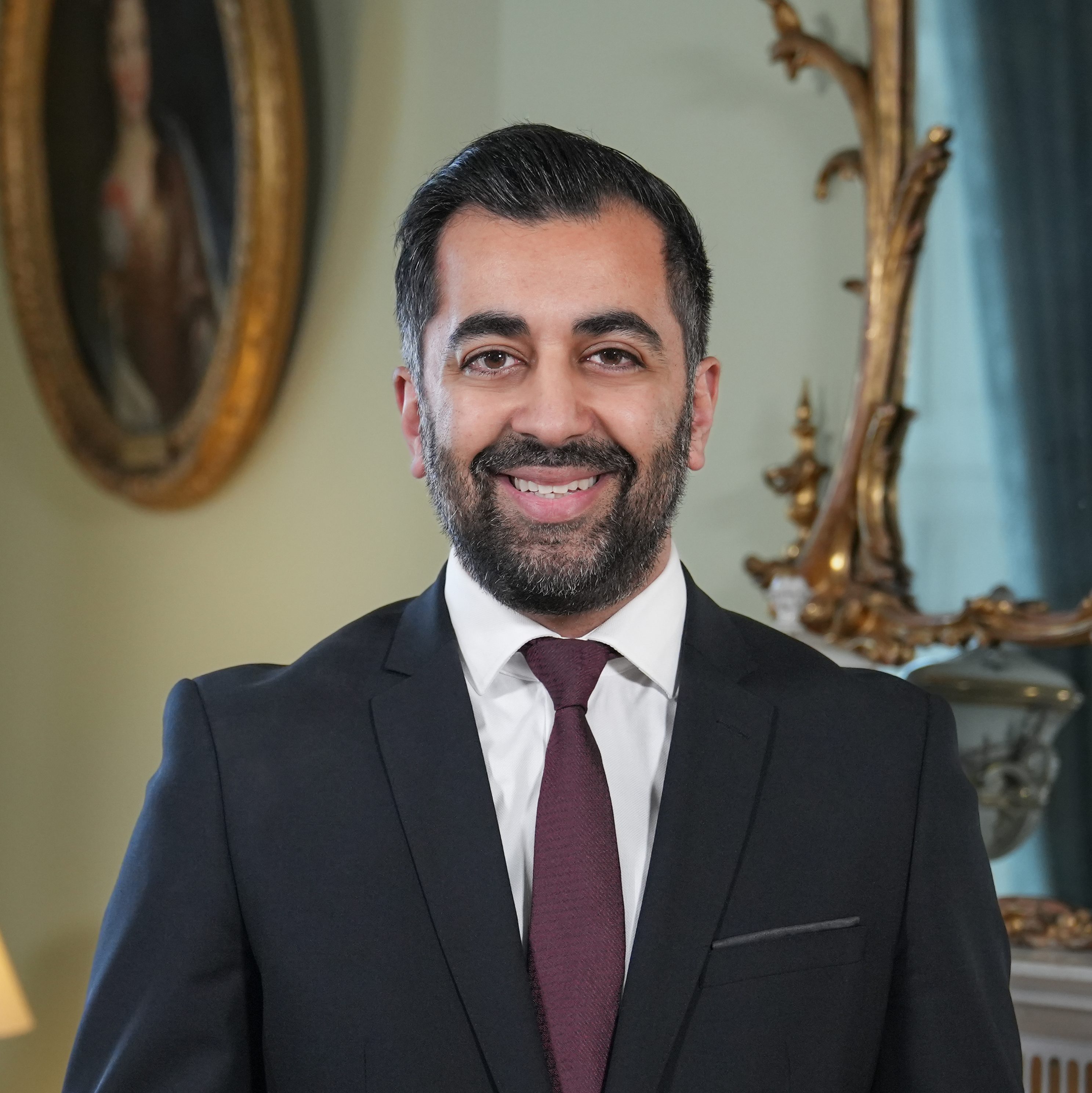
When Humza Yousaf was elected as SNP leader by party members then first minister by MSPs early last year, the prospect of another change in first minister before the next election was seen as only a fringe possibility. Not anymore. The first minister’s unilateral decision to tear up the Bute House Agreement with the Scottish Greens could very well lead to his political downfall.
The Greens are furious. Alba are opportunistic. The SNP are divided.
Instead of adding more speculation to the state of play above, I want to address the mechanics of Holyrood’s democracy and how we can improve the status quo.
A change in government leader during a parliamentary term isn’t uncommon. And in theory it shouldn’t significantly alter the trajectory of a government if parties base their government policy on their most recent manifesto. But as much as we may want to keep the personality out of politics, the real world renders this impossible. We do not have a presidential system but voters do often cast their ballots with party leaders in mind, especially in the age of televised debates, the 24-hour news cycle and social media. Furthermore, when the leader of a government is replaced, in practice this can lead to significant policy changes, deviating from manifesto promises, without any citizen input. The most extreme example of this in modern times is the rise and fall of disgraced former Prime Minister Liz Truss. The Truss government set out to chart a very different course to the one her party was elected to deliver.
We live in a representative democracy where citizens elect a legislature which determines the government. Thankfully, MSPs do elect the first minister in parliament, unlike the chaotic conventions at Westminster. But when government leaders change, and crucially change policy direction from that set during the post-election government formation period (without any direct citizen input) we have to consider how accountable to voters this really is.
A province across the Atlantic offers a democratic mechanism that could be replicated at Holyrood, and indeed Westminster. The Canadian province of Newfoundland and Labrador has a landmass larger than the UK but a population smaller than Glasgow’s. Its House of Assembly has 40 members usually elected once every four years. However, when a premier is replaced between elections, an election is automatically triggered to take place within a year of the change. This happened most recently in 2021 after Liberal Andrew Fury took over from outgoing premier Dwight Ball.
Now there are drawbacks to this solution. Voter apathy resulting from multiple elections in a short space of time would be a possibility, not to mention costs of mandated additional elections. But a safeguard such as this would ensure that a change in government leadership has some input from the voters.
Of course, a third first minister in one parliamentary term has happened before. The death of Donald Dewar then the downfall of Henry MacLeish led to Jack McConnell becoming Scotland’s third first minister only a couple of years into devolution. The solution being proposed arguably would have added a layer of unnecessary chaos to the situation but it may have been less necessary back then. The Scottish Parliament had limited powers in those days and was still in its experimental phase. But now things are different. Devolution is a necessary part of our democracy, one to be protected and improved when necessary. Not to mention, the Scottish Parliament and Scottish Government both have real teeth and should be held accountable by voters when there are major leadership changes.
And while we’re on the subject of accountability, Holyrood’s five-year terms are too long. Scotland switched away from four-year terms to avoid clashes with Westminster votes under the Fixed-term Parliaments Act. With the act now repealed, Holyrood should follow Wales and return to four-year terms.
The events taking place this week may very well lead to an extraordinary general election later this year. That would be an extraordinary development but if we do end up with our third first minister in just over a year then an election would give much needed input from citizens.
What happens in Newfoundland and Labrador would need tweaking for a Scottish context. It’s not perfect and I’m not wholly committed to it as a solution, but it recognises the need to strike a balance between accountability and stability. With Holyrood currently tilted away from stability, an election trigger in the event of a changed first minister might just be a long-term solution.
Following the Queen’s passing and the King’s ascension, discussions about the future of the monarchy are taking place across the Commonwealth realms.
There are currently 15 countries where King Charles III has become head of state by virtue of his birth. It’s almost certain several of these countries will become republics in the coming years and decades. The question is when. Australia’s relatively new government has a Minister for the Republic (although any moves away from the monarchy are unlikely to take place in this current parliament) while polling in Jamaica suggests strong support for a republic.
In the UK, the Queen was undeniably a popular figure. What remains to be seen is how much support for the monarchy in the UK is dependent on support for the Queen as an individual and her role as figurehead, rather than the institution of the Crown itself. That will become apparent in the coming years.
Polling can give an indication of the level of support for the monarchy and a possible republic.
The most recent major poll on the issue, by think-tank British Future, suggests that 58% of Brits think the UK should keep the monarchy for the foreseeable future. In contrast, 25% of those polled said they think the UK should become a republic after the Queen’s passing. Note that the poll was conducted in May 2022, four month’s before the monarch’s passing.
A further 6% said neither while 11% said they don’t know.
As for Scotland, support for a republic is stronger than across the UK overall. Less than half of Scots polled (just 45%) said they support the monarch remaining head of state. While over a third (36% support) favour becoming a republic after the Queen’s passing.
Scottish support for the monarchy is significantly weaker than across the rest of the country.
The UK is unlikely to abolish the monarchy any time soon, but there is no place for an hereditary head of state in the 21st century. The Queen was undeniably a giant and a well-respected figure on the world-stage. And while the UK becoming a republic isn’t the most important democratic upgrade we need, we should certainly strive for it.
The elections of May 2021 were dubbed as “super Thursday” due to the sheer number of votes that took place across the UK. In addition to the 129 MSPs elected in Scotland, Wales voted for a new Welsh parliament, London got a new assembly and thousands of local councillors were elected right across England. Voters in England also voted for new Police and Crime Commissioners as well as directly elected executive mayors.
Compared to the messy English system of local government (with mayors, unitary authorities, parish councils and more), Scotland’s local government is slick and easy to understand. Next year Scottish voters will be going to the polls to vote for councillors in 32 local authorities using the Single Transferable Vote. There’s a lot wrong with Scottish local governance but complexity isn’t it.
Upgrade Holyrood supports more powers for local authorities and has welcomed proposals to improve the system. Ballot Box Scotland’s blueprint is a fascinating and coherent suggestion to revitalise local democracy and empower communities in all corners of Scotland. But what about the possibility of introducing directly elected executive mayors (DEEMs) like in the England? Could the introduction of mayors invigorate Scottish local government?
It’s an intriguing prospect. Andy Burnham, a possible future Labour leader, has filled his boots as Mayor of Greater Manchester and has become a clear, local champion for the area. A directly elected mayor in Aberdeen or Dundee could play a similar role, pulling the political gravity away from the dominant central belt. The ability to give a face to a local political force, as well as the creation of one clear accountable individual for local issues, would be the main advantage of any reform.
But a directly elected executive mayor would fundamentally alter the nature of local democracy in Scotland.
Upgrade Holyrood strongly supports better representative democracy hence the support of Proportional Representation for Westminster elections, as well as better PR for Holyrood elections.
Directly elected executive mayors would somewhat clash with these principles. Current council executives are derived from agreements made by parties who together make up a majority of seats. The executive is usually multi-party thanks to the Single Transferable Vote.
Directly elected executive mayors would put an incredible amount of power in the hands of one person (and party). Such mayors are very much in the tradition of majoritarian democracy which limits their ability to fairly represent all in government. Diversity of opinion is important and while an elected mayor could listen to other parties their input would be limited.
These are largely the same arguments against a directly elected executive president. Such roles are ultimately one-seat constituencies that consolidate power in far too concentrated a place.
That said, while there are significant risks with introducing such mayors, they could still be an effective democratic tool in Scottish local government.
Crucially, if such proposals were to be seriously considered by any future Scottish government, there are three principles that they should adhere to in order to retain good representative democracy and weaken risks associated with majoritarian structures of government.
The first is the principle of consent. Any proposals for directly elected executive mayors in say Edinburgh or Glasgow should be ratified by the people that the decision would affect. In practical terms this would amount to local referenda. As an aside there would be an intriguing dynamic if say Edinburgh voted for a directly executive elected mayor while Glasgow rejected such a proposal.
The second is the principle of ensuring widespread support for any successful mayor. In order to be as representative as possible, the most effective way to elect a single-member seat for a single-member institution (such as a local mayor or national president) is one that ensures the winner has majority support. While this does not ensure that every voice is represented in the executive role (which can only be done in multi-member positions), it does maximise representation and strengthens the legitimacy of any elected mayor.
What this means is that the voting system used to elect directly elected mayors should not be First Past the Post. The Home Secretary’s proposals to replace the Supplementary Vote with FPTP for mayoral elections is an absolute travesty that should be fiercely opposed. Elected mayors should have broad support – First Past the Post very clearly does not provide this. However, the Supplementary Vote is not much better. It ensures broader support than FPTP but tactical voting and speculation are embedded into it.
Any elections for DEEMs in Scotland should use a better system. One option would be a two-round system. Voters back their favourite candidate with an ‘X’ and if no candidate wins 50%+1 of the vote then all but the top two candidates advance to a second round. Voters then return to the polls at a second date to select their mayor. This system is used for French presidential elections, as well as for non-executive presidential elections around Europe. It ensures broad support, however, it has numerous problems. The first is that it’s time consuming and turnout can vary in different rounds – local government turnout is so low any way, this is probably not the best approach. The second fault of this system is that when multiple candidates do well enough in the first round, say 8 candidates each get around 10% of the vote. The top two could be ideologically very similar and both advance to the next round. This is a problem if the other six candidates have completely different views.
The best approach to electing any directly executive mayors is therefore an instant run-off system, which would be the Alternative Vote or STV with a district magnitude of one. Under this system, mayors will achieve broad support as voters rank candidates in order of preference.
The third principle is that local councils should not end up as glorified, sentient rubber stamps. That is to say that while DEEMs would render local councils solely legislative bodies, separating the executive from the legislature, they should be able to actively input into the mayor’s agenda and provide high levels of scrutiny. How this would work in practice is not my area of expertise but there are lessons to be learnt from countries around the world where executives are separately elected from the legislature.
Introducing directly elected executive mayors into Scottish democracy would drastically alter the nature of representative democracy in Scotland, which has trended away from majoritarianism. The broadly proportional Scottish Parliament and the 2007 switch to STV for local councils demonstrates this. That said, the suggestion is an intriguing one and could potentially enhance Scottish local democracy – but only with strict controls to ensure representative democracy and multiparty input.
Directly elected executive mayors are not actively supported by Ugrade Holyrood but the prospect is one to examine further.
When an individual holds two political offices simultaneously they are exercising a dual mandate. The likes of Donald Dewar (Labour), Alex Salmond (SNP) and Jim Wallace (Liberal Democrat) have all held dual mandates in the Scottish Parliament and the House of Commons but the phenomenon has been limited in recent years.
However, the return of dual mandate holders looks likely at the upcoming Scottish Parliament election. Scottish Conservative Leader Douglas Ross MP is standing for a regional seat with an explicit commitment to holding both his seats simultaneously if elected to the Scottish Parliament (his current Westminster seat of Moray and one of the Holyrood regional list seats in the highlands and islands). Former SNP now Alba MPs Kenny MacAskill and Neale Hanvey plan on doing the same if elected to Holyrood.
Most parties are guilty of having had dual mandate holders one time or another but dual mandates are ultimately wrong and this should be recognised in legislation. Here are five reasons why.
This first point is about the principle of the matter. Constituents deserve full-time representatives at both Holyrood and Westminster. MPs and MSPs have different roles in different chambers with full sets of different responsibilities. Constituents deserve fully committed MPs and MSPs dedicated to representing their electorates in a single, clear capacity. Dual mandates make this impossible.
2. Dual mandates are also impractical
In addition to being unfair on constituents in principle, dual mandates are also extremely impractical. Being an MSP or an MP is a full-time job. Having multiple mandates mean that less work is done on behalf of constituents, ultimately weakening the link between voters and their representatives. Not to mention, MSPs and MPs often work more than the standard working week, further highlighting the impracticalities of dual mandates. There’s also the travel considerations. In normal times dual mandate holders have to be in Edinburgh, London and their constituencies throughout the week. This involves serious logistical juggling.
This argument is backed up by empirical evidence. A study by Navarro (2009: 21) examined dual mandate holders in the European Parliament. Dual mandate holders (in this case MEPs holding addition mandates in their national parliaments) were found to be less productive than single mandate holders as measured by reports made by them, questions tabled, speeches given and attendance in the parliament. While this study was for a different legislature, it adds significant weight to the argument that dual mandates are impractical.
3. Dual mandates don’t necessary strengthen local clout in parliament
One of the most common arguments in favour of dual mandates is that they strengthen the links local communities have with different legislatures as constituents have one point of contact in different levels of governance. It follows that representatives going to a legislature higher up in the governance structure with additional more localised mandates are more likely to account for local interests as opposed to sticking with party policy for example.
This does sound somewhat logical but the empirical evidence fails to back this up. One study (Van de Voode 2020) found that while representatives with multiple mandates feel they have a greater connection with their own communities, that does not translate into how they operate in parliament.
The estimated regression models demonstrate that dual mandate holders indeed perceive themselves as local brokers, even when controlling for various systemic, party and individual level factors. On the other hand, they struggle to translate their localized attitudes into localized parliamentary behaviour, which could call one of the main arguments in favour of dual mandate holding into question.
Van de Voode (2020)
The argument of local follow-through doesn’t hold up to scrutiny.
This may sound like a stretch but there is some evidence to suggest that dual mandates can lead to corruption. This is primarily from France where holding multiple mandates at different levels of government has very much been a part of French political culture.
As put by Navarro (2009: 19):
“As noted by Bernard Chantebout, in the French context, the parliamentarians are not usually corrupted in their capacity as parliamentarians: only those MPs who are in charge of a local executive have been convicted of corruption. It is indeed all the more tempting for “cumulants” to accept a bride when they decide (at the local level) about a public tender or about any urban policy that they are protected from prosecution by their parliamentary immunity.”
Navarro (2009: 19)
This definitely isn’t the main reason to ban dual mandates, and is very much a minority problem, but the fact that dual mandates could facilitate this only adds another reason to implement a ban.
5. Restrictions on dual mandates are gaining popularity
There is growing recognition that dual mandates are unfair on constituents. A popular idea alone is no reason to support reform but the current momentum against dual mandates shows that countries are recognising the problems associated with them.
Members of the European Parliament cannot take their seats if they hold a national mandate while members of the provincial legislatures in Canada cannot even stand for federal office.
Even France which has a long history of politicians holding multiple mandates, has taken a stance against them in recent years under Emmanual Macron’s government.
Closer to home, in 2014 the House of Commons banned dual mandates for members of the Welsh Parliament and Northern Assembly. The bans made Scotland the only constituent nation of the UK where dual mandates for the devolved national administration are not banned.
Dual mandates should be banned in Scotland to build a fairer and more efficient democracy. The route to banning dual mandates involves political agreement and likely legislation in Westminster rather than the Scottish Parliament as shown by previous laws made regarding Wales and Northern Ireland.
Douglas Ross’ likely return to Holyrood – in addition to the possible elections of Kenny MacAskill and Neale Hanvey to the Scottish Parliament (in addition to their seats in the Commons) – puts the issue clearly in the spotlight.
However, this likely return of dual mandates also stresses the challenges to banning them. The Conservatives have a majority in the House of Commons and Ross leads the Scottish Conservatives. From a point of view of the practicalities of parliamentary politics (not to mention Conservative resistance to any democratic improvements), it seems unlikely that the Conservatives will budge on this issue. That said, opposition parties should continue to push for reform.
Dual mandates are not the most important issue in Scottish politics, not to mention that they are not the most important democratic reform campaign issue. Nonetheless, dual mandates are clearly wrong and ultimately unfair on constituents. A ban on dual mandates in Scotland is long overdue. Let’s make 2021 the last Scottish election where dual mandates are possible.
Upgrade Holyrood is a political blog and resource dedicated to improving Scotland’s representative politics and delivering relevant political analysis and commentary. Scottish politics needs an upgrade and Upgrade Holyrood aims to provide a space to help facilitate that.
Van de Voorde, N. and de Vet, B., 2020. Is All Politics Indeed Local? A Comparative Study of Dual Mandate‐Holders’ Role Attitudes and Behaviours in Parliament. Swiss Political Science Review, 26(1), pp.51-72. Access here: https://onlinelibrary.wiley.com/doi/abs/10.1111/spsr.12388