
Make Votes Matter launches landmark electoral systems report

By Richard Wood

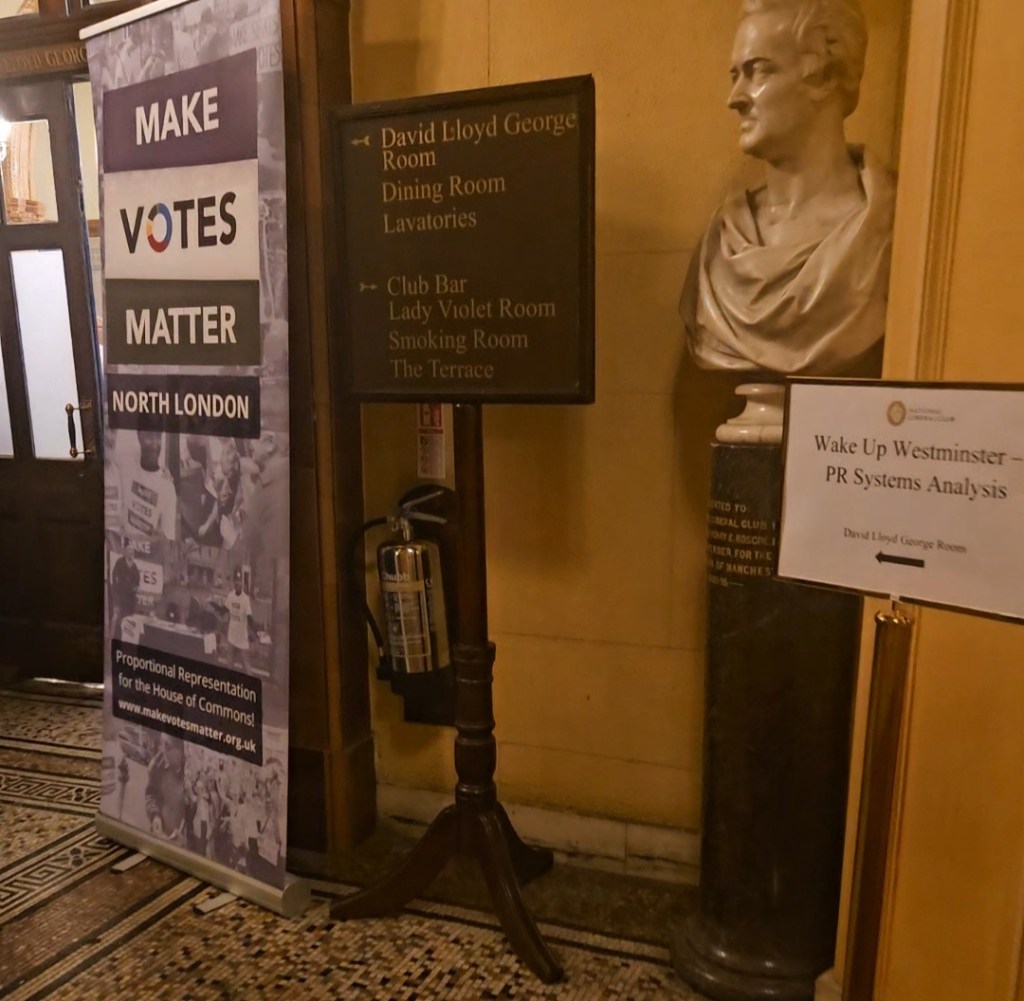
At an event in London’s National Liberal Club on Monday 8 June 2026, the proportional representation campaign organisation Make Votes Matter launched a report outlining the cases for different voting systems.

Make Votes Matter has largely focused on making the principled case for PR rather than advocating for a particular alternative to First Past the Post.

And back in 2019, they outlined the ‘Good Systems Agreement’, highlighting 10 key principles which underpin a good voting system, crucially focused on seats matching votes.

This agreement achieved widespread publicity after the Brexit Party (now Reform) signed the agreement in addition to the Liberal Democrats, SNP, Plaid Cymru, the Greens, and politicians and public figures from across the political spectrum.

The new report ‘What Could Future Electoral Systems Look Like?‘ takes this a step further outlining four voting systems, which could (if designed well) be welcome proportional alternatives to First Past the Post.

READ MORE: 12 reasons why the UK needs Proportional Representation now

4 alternatives to First Past the Post in Westminster

The report very clearly takes the ten principles of the Good Systems Agreement and uses that as the foundations on which to build practical electoral systems that could replace FPTP.

The four systems identified are: the Additional Member System, the Single Transferable Vote, regional list PR, and, perhaps surprisingly, the Alternative Vote Plus, which was recommend by the Jenkins’ committee in the early days of the previous Labour government.

The report doesn’t outline these systems in detail. Rather it highlights examples where these systems have worked well and where they haven’t, and sets out several recommendations of how each system should operate to meet the ten criteria identified in the Good Systems Agreement. Some of the particulars can be quibbled over, but by and large the recommendations are welcome and far superior to First Past the Post. This is a major step towards narrowing the options for an alternative.

READ MORE: First Past the Post will let down Scotland yet again, polling suggests

What does Make Votes Matter’s report say about Scotland?

The report focuses on Westminster, highlighting the Additional Member System in Holyrood as one of several viable alternative to Westminster’s indefensible First Past the Post system.

One weakness of the report, from the Scottish perspective, is that it only covers Scottish elections up to 2021, all six of which were broadly proportional. The report doesn’t highlight how AMS delivered a disproportional result in 2026 due to the dominance of First Past the Post exposed by changing voting patterns and party choices. This is likely due to publication deadlines (what with the election only being a month ago), but is something to consider in future considerations concerning adopting a mixed-member system for Westminster.

Here, it’s also worth highlighting that former Lib Dem president turned member of the House of Lords Mark Pack, who was on the panel for the report launch, remarked upon the recent election and the high levels of split ticket voting in part caused by the Scottish Greens not standing on the vast majority of Scottish seats.

A system modelled on Holyrood’s would be a major improvement to First Past the Post, but the lessons of 2026 must be considered when the time comes to overhaul Westminster democracy for the better.

The full report from Make Votes Matter (authored by Alberto Smith,
Director of Policy and Public Affairs at Make Votes Matter) is available here.

More about the report launch can be viewed here.

READ MORE: Holyrood needs electoral reform: 2026 was Scotland’s least representative election

Labour conference votes in favour of Proportional Representation

By Richard Wood

Delegates at the UK Labour Party Conference in Liverpool have today voted in favour of a motion to put changing the UK’s electoral system to one of Proportional Representation (PR) in the next election manifesto.

The vote follows years of hard work from reform activists, notably the Labour for a New Democracy campaign which includes the likes of Make Votes Matter and the Labour Campaign for Electoral Reform.

The successful vote also comes a year after a similar motion was defeated at the previous conference.

It’s worth highlighting that 60% of local Labour parties support PR. A total of 140 sent motions to this year’s conference in favour of reform.

Scottish Labour Leader Anas Sarwar even made the case for PR at the Labour conference. The Scottish Parliament voting system may not be perfect but it does deliver broadly proportional outcomes so it’s great to see MSPs standing up for PR at Westminster too.

READ MORE: 12 reasons to support Proportional Representation

Analysis – what does this mean and what next for Labour?

This is a major step forwards on the road to Proportional Representation. The Labour Party now officially has a policy in favour of upgrading UK democracy with fair votes.

However, it does not guarantee the inclusion of PR at the next election. Reports suggest that the party leadership may opt to exclude a commitment to PR from its 2024 manifesto.

It remains to be seen how this will play out but one thing is certain, this is a significant moment.

Labour for a New Democracy will no doubt keep up the pressure within the Labour Party.

READ MORE: 3 alternatives to the Scottish Parliament’s AMS voting system

Campaigners rally against UK Government’s regressive Elections Bill

By Richard Wood

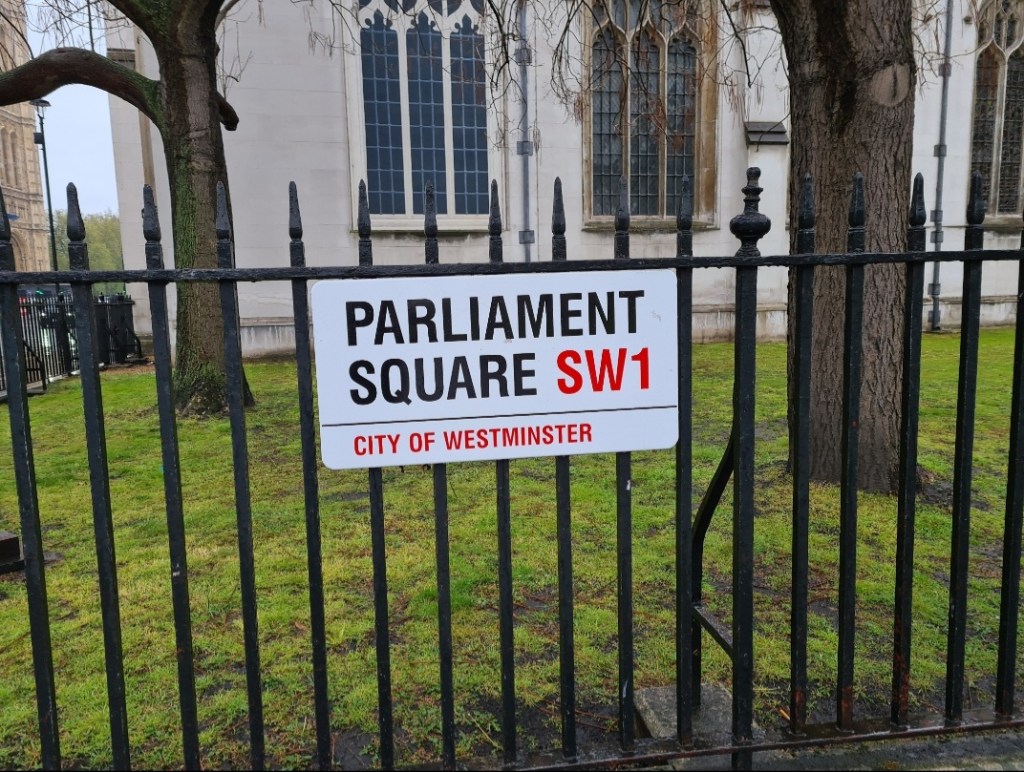
A coalition of pro-democracy protestors gathered at London’s Parliament Square on Saturday 5 February to rally against the UK Government’s regressive Elections Bill.

Organised by leading organisations in the democracy sector, including Make Votes Matter, Unlock Democracy and the Electoral Reform Society, the rally included speeches from across the political spectrum.

Unlock Democracy’s Tom Brake, Labour’s John McDonnell, the Lib Dem’s Hina Bokhari, Reform UK leader Richard Tice and Green co-leader Carla Denyer were just some of the leading figures who spoke at the rally. Campaigners from pro-reform groups such as the Liberal Democrats for Electoral Reform and the Labour Campaign for Electoral Reform were also in attendance to make their case against the controversial piece of legislation.

The rally was one of a number of pro-democracy events held across the country including a similar rally in Manchester later in the afternoon.

READ MORE: Upgrade Holyrood joins Make Votes Matter’s Proportional Representation Alliance

The Elections Bill is a deeply damaging piece of legislation which passed in the House of Commons on the evening of Monday 17 January (and due to have its Second Reading in the House of Lords later in February).

The bill is set to introduce voter identification requirements, a “solution” to the near non-existent problem of voter fraud which will end up suppressing voters in the most marginalised groups across the country.

The bill also replaces the Supplementary Vote with the clapped-out and unfair First Past the Post electoral system. This unnecessary change will make elected mayors in England less representative and shows just how opposed this government is to any positive voting reform.

In addition to this, the Bill threatens the independence of the Electoral Commission and sets out measures to change spending rules for the worse.

UK politics needs better representation not less, and First Past the Post certainly needs to be ended not extended.

The Elections Bill will level down our democracy but there is hope. The Parliament Square rally shows the vibrancy of the campaign against this regressive bill. Together, we can push back and upgrade our democracy.

READ MORE: Elections Bill set to wrongly expand First Past the Post

READ MORE: Upcoming PR Scottish council elections show England a better way of doing local democracy

Upgrade Holyrood is a Scottish political site dedicated to improving Scottish democracy, as well as politics across the UK.

Read more about Upgrade Holyrood here.

Upgrade Holyrood joins Make Votes Matter’s Proportional Representation Alliance

Upgrade Holyrood has joined Make Votes Matter’s alliance for Proportional Representation.

The alliance includes all the UK’s main opposition parties, leading democracy organisations (apart from Labour) and key PR supports from right across the UK. Make Votes Matter’s goal is to replace First Past the Post with Proportional Representation for elections to the House of Commons.

Upgrade Holyrood primarily supports better democracy in Scotland – by arguing for an end to dual mandates, the introduction of a recall process for MSPs and better Proportional Representation at Holyrood. But Upgrade Holyrood also passionately supports the introduction of PR at Westminster.

Founder of Upgrade Holyrood, Richard Wood, said:

“Adopting a system of Proportional Representation is the single-most important improvement we can make to democracy in the UK. We need to correct the distorted link between seats and votes so that voters are accurately represented and wasted votes are minimised.”

“The voting system used to elect Members of the Scottish Parliament has its flaws but it does deliver largely proportional results and is far more representative First Past the Post. Westminster has a lot to learn from the way Scottish Parliament elections are conducted.

“Without Proportional Representation at Holyrood, the SNP would unfairly dominate parliament due to their near monopoly of constituency seats. Scottish Labour and the Scottish Conservatives would have next to no representation, not to mention that both Anas Sarwar and Douglas Ross owe their admittance to the Scottish Parliament to PR.”

“Westminster needs a major shake-up and I am proud that Upgrade Holyrood has joined the Alliance for Proportional Representation to help make that happen.”

_______________________________

More about Make Votes Matter’s Proportional Representation Alliance can be read here.

READ MORE: 12 reasons the UK needs PR right now

READ MORE: Why I’m standing for election to the Electoral Reform Society’s Council – Richard Wood

READ MORE: How proportional was Norway’s election? Lessons for the UK