

By Richard Wood
The SNP launched their manifesto on Thursday 16 April 2026, three weeks ahead of the Scottish Parliament election and in line with the first postal vote ballots being sent out to households.
Overall, highlights include John Swinney’s commitment to winning a majority of seats to secure a second independence referendum, a £2 bus fare cap, a “welcome to school bag”, and maximum prices for essential food items.
But on issues relating to electoral and democratic reform, the manifesto was surprisingly and disappointingly bare.
In fact, democracy was mentioned just twice throughout the whole document.
Other parties have so far made pledges on introducing a recall rule for rule-breaking MSPs, automatic voter registration, reforming the way councillor vacancies are filled, and empowering the Scottish Parliament’s committees. Yet the SNP’s focus on anything to do with elections and democracy is their pledge for a referendum in 2028.
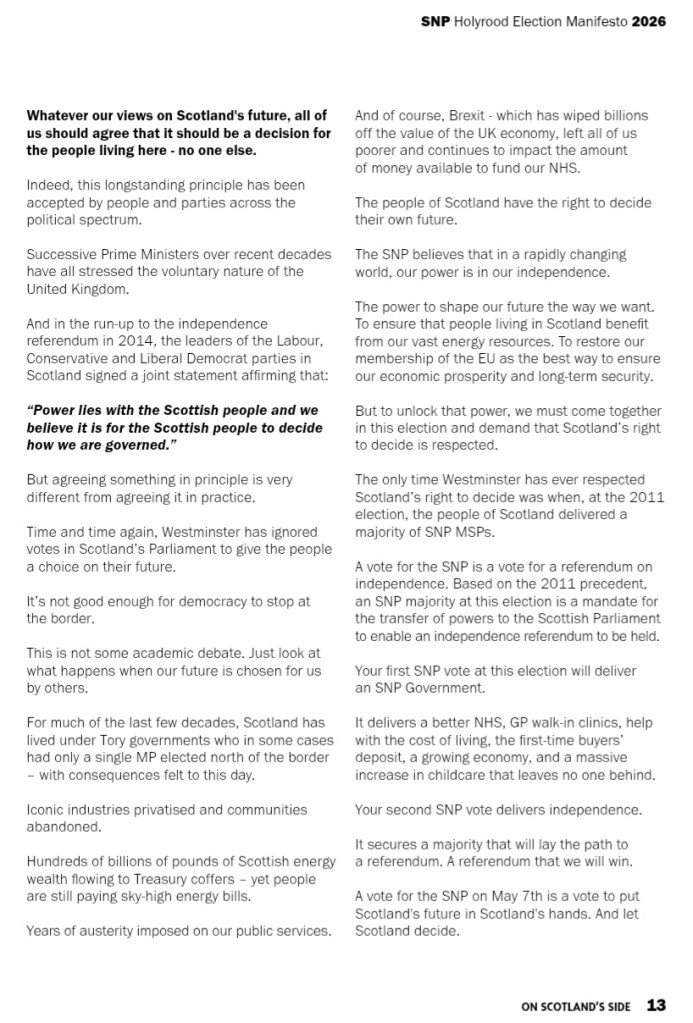
That said there are a couple of pledges that are related.
READ MORE: Scottish Green democracy pledges announced in 2026 manifesto
Reforming Scotland’s commissioners
The party commits to listening to the Scottish Parliament’s Finance and Public Administration Committee’s recent report by amalgamating a number of commitissioners and implementing non-executive oversight for all commissioners.
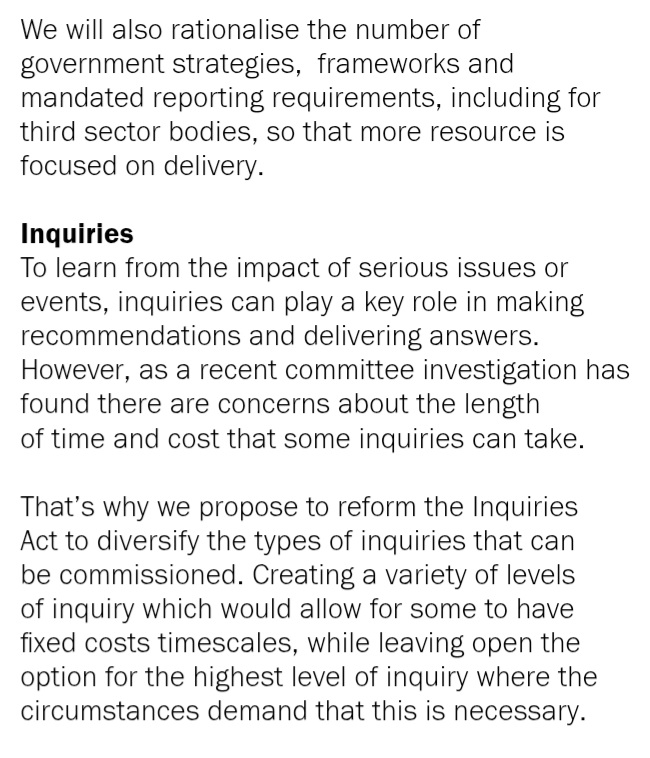
Inquiry reform
The SNP also proposes to reform the Inquiries Act to create various levels of inquiries.
READ MORE: Manifesto 2026: How would Scottish Labour and Anas Sarwar reform democracy?
What about voting system reform?
Current polling suggests the SNP could win a majority of seats despite a notable fall in support. While the SNP support Proportional Representation in principle, with a majority being the SNP’s route to negotiating for a second referendum, it’s no surprise that John Swinney’s plans do not include a pledge to reform or replace the Additional Member System. That’s an extremely disappointing outcome, considering that AMS is creaking at the seams.
READ MORE: Will the Scottish Parliament change its voting system?
The full SNP manifesto can be read here. All have Scotland’s six main parties have published manifestos, bar the Scottish Liberal Democrats who are set to launch theirs on Friday 17 April 2026.