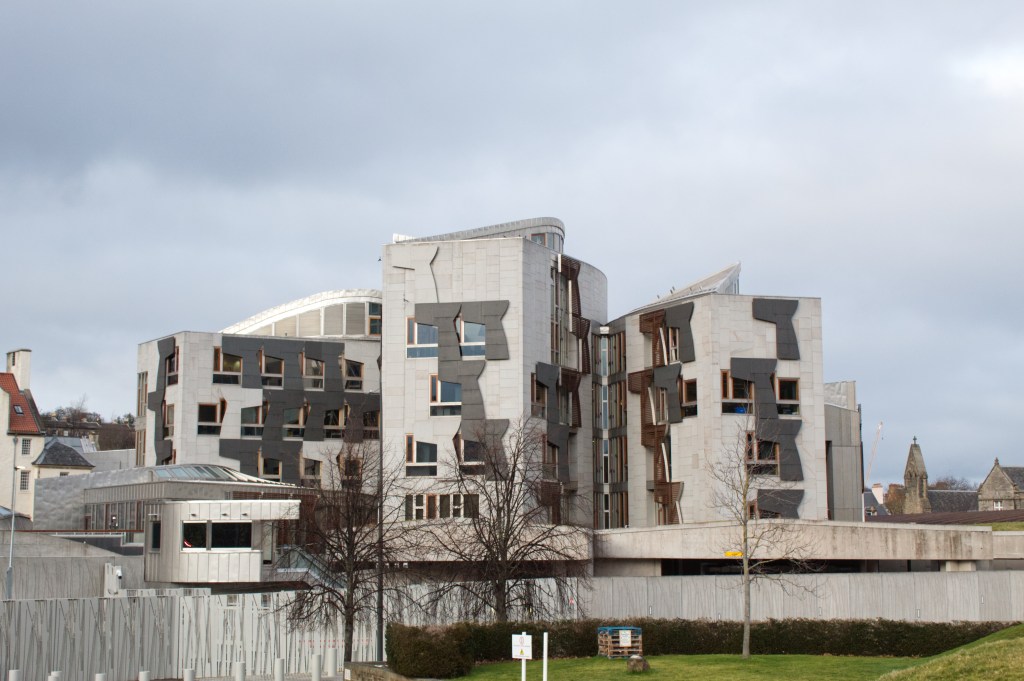
Stephen Flynn, Holly Bruce, Thomas Kerr: full list of dual mandate MSPs in 2026

By Richard Wood

The 2026 election has seen a record number of brand new MSPs elected to the Scottish Parliament. Many of these new representatives hold, or held, other elected positions such as MP or Councillor. When an individual holds two elected positions at one time they are said to hold a dual mandate.

Upgrade Holyrood has consistently made the case against dual mandates and welcomed legislation that has banned dual MSP-MPs and MSP-Lords. The legislation also gives councillors elected to a Holyrood a year to step down, minimising disruption at the local level when council election are held a year after Scottish Parliament votes now regularly the case).

The largest block of dual mandate holders comes from the MSP. Most councillors elected as MSPs in 2021 kept both roles until the 2022 election – it remains to be seen whether that will be the case ahead of 2027.

READ MORE: Dual mandates ban passed unanimously in Scottish Parliament

MSP-MPs

This year, two MPs were elected to Holyrood and both of those individuals are standing down from Westminster as a result of new dual mandate restrictions. This will create two by-elections – dates TBC.

Stephen Flynn (MSP for Aberdeen Deeside and North Kincardine) (MP for Aberdeen South)

Stephen Gethins (MSP for Dundee City East) (MP for Arbroath and Broughty Ferry)

MSP-Lords

Katy Clark (MSP for West Scotland) (Lord Temporal since 2020)

(Malcolm Offord stepped down from the House of Lords before standing in the election. Unlike Katy Clark)

READ MORE: 5 reasons to ban MSP-MP dual mandates

SNP MSP-councillors

Alex Kerr (MSP for Hamilton, Larkhall and Stonehouse) (Cllr in Glasgow)

Colm Merrick (MSP for Glasgow Anniesland) (Cllr in East Renfrewshire)

Dawn Black (MSP for Angus North and Mearns) (Cllr in Aberdeenshire)

Gary Bouse (MSP for Falkirk West) (Cllr in Falkirk)

Heather Anderson (MSP for Dundee City West) (Cllr in Dundee)

Kate Campbell (MSP for Edinburgh Eastern, Musselburgh and Tranent) (Cllr in Edinburgh)

Katie Hagmann (MSP for Carrick, Cumnock and Doon Valley) (Cllr in Dumfries and Galloway)

Lloyd Melville (MSP for Angus South) (Cllr in Angus Council)

Michelle Campbell (MSP for Renfrewshire and North Cardonald) (Cllr in Renfrewshire)

Pauline Stafford (MSP for Bathgate) (Cllr in West Lothian)

Simita Kumar (MSP for Edinburgh South Western) (Cllr in Edinburgh)

Zen Ghani (Glasgow Cathcart and Pollock) (Cllr in Glasgow)

Reform UK MSP-councillors

Duncan Massie (MSP for North East Scotland) (Cllr in Aberdeen)

Julie MacDougall (MSP for Mid Scotland and Fife) (Cllr in Fife)

Thomas Kerr (MSP for Glasgow) (Cllr in Glasgow)

READ MORE: Will the Scottish Parliament change its voting system?

Scottish Labour MSP-councillors

Joe Fagan (MSP for South Scotland) (Cllr in South Lanarkshire)

Scottish Green MSP-councillors

Holly Bruce (MSP for Glasgow Southside) (Cllr in Glasgow)

Kayleigh Kinross-O’Neil (MSP for Edinburgh and Lothians East) (Cllr in Edinburgh)

Kristopher Leask (MSPs for the Highlands and Islands) (Cllr in Orkney)

Scottish Conservative MSP-councillors

None.

Scottish Liberal Democrat MSP councillors

Andrew Baxter (MSP for Skye, Lochaber and Badenoch) (Cllr in Highland)

Morven-May MacCallum (MSP for the Highlands and Islands) (Cllr in Highland)

Sanne Dijkstra-Downie (MSP for Edinburgh Northern) (Cllr in Edinburgh)

Yi-Pei Chou Turvey (MSP for North East Scotland) (Cllr in Aberdeenshire)

READ MORE: Dual mandates ban by 2026 backed by the Scottish Government

Dual mandates in Scotland

Dual mandates are ultimately unfair on constituents who deserve full-time representatives solely focusing on their work in one clearly defined area.

That’s why it’s welcome that MSP-MPs and MSP-Lords have been banned. In an ideal world MSP-councillors should also be restricted but the compromise to minimise local level disruption (especially when the process to replace councillors isn’t representative and can alter the make-up of councils) is a sensible compromise for one year.

READ MORE: SNP manifesto is limited on democratic reform ahead of 2026 election
What electoral reform promises did Scotland’s parties make in their 2021 manifestos?

By Richard Wood

As we await the publication of manifestos from the five parties elected to the Scottish Parliament in 2021, it’s worth taking a look back at what each party said in 2021.

Scottish Greens

The Greens were the first of the five main parties to release their manifesto, launching their plan for Scotland on Wednesday 14 April 2021. The manifesto focused on green issues, restructuring the economy and Scottish independence. It also had a section on “Local democracy and communities” with the party pledging to:

  • Deliver empowered, genuinely local councils (more powers and an overall restructuring)
  • Oppose Ministerial vetoes over local decisions
  • Promote more diverse local representation
  • More local, democratic ownership
  • Additional participatory democracy with citizens assembly to be formalised at both local and national levels

READ MORE: Will the Scottish Parliament change its voting system?

The Scottish National Party (SNP)

The SNP secured a historic fourth term at Holyrood in 2021, and were second to launch their manifesto (Thursday 15 April 2021). The party pledged to:

  • Create a Citizens’ Assembly for under 16s
  • Extend the entitlement to stand for election to all those entitled to vote
  • Introduce a Local Democracy Bill to further empower local communities and to ensure that decisions are most closest to those who they will impact the most

Scottish Liberal Democrats

Willie Rennie’s Scottish Liberal Democrats launched their manifesto on Friday 16 April 2021, hoping to build on the five MSPs they won in 2016 but in actual fact lost one seat. In typical Lib Dem fashion party’s 2021 manifesto was full of policies designed to improve Scottish democracy. The party pledged to:

  • Introduce a new fiscal framework to improve council funding, as well as more powers for local councils including the ability to set domestic and business taxation areas
  • Create a New Contempt of Parliament rule so minority governments cannot ignore the Scottish Parliament as a whole
  • Replace the Additional Member System with the Single Transferable Vote for Scottish Parliament elections
  • Return to four-year parliamentary terms
  • Work with other parties to further a culture of respect and use the pandemic experience go make Holyrood more flexible and Family friendly
  • Introduce a recall system for MSPs
  • Strengthen and expand the public’s right to information and introduce a new duty to record so the public can access information on important ministerial meetings
  • Increase usage of Citizens’ Assemblies

Scottish Conservatives and Unionists

The Scottish Conservatives’ launched their own manifesto on Monday 19 April 2021. Their proposal to introduce a recall rule was the most eye-catching of all, but in the end the proposal was flawed and didn’t make it into law. The party proposed to:

  • Introduce a recall rule for MSPs (Mackay’s law) – this would allow the public to re MSPs who have broken the law, grossly undermined trust or failed to contribute to parliament for over six months
  • Retain votes at 16 for all Scottish elections
  • Implement a cross-party commission on improving how the Scottish Parliament operates and to improve Scottish Government scrutiny
  • Explore how to modernise the working practices of the Scottish Parliament to make them more suitable for MSPs with young families
  • Cut the cabinet from 12 to six members and freeze MSP and ministerial pay across the next parliament

READ MORE: Dual mandates ban passed unanimously in Scottish Parliament

Douglas Ross MP (by David Woolfall • CC BY 3.0)

Scottish Labour

Scottish Labour were the last of the main five parties in Scotland to launch their manifesto. Anas Sarwar’s party unveiled their policy priorities on Thursday 23 April and are hoping to take second place from the Scottish Conservatives. The party’s main proposals on Scottish democracy are to:

  • Devolve further powers to Holyrood (borrowing and employment rights)
  • Introduce a Clean Up Holyrood Commission
  • Elect Holyrood committee conveners via the whole Scottish Parliament
  • Give Holyrood committees more powers
  • Further devolve powers to local government
  • Introduce a “Right to Space” to ensure communities have places to meet and funding to build the capacity to participate as active citizens
Source: Scottish Parliament (2017), CC BY 3.0

When will manifestos be published in 2026?

Just one of the six parties expected to win seats at Holyrood this year has published their manifesto. Reform UK unveiled their platform last month alongside their candidates, with many of those candidates no longer in those roles…

Last time, the other five published their manifestos in a tight window mid-April. By the end of April, we will have all major manifesto ahead of the vote on Thursday 7 May.

READ MORE: Reform UK’s manifesto: Malcolm Offord’s party on Scottish democracy

What are the Scottish Parliament’s new dual mandate rules for MSPs?

By Richard Wood

The 2026 election will be the first Scottish election with restrictions on dual mandates following new regulations after the Scottish Government consulted on the issue in early 2025. The decision followed Stephen Flynn MP’s declaration that he would retain his Westminster role if elected as an MSP in 2026.

Dual mandates have long been a small but persistent problem needing fixed – dual mandate holders cannot effectively represent their constituents due to practical time and location constraints with MSPs and MPs being full-time positions.

The developments following Flynn’s announcement were extremely welcome and spurred the government into action.

New regulations

On 2 September 2025, the Scottish Government introduced three regulations on disqualifying MPs, councillors and members of the House of Lords from the Scottish Parliament.

They were reviewed by the Scottish Parliament, led by the Standards, Procedures and Public Appointments Committee, and approved on 30 October 2025.

The regulations took effect on 31 October 2025, but the new limits on dual mandates will only apply to MSPs from the next Scottish Parliament election on Thursday 7 May 2026.

READ MORE: Stephen Flynn MSP-MP in 2026? A dual mandates ban is overdue

MSP-MPs

The Scottish Parliament (Disqualification of Members of the House of Commons) regulation bans MSPs from being MPs.

However, any MP elected to Holyrood or any MSP elected to Westminster will have a 49 day grace period to resign from one of those roles.

For example, if Stephen Flynn MP is elected as an MSP in May, he will have 49 days to step down from his MP roles.

MSP-Lords

Similarly, the Scottish Parliament (Disqualification of Members of the House of Lords) regulation disqualifies MSPs from becoming peers at the same time as disqualifying peers from becoming MSPs.

However, there is also a grace period – this time much shorter – of 14 days, during which a peer elected to Holyrood or vice versa must step down from one of their roles.

READ MORE: Scotland must follow Wales on four-year terms

MSP-councillors

The new regulations also cover MSP-councillors, which is a slightly different kettle of fish due to councillors being part-time positions.

The Scottish Parliament (Disqualification of Councillors) regulations bans MSPs councillors.

If an MSP becomes a councillor, they can stay as an MSP for 49 days. But if a councillor becomes an MSP, they can stay as an MSP either until the next council election if it’s within 372 days, or for 49 days if the election is further away.

In practice, this means that any councillors elected at the May 2026 election can retain their council role until local authority elections in May 2027.

READ MORE: Why we need to ban dual mandates

Next steps

The dual mandate bans are a welcome addition to Scotland’s democracy, ensuring that constituents can be effectively represented at multiple layers of government.

Grace periods are a sensible solution to allow for adjustments, and while the extended councillor-MSP grace period is a practical addition to limited impacts on local government, this should be monitored to see how effective it really is.

READ MORE: Will the Scottish Parliament change its voting system?

Dual mandates ban passed unanimously in Scottish Parliament

By Richard Wood

The Scottish Parliament has today (Tuesday 17 December 2024) unanimously passed amendments to ban dual mandates, also known as double jobbing, in Scotland. The amendments were proposed by Graham Simpson MSP who has been pushing the issue for sometime.

The changes will not be immediate. But regulations are set to be introduced in 2025 followed by consultation ahead of a ban in time for the 2026 Holyrood elections.

READ MORE: MSP retables amendment to ban dual mandates by 2026

A win for Scottish democracy campaigners

This is a major win for improving Scottish democracy and effective representation that almost happened by accident.

Dual mandates are ultimately unfair on constituents who deserve full-time dedicated representatives at Holyrood. Not part-time MSPs.

Had Stephen Flynn MP not announced his intentions to double job, we have to wonder if we’d be here?

READ MORE: Why we need to ban dual mandates

Dual mandates ban by 2026 backed by the Scottish Government

By Richard Wood

Rules preventing MSPs from also holding seats in Westminster are now almost certain to come into force.

The Scottish Government has backed a ban proposed by a Conservative MSP and supported by a Green MSP.

After Graham Simpson MSP retabled his amendments to the Scottish Elections (Representation and Reform) Bill, the Scottish Government has worked with him to table new amendments which state that “Scottish Ministers must lay before the Scottish Parliament a draft of a Scottish statutory instrument containing regulations which (a) make provision to the effect that a person is disqualified from membership of the Scottish Parliament if that person is a member of the House of Commons.

READ MORE: Scottish Elections (Representation and Reform) Bill set to return on 17 December 2024

What does this mean?

Simply put, it’s a victory for the campaign to ban dual mandates though there’s still some time before the ban is implemented.

Dual mandates are bad for effective representation. Constituents deserve representatives working full-time for them in parliament. Not part-time MSPs.

What next?

If the amendments pass, the Scottish Government will be introducing a consultation in 2025, with a ban set to come into force ahead of the 2026 elections if all goes to plan.

READ MORE: Patterns of dual mandates in the Scottish Parliament from 1999 – 2021

Scottish Elections (Representation and Reform) Bill set to return on 17 December 2024

By Richard Wood

The third stage of the Scottish Elections (Representation and Reform) Bill will be debated on Tuesday 17 December.

This potentially gives an opportunity for MSPs to ban dual mandates, disqualifing MSPs from holding seats in Westminster at while representating constituents at Holyrood.

READ MORE: MSP retables amendment to ban dual mandates by 2026

Graham Simpson MSP retabled his amendment to do this after the furore over Stephen Flynn MP planning on holding a dual mandate until 2029 if elected to Holyrood in 2026. So far, his amendments (one relating to the Commons and one the Lords) are the only ones that have been tabled, with the deadline on Tuesday 10 December for further amendments.

MSPs deserve to debate these proposals and should ultimately vote to ban dual mandates once and for all.

READ MORE: The MSPs who hold dual mandates following the 2021 election

Are dual mandates banned in Northern Ireland for MLAs and MPs?

By Richard Wood

When an MP holds another elected role, such as MSP, they are said to hold a dual mandate. As with second jobs more generally, this is problematic as constituents deserve full-time representatives. Not part-timers.

The issue has been in the spotlight again with SNP Westminster leader Stephen Flynn planning to hold a dual mandate if selected to run for the Scottish Parliament in 2026 and ultimately become an MSP – until rescinding his bid on Thursday evening.

Momentum is building against dual mandates in Scotland but other parts of the UK already have dual mandate bans in place.

Northern Ireland is one of them.

READ MORE: Stephen Flynn MSP-MP in 2026? A dual mandates ban is overdue

What are the rules on dual mandate bans in Northern Ireland?

The Northern Ireland (Miscellaneous Provisions) Act 2014 legislated to explicitly prevent members of the Northern Ireland Assembly (MLAs) from also being MPs. It also bans MLAs from being members of the Dáil Éireann (TDs) in the Republic of Ireland.

The Local Government Act (Northern Ireland) 2014 takes this ban further, outlining that councillors cannot be MPs, MLAs, peers of members of any other legislative body.

READ MORE: What does the Electoral Reform Society say about dual mandates in Scotland?

Momentum is building against dual mandates following Stephen Flynn’s bid to enter Holyrood in 2026.

MPs and MSPs should recognise this and legislate to ban dual mandates in Scotland.

Image via Pixabay

Momentum is building against dual mandates – here’s what I’ve asked my MP to do

By Richard Wood

Westminster has an opportunity to ban dual mandates to prevent MPs and peers from also serving MSPs at the same time.

More immediately, the House of Commons’ Modernisation Committee is looking at improving working practices, standards and conditions, with a remit that includes second jobs. This gives a clear opportunity to improve our representative democracy and abolish dual mandates once and for all.

Below is a copy of the text I used to write to my MP on the matter. I am also submitting evidence to the Modernisation Committee.

Feel free to use my letter as the basis for your own contact.

Whether it’s Stephen Flynn in the SNP, Douglas Ross in the Conservatives, or any future Labour or Lib Dem MPs hoping for dual mandates, double jobbing is bad for effective representation of constituents.

READ MORE: Stephen Flynn MSP-MP in 2026? A dual mandates ban is overdue

Email to MP: abolish dual mandates once and for all

Dear [NAME] MP

I am writing to express my concern about dual mandates held by Members of Parliament and peers in the House of Lords.

Voters deserve full-time MPs to speak up for their constituencies in parliament. Not part-timers. That is why I believe MPs shouldn’t be able to hold additional full-time roles in the Scottish Parliament or the London Assembly, and be restricted from holding elected roles in local councils.

MPs cannot be members of the Senedd in Wales or Stormont in Northern Ireland in addition to their Westminster roles. Why not the same for the Scottish Parliament and the London Assembly?

Please write to the Modernisation Committee to represent my views and call on them to recommend that the law is changed so MPs are unable to hold additional elected roles, as part of their remit looking at second jobs for MPs.

Thank you for taking the time to read this. I look forward to you raising this matter.

READ MORE: 5 reasons to ban MSP-MP dual mandates

Are dual mandates or “double jobbing” banned in Scotland?

By Richard Wood

The issue of dual mandates, which is when a politicians holds two political positions at once such as MP and MSP, has risen its head again.

Currently, there is only one dual mandate holder in the Scottish Parliament: Katy Clark of Scottish Labour. Although in fairness to Clark, she is on leave from her duties as a member of the House of Lords so in practice she essentially holds a single mandate. The problems with the unelected House of Lords are a whole discussion on their own.

But SNP MPs Stephen Flynn and Stephen Gethins have both put forward their names to stand for Holyrood in 2026 and remain MPs.

It is worth highlighting here that the SNP criticised the Conservatives’ Douglas Ross for holding both positions until the 2024 UK General Election when he lost his Westminster seat.

No matter the party, dual mandates are wrong.

Simply put, voters deserve full-time MPs. Not part-timers.

READ MORE: Stephen Flynn MSP-MP in 2026? A dual mandates ban is overdue

Are dual mandates banned in Scotland?

In short, being an MP and MSP is not mutually exclusive as shown by Ross holding a dual mandate until earlier this year. Dual mandates are not banned in Scotland.

That said, momentum is building against them, particularly following Flynn’s 2026 election announcement.

Either the Scottish Parliament or Westminster could legislate on this by setting out the qualifying rules for MPs and MSPs.

There’s already precedent for this in the United Kingdom with both Westminster and the Senedd setting out rules on dual mandates.

READ MORE: The MSPs who hold dual mandates following the 2021 election

The issue of dual mandates is one that should be addressed right now while the impact will be limited. They need banned before 2026.

Will Holyrood or Westminster get there first?

Image via Pixabay

MSP retables amendment to ban dual mandates by 2026

By Richard Wood

A ban on MSPs also being able to serve as MPs has moved one step closer thanks to Conservative MSP Graham Simpson’s retabled amendment to the Scottish Elections (Representation and Reform) Bill.

The amendment follows SNP Westminster leader Stephen Flynn announcing his intentions to stand for Holyrood in 2026 and hold a dual mandate until 2029.

Simpson initially tabled the amendment at stage 2, but didn’t push it after being offered a potential consultation on the matter in the future. He will now retable at stage 3 following the momentum building against “double jobbing” in recent weeks.

Holyrood Magazine reports that Scottish Labour and the Scottish Greens would back the amendment. Liberal Democrats have said in the past they would support a dual mandates ban.

READ MORE: Stephen Flynn MSP-MP in 2026? A dual mandates ban is overdue

What’s wrong with dual mandates?

The roles of MP and MSP are full-time positions. Voters deserve full-time dedicated representatives. Not part-timers.

The case for a dual mandates ban is one of principles and practicalities. For effective representation to happen, not to mention travelling between three locations and handling casework directly relating to two layers of government, MPs and MSPs should focus on the day job of representating constituents in one clear capacity.

Dual mandates should be banned.

What next?

The BBC reports that a vote on the amendment could come before Christmas 2024. If all opposition MSPs unite on the matter, then a dual mandates ban could become a reality.

Parliamentary Business Minster Jamie Hepburn has said he supports a consultation on the issue but there’s a chance the legislation wouldn’t come into force until after 2026 if parliament went down that route.

READ MORE: Westminster’s Modernisation Committee should consider MSP-MP dual mandates ban

Analysis

This shouldn’t be a party political issue. Whether it’s the SNP’s Stephen Flynn, the Conservatives’ Douglas Ross or Labour and Lib Dem MPs and MSPs past, dual mandates fail to meet the standards required to deliver effective representation.

And yet there’s a clear party political slant to the way this is coming about – opposition parties coming together amid an SNP divided on this issue due to one of their own paving to double job despite past party opposition.

It’s also worth highlighting that this probably wouldn’t be happening had Douglas Ross retained his seat in Westminster, as well as his leadership of the party.

Perhaps this change in this way is inevitable with dual mandates not currently being widespread across different parties and Scottish politics being so divided.

That said, a dual mandates ban will be welcome. MSPs should vote for this when the time comes.

READ MORE: 5 reasons to ban MSP-MP dual mandates