
By Richard Wood
Reform UK is the first of Scotland’s six main parties to launch a manifesto ahead of the Scottish Parliament election on 7 May.
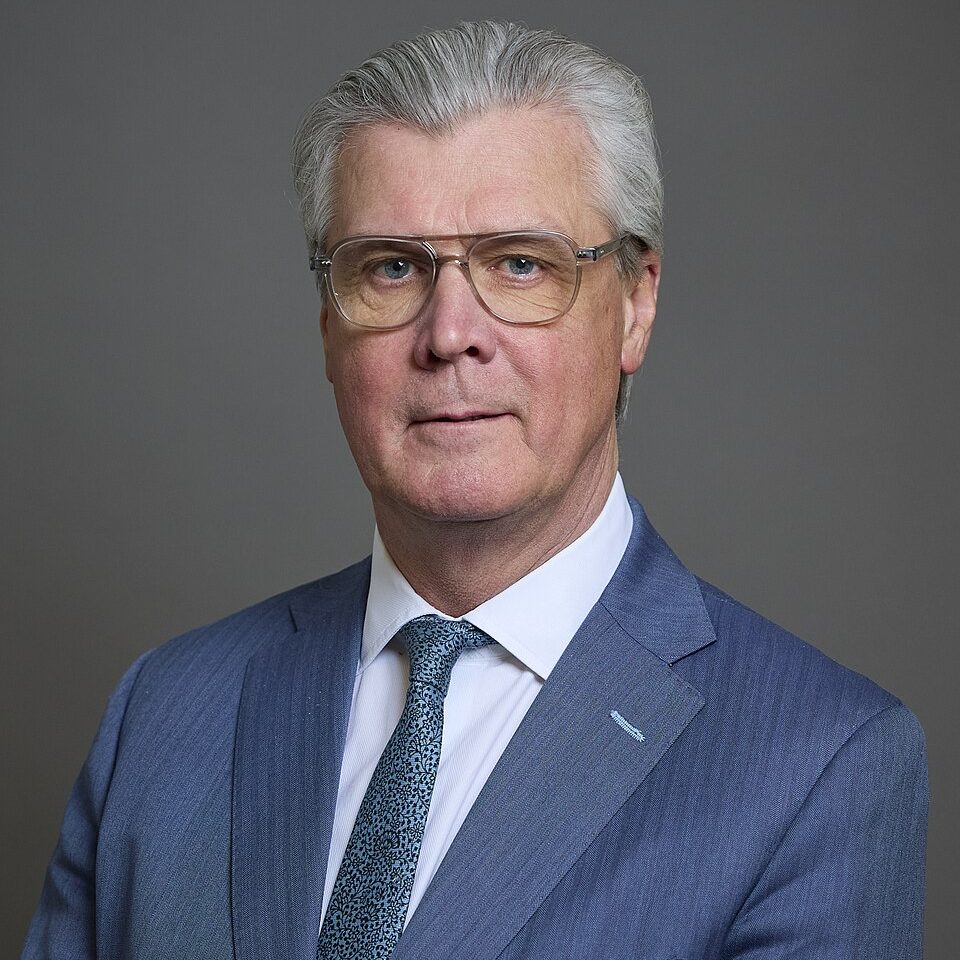
Its recently appointed leader Malcolm Offord, who defected from the Conservatives earlier this year, unveiled the document on Thursday 19 May. The party also revealed its candidates for the election.
The manifesto includes a series of pledges relating to democracy and the constitution. While there are some welcome ideas, notably a recall rule for MSPs, overall the party’s pledges are not right for improving Scottish democracy — and in some cases deeply troubling. Not to mention, there is a considerable lack of detail on numerous pledges and what they will mean in practice.
Here’s what Nigel Farage’s party wants to see on the issue of democracy in Scotland.
1. Reducing the number of MSPs
The manifesto includes a proposal to reduce the number of MSPs by linking Holyrood constituency boundaries with Westminster, which would cut the number of constituency MSPs from 73 to 57 seats. This would leave a total of 113 MSPs if list MSPs were all retained.
While this could arguably increase proportionality at Holyrood by addressing the imbalance of constituency seats to list seats, that is clearly not the purpose here.
Instead, it appears that the intent of this is to weaken Holyrood; the Scottish Parliament has gained significant powers in recent years, and if anything, it should increase its number of MSPs alongside electoral reform to improve proportionality.
READ MORE: New Zealand and Scotland – proportional but imperfect voting systems
2. A recall rule
The party proposes a recall rule for MSPs, something that has existed in Westminster now for over a decade under a very specific set of circumstances.
A similar process is being established in Wales.
If designed well, a recall rule is welcome. But there is no detail on how such a rule would operate in Malcolm Offord’s manifesto.
3. Cutting Quangos
The manifesto puts the party’s support behind cutting Quangos, with the intention of returning “powers to democratically elected ministers supported by the civl service”.
While there is possibly some potential for valid savings and spending money better elsewhere, the detail of what this would mean is far from clear.
READ MORE: Scotland’s new MSPs shouldn’t have to pledge allegiance to the King
4. Devolved issues focus
The party says it would focus parliamentary time on devolved rather than reserved matters. While it’s difficult to calculate the exact figures, the vast majority of time spent in the Chamber at Holyrood is certainly focused on devolved matters, and rightly so.
But there’s also a place for focusing some time on reserved issues. It would be an odd spectacle for ministers and MSPs not to address matters of UK-wide and worldwide importance on some level.
READ MORE: Will the Scottish Parliament change its voting system?
5. Committee reform
The party supports having committee Conveners elected by MSPs rather than appointed by parties and reducing committee sizes to seven.
Ensuring Conveners are elected could strengthen accountability. As for reducing committee sizes, there could be practical benefits of this, however, this would reduce diversity of parties represented on committees. Not to mention this is probably a consequence of the party’s pledge to cut MSP numbers.
READ MORE: Dual mandates ban passed unanimously in Scottish Parliament
6. Devolution reviews
The party also pledges to review devolved powers every ten years. This is deeply worrying and adds to concerns from Reform’s plans to cut MSP numbers.
Devolution must be protected and promoted against these threats. The Scottish Parliament has its faults, yes, but those should be fixed to strengthen its foundations rather than exploited to undermine it.
7. No to independence
Lastly, the party has reaffirmed its commitment to the union, stating firm opposition to independence.
What about the other parties?
The SNP, Scottish Labour, Scottish Conservatives, Scottish Greens and Scottish Liberal Democrats are expected to publish their respective manifestos in the coming weeks.
Upgrade Holyrood will publish similar articles in the coming weeks — outlining each party’s stance on democracy.
IMAGE: Attribution: © House of Lords / photography by Roger Harris. Creative Commons Attribution 3.0 Unported.
READ MORE: Yet another poll shows Scotland on track for an unrepresentative election due to AMS
 Upgrade Holyrood