The confirmation of a by-election in Rutherglen and Hamilton West following a recall petition demonstrates the case for a recall mechanism for MSPs.
The by-election, which will be held some point after parliament returns from summer recess, is the first to take place in Scotland under the Recall of MPs Act (2015). The most recent Westminster by-election to take place in Scotland was in Airdrie & Shotts in May 2021 when the SNP’s Neil Gray switched from Westminster to Holyrood.
The by-election in Rutherglen and Hamilton West got the go ahead from constituents following over 10% of them signing a recall petition after sitting MP Margaret Ferrier was suspended from the House of Commons for 30 days.
The Recall of MPs Act (2015) empowers constituents to kick out suspsended MPs, with appropriate checks and balances to ensure it doesn’t become a political tool.
The ability to recall MPs in certain circumstances puts powers in the hands of constituents, allowing MPs to be held accountable for their actions.
The Scottish Parliament must follow Westminster’s lead and introduce a Recall of MSPs act to strengthen accountability in Scottish democracy.
The upcoming by-election looks set to be a heated contest between Labour and the SNP. A win for Labour would be hailed as a resurgent moment for the party in Scotland.
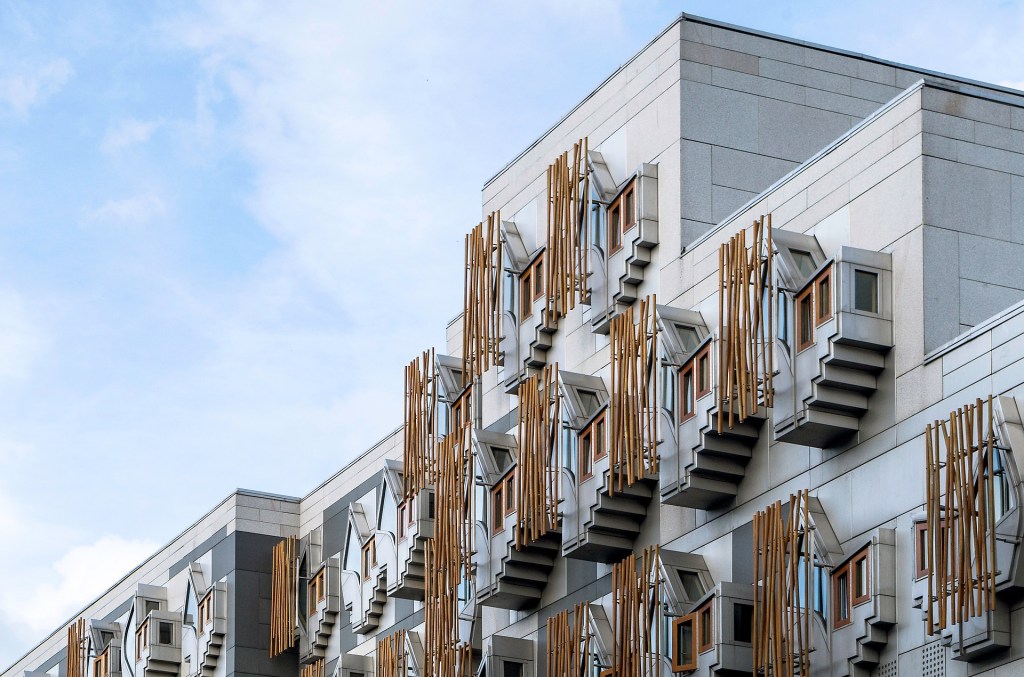
Boundaries Scotland has published their proposed new boundaries for constituencies in the Scottish Parliament.
The boundaries were published on Wednesday 17 May 2023.
The review affects the 70 non-protected First Past the Post seats in the Scottish Parliament. Orkney, Shetland and Na h-Eileanan an Iar are exempt from review as outlined in legislation.
There is now a one-month period of consultation where you can have your say.
The final outcome from the review will result in the 2026 Scottish Parliamentary elections being the first to be conducted under new boundaries.
Boundary changes are an inevitable consequence of any electoral system, however, the frequency of when they take place is largely determined by the voting system used. The First Past the Post element of the Scottish Parliament’s Additional Member System means that fairly regular changes are expected to account for changing and shifting populations across the country.
Of course, systems with larger, multi-member constituencies such as STV are less likely to require boundary changes due to the ability to simply add or take away representatives from existing boundaries to account for population changes.
It’s right for the boundary review to go ahead although there are certainly some oddities: the Edinburgh Forth and Linlithgow constituency arguably doesn’t have the most “natural” of boundaries. With that in mind, it is important for residents of different constituencies to have their say in the consultation which lasts until 17 June.
Of course, while the review is welcome and will improve representativeness in the current system, the case remains for a complete overhaul: replacing the Additional Member System and adopting a more representative system such as STV.
Next year marks 25 years since the establishment of the devolved Scottish Parliament. In that time we’ve had six first ministers, six elections and a seismic shift in voting patterns best illustrated by the once dominant Labour now in third place and a pro-independence majority at Holyrood.
With a quarter of a century of devolution fast approaching, a full review of Scotland’s democratic apparatus is surely needed. Democracy is a process not an event; likewise our democratic institutions need to evolve and keep up with democratic best practice.
1. Better Proportional Representation
When it comes to the link between how people vote at the ballot box and how seats are distributed in the legislature, the Scottish Parliament is significantly fairer than the House of Commons (let alone the unelected House of Lords). The introduction of the Additional Member System (AMS) to elect MSPs from the outset, rather than the unrepresentative First Past the Post (FPTP) system, has ensured diverse representative parliaments where seats won broadly reflect votes cast.
That said, the benefits of AMS should not be overstated. The system has a number of flaws which should be addressed and remedied. Holyrood needs electoral reform as well as Westminster.
AMS is only partially proportional. A majority of seats are elected via FPTP and the proportional list seats are allocated on a regional basis leading to only regional proportionality and a risk of overhangs with no mechanism to correct them. Furthermore, the FPTP constituencies as an integral (and majority) part of AMS result in safe seats, retain a major drawback of FPTP.
There’s also the two-vote problem – having two types of votes can lead to divergence between constituency and list votes cast, messing with the ended outcome of proportionality. As part of that, the system can be gamed: although unsuccessful, in 2021 Alba tried to game the list vote to create a supermajority for independence, going against the spirit of a system designed to represent as many views as possible – as accurately as possible. This is compounded by the fact that there are two types of MSP, constituency and list, which while in theory have the same roles in practice can be rather different.
AMS is superior to FPTP but its flaws demonstrate the need to reform. The Scottish Parliament needs a system like the Single Transferable Vote to empower voters, deliver better proportionality and end the two vote/MSP problem.
Dual mandates occur when an individual holds elected office for two positions. In the Scottish context, this can be any combination of MP, MSP, Councillor or Peer. Scotland needs fair and accountable representation, through dedicated parliamentarians. We need to end dual mandates.
The main argument against dual mandates is one of two connected parts. In principle, parliamentarians are elected to serve their constituents at either Holyrood or Westminster. Each role has different responsibilities, and representatives owe it to their constituents to solely focus on representing constituents in one clear capacity. Dual mandates mean this cannot happen.
Related to that is the practical element. Being an MP or MSP is a full-time job and carrying out the duties of both roles to the same extent as a representative for one job is simply impossible. Constituents deserve better than that.
The only current MSP to hold a dual mandate is Scottish Conservative Leader Douglas Ross. That said, it’s worth flagging that while Labour MSP Katy Clark is also a member of the House of Lords she has stepped down active duty in that role while in the Scottish Parliament. Furthermore, until the 2022 Scottish council elections, 18 newly elected MSPs also held dual mandates from their roles as councillors they won before the 2021 Scottish Parliament elections.
In a similar spirit to the above reform, the Scottish Parliament needs to restrict MSPs from having second jobs. The problem is a big one at Westminster, with MPs in safe seats taking advantage of that job security and focusing time and energy into other pursuits. While not as a significant issue in the Scottish Parliament, there are no restrictions on MSPs taking additional employment. Constituents deserve 100% focus on them – MSPs having second jobs just doesn’t cut it.
There is of course a debate over to what exact reach any restrictions on second jobs should have. Clearly any jobs even relating to public affairs and lobby should be to prevent any conflicting motivations. Full-time jobs should also definitely face a ban. While at the other end of the scale there’s a case to doctors and similar professionals to work limited hours in that capacity to retain licenses.
There is of course a middle ground between those two ends and while it’ll be up to policy-makers to decide where the line is drawn, anything that takes up a significant portion of an MSPs time should be banned.
The Scottish Parliament was founded with fixed-term four-year parliamentary terms as shown by the 1999, 2003, 2007 and 2011 elections. Regular fixed elections ensure frequent accountability and democratic input from the voters. Westminster’s fixed-term parliament Act wasn’t perfect but it ensured a level playing field in normal times – all parties knew when the election was scheduled for. The reality was of course quite different due to Brexit and political upheaval but the principle is solid and is borne out in practice in much of the democratic world. In different times, the benefits would have been realised. The current uncertainty as to when the next Westminster election will take place is frustrating and places an obvious advantage in the hands of the incumbent prime minister.
With the principle of fixed elections established, it then follows how frequent these should be?
There is no right answer but the move to five-year Holyrood terms means just two elections a decade, less accountability and “zombie parliaments” at the end of a parliamentary term.
Two year parliaments, as seen in the USA with the House of Representatives, face the opposite problem: too much accountability leading to constant electioneering and voter fatigue. New Zealand and Australia have three year parliaments, which are popular over there but would be a radical shift in the UK and perhaps lead to the same voter fatigue seen during the Brexit crisis.
There is however, a happy middle that would ensure a fair balance between accountability and effective government. Four year terms would enable that – and it’s time for Holyrood to return to its roots.
During the last parliamentary session a disgraced former minister was able to claim his salary and expenses while not even turning up to the Scottish Parliament to represent his constituents. The minister brought the parliament into disrepute but there was no mechanism to remove him as an MSP.
Holyrood should learn from Westminster and introduce a recall rule to address this democratic deficit. A recall petition – that can lead to a by-election – is triggered if an MP receives a custodial prison sentence, is suspended from the House or is convicted of providing false or misleading expenses claims. A similar mechanism should be adopted at Holyrood, ideally as part of a new, fairer voting system, and built upon to include MSPs who don’t turn up and other actions that don’t live up to what is expected of MSPs.
The Westminster system is designed for FPTP so modifications would be required for AMS at Holyrood, especially the list element or any future better alternative. That said, whatever voting system is used it’s clear that there should be a mechanism to remove lawbreaking and absent MSPs. Anything less is an insult to democratic accountability.
The idea of more politicians will be off-putting for many but a moderate increase in the size of the Scottish Parliament would be a proportionate response to the increased powers held by the chamber. Furthermore, with around a fifth of MSPs on the government payroll (as ministers and junior ministers) an increase in members will improve overall accountability and scrutiny. MSPs also often sit on multiple committees in addition to party spokesperson roles and their work as constituency MSPs, a point recently made in the Herald.
Scottish representatives need the space to become experts in different areas. Freeing up time to limit multi-tasking would result in just that, further improving scrutiny.
An increase in MSPs would also allow greater flexibility when designing a new voting system for the Scottish Parliament. Sticking to 129 would place limitations on the exact make-up of any new election system.
7. Better ballot access
Better ballot access isn’t something that Upgrade Holyrood has directly advocated before but it’s a reform that’s well worth considering as part of a wider package of upgrading Scottish democracy. To stand for election at either Holyrood or Westminster, one must pay a deposit of £500, only returnable upon winning 5% of the vote. This has become such a normalised part of our politics it blurs into the background and is regularly accepted without question.
Yet is should be questioned. Requiring a £500 deposit to stand for election places an immediate barrier on potential candidates. Of course there should be a barrier to minimise non-serious candidates to only the most persistent but the nature of the £500 is a financial barrier which has obvious consequences for accessibility and equality.
Championed by Ballot Box Scotland, one alternative would be combination of entitlements and subscriptions, which are used in other democracies. Parties and/or candidates who win seats in the most recent elections would be entitled to automatically stand again if they wish. However, new parties or independent candidates would be required to gather signatures of say 0.1% of the electorate to demonstrate a level of support. This would result in a system with no financial barriers, only the barrier of proving that a party or candidate has a small but provable level of support and reduce frivolous candidates.
BONUS – Further powers for local councils and local democracy reforms
This isn’t strictly a reform of the Scottish Parliament, but to wider Scottish democracy. Decisions should be made as close to the people as possible at the level of governance most appropriate as possible. While the Scottish Parliament has gained powers since its formation, local councils have only seen some moderate increases in powers while power in Scotland has been increasingly centralised at Holyrood. Local councils surely deserve more of a say in how local areas are run.
Next year marks 25 years of devolution following the re-establishment of the Scottish Parliament in 1999. After some bumps along the way, the Scottish Parliament is undeniably a success story. However, while its use of a broadly proportional voting system makes it more representative than the parliament in Westminster (what with FPTP in the Commons and the continued existence of the House of Lords), the Scottish Parliament needs reform. Put simply, Holyrood needs an upgrade.
Upgrade Holyrood champions better democracy in Scotland. With next year marking a quarter of a century of devolution, it will be the perfect time to reflect, assess and improve upon the democratic mechanisms of the Scottish Parliament.
First things first, Scotland’s voting system sounds great at first glance but there is significant room for improvement. The Additional Member System (AMS) ensures broad proportionality but only goes so far as having a mechanism for regional proportionality. What’s more it fails to address overhangs, retains single-member districts and leaves open the possibility for parties to “game the system” as seen with Alba’s failed attempt to win a “supermajority” for independence at the 2021 Scottish Parliament election. Furthermore, voters still have limited powers over individual candidates.
The system is significantly more proportional than First Past the Post but alternatives do exist – and those alternatives must be examined and adopted. There are three likely routes that the Scottish Parliament could take on this issue: AMS with modifications, Open List PR or the Single Transferable Vote.
Tinkering around the edges by adopting a German style mixed-member voting system to address overhangs and ensure national party proportionality would be a minor improvement but it would cause some headaches of it’s own – Germany’s Bundestag is growing with each election. The Scottish public are likely to be approving of significantly more politicians. What’s more such a system would retain single-member constituencies.
Open List PR with levelling seats – as in Denmark, Sweden or Iceland – this would improve proportionality, give voters power over individual candidates and crucially end single-member districts. This would be one option for the Scottish Parliament that’s worth considering. If we were to go down this route then we would to ensure that any lists are regional, open for voters to enhance their power and have levelling seats to ensure both regional and national proportional representation.
The final alternative is often seen as the gold-standard voting system (if implemented properly) – the Single Transferable Vote. Already used to elect councillors in Scotland, STV would provide proportionality (depending on district sizes), give voters an enormous amount of power at elections and provide voters with multi-party representation. What’s more, the system is backed by the SNP, Lib Dems, as well as some Labour and Conservative MSPs. The Scottish Greens recently supported it before backing Open List PR.
The Scottish Parliament must therefore examine its voting system in any 25-year review of devolution.
But it’s not just the electoral system where the Scottish Parliament needs improvements.
Holyrood needs to end dual mandates – primarily for joint MSP-MPs and MSP-Lords but also place restrictions on MSP-councillors. Dual mandates are unfair on voters who deserve fully-committed representatives. On top of that, there also needs to be a restriction on second jobs for MSPs, again for similar reasons.
We also need a return to four-year parliamentary terms. It’s right that election terms are fixed – as they give a level playing field to all parties and candidates – but five-year terms are too long and are only something the Scottish Parliament slipped into during the last decade as a result of Westminster’s very brief adoption of fixed five-year terms.
What’s more, the Scottish Parliament also needs a recall rule. Holyrood is ahead of Westminster on many fronts but the lack of ability for constituents to recall MSPs is a major flaw. In practice this will be difficult to achieve due to the mixed-member system and by-election blueprint for recalls at Westminster but any review of the functioning of the Scottish Parliament should include a reform of this nature.
2024 will be a milestone year for Scotland – 25 years of devolution have undoubtedly changed the Scottish political landscape forever.
Devolution works and what’s more it works well. This should be celebrated. But with that success comes room for improvement. There will be time to take stock next year and assess a way to move forward on these reforms – hopefully with cross-party support. It’s time to upgrade Holyrood.
Sweden went to the polls on Sunday 11 September 2022, four years after the previous vote in 2018. The country uses a system of Proportional Representation to elect members of the Riksdag, ensuring that how Swedes vote at the ballot box is reflected in parliament.
The country’s electoral system is worth exploring as an alternative to Holyrood’s broadly proportional but flawed Additional Member System.
What electoral system does Sweden use?
Sweden uses a system of Open List Proportional Representation with levelling seats to ensure national proportionality.
The country is divided into 29 constituencies – ranging from 2 to 43 members (Gotland and Stockholm county respectively) – to which parties present lists of candidates in each constituency. Voters get to vote for one party but also have the option to vote for individual candidates, which can alter the list ordering within their constituency. This is the open element of the system, thus further empowering voters at the ballot box.
Elections in Sweden are extremely proportional due to larger multi-member constituencies, however, what sets the country’s system apart from country’s such as Estonia and Latvia which use list PR systems, is that Sweden’s electoral system also employs levelling seats. Once all the votes are counted and seats distributed as per the voters’ wishes, parties win additional seats across the country to ensure that the overall results are as proportional as possible. Of the 349 seats in the Riksdag, 310 are distributed in the first instance while a further 39 are distributed to further improve proportionality. There is also a 4% national threshold for parties to enter the Riksdag. Sweden is not unique in this regard; Norway, Denmark and Iceland also have levelling seats to ensure proportionality overall.
How did Sweden vote at the 2022 election and how proportional was it?
The previous Swedish general election took place in 2018, which was followed by tough negotiations and even a no confidence vote in Prime Minister Stefan Löfven. However, Löfven emerged to lead a minority left coalition made up of his own party the Social Democrats, as well as the Greens. Löfven resigned in 2021, making way for party colleague Magdalena Andersson, who led her party into the 2022 election.
The most recent election was an incredibly close-run contest between the left and right blocs. On the left, the Social Democrats maintained their dominant position as the largest party in parliament. however, right of centre parties managed to win a very slim majority of seats, leading to Magdalena Andersson’s resignation on Thursday. The far-right Sweden Democrats replaced the centre-right Moderates as the second largest party in parliament but the Moderate leader is likely to become prime minister due to the toxicity of the Sweden Democrats even amongst the rest of the right. What influence they will have this parliament – and in the years to come – remains to be seen.
But how proportional was the 2022 election? Thanks to Sweden’s Open List PR system, the answer is very.
The Social Democrats for example won 107 seats (30.7%) on 30.4% of the vote. The Sweden Democrats took 73 seats (20.9%) on 20.5% of the vote while the Moderates won 68 seats (19.5%) on 19.5% of the vote. Overall, results were extremely proportional with seats reflecting votes. Furthermore, voters were empowered by the open element of the allowing them to express support for individuals within their chosen party.
Swedish Election Result (6,568 out of 6,578 Districts Counted):
Social Democrats: 107 (+3) Sweden Democrats: 73 (+11) Moderate: 68 (-2) Centre: 24 (-7) Left: 24 (-4) Christian Democrats: 19 (-4) Green: 18 (+2) Liberal: 16% (-4)
How do the Swedish and Scottish electoral systems compare?
The Scottish Parliament’s broadly proportional Additional Member System (AMS) is significantly fairer than the unrepresentative First Past the Post voting system used for the House of Commons. However, it has a number of flaws that need to be addressed. Problems associated with Holyrood’s mixed-member system are listed below:
1. Regional not national PR – As list members are distributed on a regional basis only, there is no mechanism to ensure overall nationality proportionality. While regional proportionality tends to result in broadly proportional outcomes overall, there is still room for improvement.
2. Limited voter power – Under AMS voters have no power over the ordering of party lists. Furthermore, the constituency vote element limits voter power by creating safe seats and targeted marginal seats while also being “lists of one”.
3. Two types of MSPs – Due to the nature of mixed-member systems, the Scottish Parliament has two types of MSP. While in theory they perform the same functions, this can vary in practice, particularly on the casework side of things.
4. The two-vote problem – Voters have two votes, and while they should ideally work in tandem to result in proportional outcomes, it creates the opportunities for parties to exploit this by only standing in the list and asking established parties’ supporters to back them on the list. This was highlighted when Alba was established with the express intention to do this in 2021. This clearly goes against the spirit of AMS and could create highly disproportionate elections.
5. Constituency seats remain (and dominate!) – Single-member constituencies still come with many of the flaws they have in FPTP. They result in wasted votes and can lead to safe seats, as well as marginal seats which can result in parties focusing on them rather than giving attention to the wider region or country. Furthermore, the fact that constituency seats make up a significant majority of seats in the Scottish Parliament, this can result in overhangs (which aren’t addressed by AMS) and skew overall proportionality – particularly if one party dominates single-member seats.
Upgrade Holyrood is committed to making the case for improving Scotland’s democracy, and that includes arguing for a review of the current system and outlining alternatives. The type of system used for Swedish elections – an Open List PR system with levelling seats – is one option that would address many of the faults of AMS.
Levelling seats would rectify the problem of limited national proportionality. And while there would technically be two types of MSP, under a Swedish model, these are given back to constituencies, minimising that problem to a minimum. Furthermore, voters would only have one party vote, ending the two vote problem, and single-seat constituencies would come to an end. Voters would also be empowered by being able to influence party lists unlike under AMS where parties present unalterable lists.
But what would such a system look like in practice?
Ballot Box Scotland is a strong advocate of Holyrood adopting an Open List PR system (with levelling seats), which they categorise as Scandinavian-style PR. For those wondering what Holyrood would look like if it adopted a system like Sweden, BBS has designed such a model for Scotland and used the most recent Scottish Parliament election results to give an indication of what seat distribution would look like.
This is shown below. Of course, it’s worth noting that the size of any constituencies in such a system if it were to be adopted would be up to the designers so it wouldn’t necessarily reflect the below. Furthermore, in terms of seat projections, the below uses the regional vote to determine how people would cast their singular Open List PR vote. In reality, many who voted ‘SNP constituency and Green regional’ might instead have use their one vote for the SNP although this is all speculation of course. In addition, the type of voting system used very much determines how people vote and so how people may have voted under this system could be completely different (e.g. smaller parties may be more considered).
Final Large Change: Abolish all trace of current model, introduce Scandinavian Style PR! https://t.co/1Vj8klBW7h
SNP ~ 55 (-9) Conservative ~ 32 (+1) Labour ~ 24 (+2) Green ~ 11 (+3) Lib Dem ~ 7 (+3)
— Ballot Box Scotland (@BallotBoxScot) June 3, 2021
So, what support is there for a Swedish-style system among Scottish parties? The Scottish Greens support a Scandinavian-style system while the Lib Dems favour the Single Transferable Vote (which again would be better than AMS if designed effectively), as do the SNP while Labour and the Conservatives are largely missing from this debate (although figures such as Labour’s Paul Sweeney MSP recognise the faults of the current system).
That all said, a Sweden-like system is not the only alternative to the current set-up at Holyrood. Two other alternatives would be the Single Transferable Vote (which would address many of AMS’ problems, ensure proportionality and vastly improve voter choice and power) and a modified mixed-member system with open lists and guaranteed overall proportionality (similar to Bavaria’s electoral system).
Sweden’s election provides just one model that Holyrood – and perhaps Westminster (although that seems far less likely and possibly undesirable for such a large populous) – could adopt to improve electoral outcomes. Reform is needed, and to achieve change it is vital that we look to other parliaments for guidance.
The Baltic states – Estonia, Latvia and Lithuania – all gained their independence from the Soviet Union in the early 1990s after the fall of the Berlin Wall. The famous Baltic Chain of Freedom of 1989 was vital in ending Soviet control of the region, paving the way for three independent republics.
There are striking similarities between the three Baltic democracies and some crucial differences too. All are republics, all use list systems to elect some or all of their MPs who have four-year terms, and all have written, codified constitutions.
Having recently visited Latvia and Lithuania (previously visiting Estonia in 2019), I’ve taken the time to highlight the electoral systems of each of the Baltic state and comparing them to Holyrood and Westminster.
Estonia has a population of 1.3 million and is most northern of the three Baltic states, bordering Latvia to the south, as well as Russia to the east.
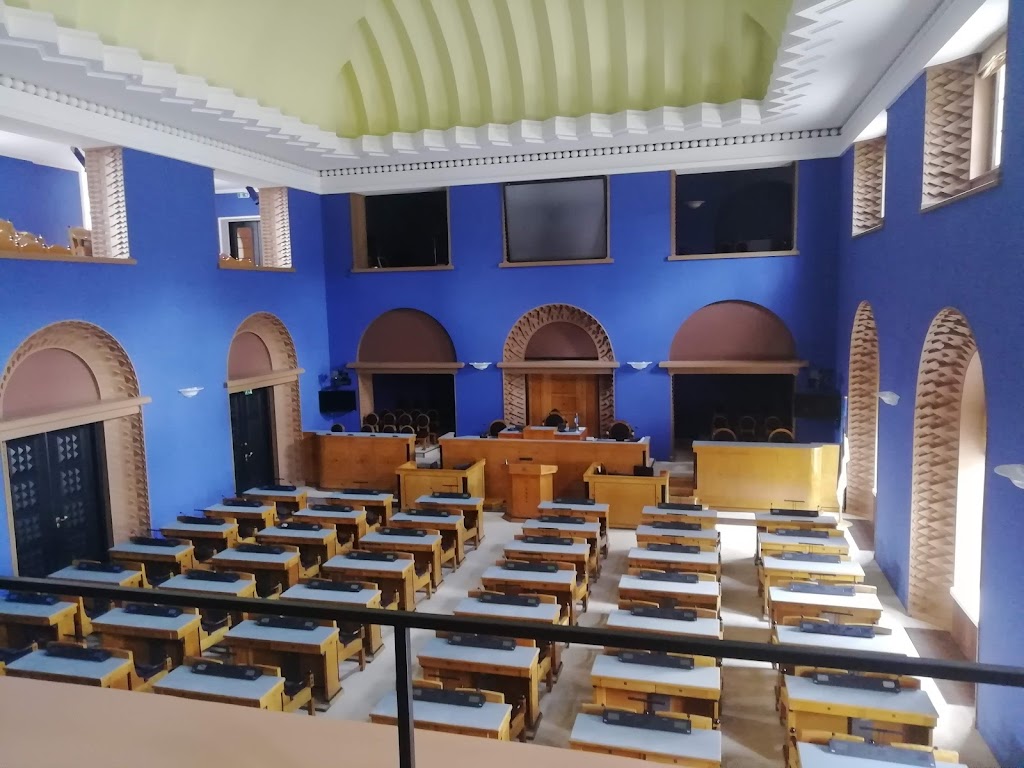
Since gaining independence in 1990, the Estonian Parliament – the Riigikogu – has had eight elections. Members are elected via a Closed List Proportional Representation system with multiple constituencies and no levelling seats, a model similar to what was used to elect UK Members of the European system. It also resembles the expected new system for the Welsh Parliament, as proposed by Welsh Labour and Plaid Cymru.
A total of 101 members are elected to the Riigikogu across 12 electoral districts ranging from five to fifteen members. This gives the country highly proportional elections while also retaining a reasonable degree of local representation. The three largest districts by representation cover Tallinn (the country’s capital and home of the national parliament) and the surrounding area.
It’s worth highlighting here that unlike at Holyrood and Westminster, when an MP joins the Estonian government they leave they stop being an MP. This gives a more formal separation of the legislature and executive than what we’re used to in the UK. The idea is an intriguing one although it only works due to the country’s list system: when an MP joins the government, the next person on their party’s list replaces them as an MP. This of course has the consequence that when a minister returns to the legislature, their substitute MP vacates their seat.
The country last voted in 2019, following which a coalition was formed led by the centre-right Centre Party. However, the government collapsed less than two years later; liberal Reform Party, led by Kaja Kallas, subsequently formed a cabinet with the Centre Party as the junior coalition partner. That arrangement didn’t last long either, but Kallas remained prime minister, after forming a coalition with the conservative Isamaa and the Social Democratic Party. The next election is expected to take place in March 2023.
As an independent, democratic republic, the country also has a non-executive president as Head of state. Unlike some other European countries with a similar set-up, Estonia’s president is elected by members of its national parliament rather than by a nation-wide vote. Its Baltic neighbours have also have non-executive presidents, but more on that below.
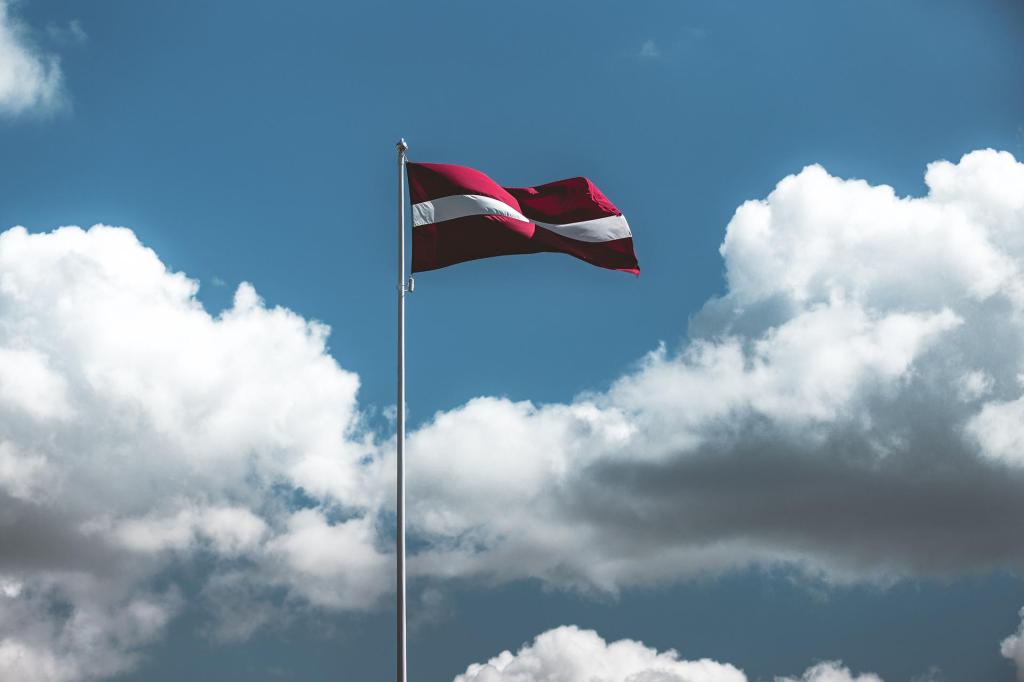
Latvia has a population just shy of 2 million, and like its less populous northern neighbour, the country uses a closed list proportional system to elect its members. The Saeima, the country’s parliament, has 100 members, one short of Estonia’s Rijikogu, and is based in the capital city of Riga.
Proportionality is a key principle in Latvian democracy. So much so that Articles 6 and 7 of the country’s constitution enshrine it in law:
6. The Saeima shall be elected in general, equal and direct elections, and by secret ballot based on proportional representation.
7. In the division of Latvia into separate electoral districts, provision for the number of members of the Saeima to be elected from each district shall be proportional to the number of electors in each district.
Latvian Constitution (Article 6)
While Latvia uses a Closed List PR system like Estonia, the system is rather different in design. The Saeima’s 100 members are spread across just five electoral districts. The capital Riga elects 36 members – that’s over a third of representatives. The other four districts elect 26, 13, 13, 12 members respectively.
This voting system leads to highly proportional elections, however, local representation is less than in Estonia, especially in the super-constituency of Riga.
The next Latvian election is scheduled to take place on 1 October 2022. The previous election saw three previously unrepresented parties gain representation in the Saeima. The pre-election governing coalition led by the centre-right, agrarian Union of Greens and Farmers since 2016 lost significant support, leading to a new government. After months of negotiations, a five-party coalition was formed with the centre-right New Unity’s Krišjānis Kariņš becoming prime minister in early 2019. New Unity is the smallest party in parliament, making Kariņš very much a compromise prime minister for the diverse coalition he heads.
Two final things. Like in Estonia, Latvian MPs formally exit the legislature when they join the government, making way for substitute MPs. And finally, Latvia’s non-executive president is elected by members of its national parliament just like in Estonia.
In line with it having the largest population of the three Baltic states (2.8 million people), Lithuania’s parliament (called the Seimas – not to be confused with Latvia’s Saeima) has the largest number of members of the three Baltic states. The country votes for 141 deputies every four years. However, unlike its northern neighbours, Lithuania doesn’t use what can be characterised as a proportional system.
The Seimas’ has 141 members (although the chamber has 142 for the sake of symmetrical design!) are elected in two ways. Just over half of MPs, 71, are elected from single-member districts. Candidates are only elected if they win a majority of votes in their constituency; if no candidate does then a run-off is held two weeks later to determine the elected representative.
The remaining 70 members are elected via proportional lists with a 5% threshold. There is also a degree of openness to the list element where voters can express a preference for a candidate of their choosing.
Unlike similar systems used in the likes of Scotland, Germany and New Zealand there is no link between single-member seats and the proportional element. This results in a Mixed-Member Majoritarian system where overall results are only somewhat proportional. This is also known as parallel voting.
This limited proportionality is best shown via the Gallagher Index, which provides a standardised measure of proportionality to compare different systems at different elections. The closer to 1 an election is, the more proportional it is. The 2019 Estonian and 2018 Latvian elections yielded Gallagher scores of 5.28 and 5.51 respectively. Lithuania’s score was 9.49 overall. Lithuanian elections therefore have proportional elements but are far from fully proportional.
The 2020 election led to the formation of a government headed by popular independent MP Ingrida Šimonytė. This is an interesting situation, which follows the 2019 non-executive presidential election (which unlike Estonia and Latvia was a nationwide election) which Šimonytė lost. However, she remained a popular figure, winning the most preference votes in the 2020 parliamentary election, and has a strong relationship with the centre-right Homeland Union. She now leads a centre-right cabinet consisting of independents, the Homeland Union, Liberal Movement and the Freedom Party.
When it comes to comparing the electoral systems of Estonia, Latvia and Lithuania with Westminster, the Baltic states come out on top. Even the semi-proportional Lithuanian system is significantly more representative than First Past the Post.
Of the three Baltic states, Estonia has the best balance of proportionality and local representation whereas Latvia’s mega-constituencies reduce local links and Lithuania’s mixed-member majoritarian system limits proportionality. Of course, all three are significantly more representative than First Past the Post, which distorts the link between seats and votes, leads to countless wasted votes and encourages tactical voting.
Were Westminster to adopt any of the three systems from the Baltics, representation would improve significantly.
The situation is somewhat different when making comparisons with the Scottish Parliament, which has used the proportional Additional Member System (AMS) since the advent of devolution in 1999. Unlike the mixed-member majoritarian system of Lithuania, Holyrood’s AMS is mixed-member proportional (MMP) as the constituency election results directly impact the distribution of list seats to compensate for lack of proportionality. The system has some significant flaws – which I’ve written about extensively here – but overall it delivers broadly proportional outcomes. Take a look at the most recent Scottish and Lithuanian elections. The Gallagher score for Scotland was 7.03, making it more proportional than Lithuania’s 9.49.
However, when comparing Scotland’s Gallagher scores to Estonia and Latvia, it is clear that the northern Baltic states have more proportional elections. This highlights the flaw that Holyrood elections are only broadly proportional (due to the balance of MSP types and the fact that votes are only regionally representative).
That said Scotland’s AMS means better local representation that Estonian and Latvia (with all constituents eight MSPs – one constituency MSP and seven regional MSPs). I should say here that I am of course in no position to call for reform in other countries, but the purpose of this to to show comparisons between Holyrood and Westminster with electoral systems around the world.
First Past the Post is significantly flawed. The UK needs to adopt a proportional alternative. Scotland’s AMS is a significant improvement but is in need of reform. When looking to make democratic improvements it is vital to look outward and see what other countries offer. That is a key part of the Upgrade Holyrood mission.
Northern Ireland goes to the polls on Thursday 5 May to elect a new assembly. The election is going ahead as scheduled but follows the recent collapse of the executive as a result of First Minister Paul Givan’s resignation. The election could make history, with Sinn Fein looking likely to emerge as the largest party after years of unionist dominance.
Assembly members are elected via the Single Transferable Vote, a form of Proportional Representation with multi-member constituencies where voters rank candidates in order of preference.
Voters in Scotland also go to the polls on 5 May – this time to elect councillors across all 32 local authorities. Like the election in Northern Ireland, Scottish councillors are elected via STV. However, the Northern Irish system has lessons for Scotland’s democracy – both at the local level and at Holyrood.
Northern Ireland Assembly election
For Northern Ireland elections, the province is split into 18 constituencies. Each constituency has five members, meaning a total of 90 Members of the Legislative Assembly.
By allowing voters to rank candidates, voters have a significant degree of control over who is elected, rather than just which party. This is an important element of representative democracy, which is lacking at elections to Westminster and the Scottish Parliament.
Elections are also extremely proportional. In 2017, the DUP won 28.1% of first-preference votes and ended up with 31.1% of seats. Sinn Fein won 27.9% of the first preference votes and 30% of all seats while the UUP won 12.9% of first preference votes and 13.3% of all seats.
The Gallagher index, used to measure proportionality and compare across systems, for the last election was 3.34. The closer to one an election is, the more proportional it is. Compare this to the UK’s last election, which had a Gallagher index of 11.80.
In short, Northern Ireland elections are extremely proportional.
Scotland is split into 32 council areas, each electing a different number of councillors. The vast majority of these are elected in three or four member wards via STV. Like in Northern Ireland, council results are largely proportional and voters have more power than parties.
However, the fact that councillors are only elected in three or four member wards, as opposed to five member wards in Northern Ireland, decreases proportionality. Of course, the more local councillors are, the better – as they deal with local issues – but it is worth considering that wards with higher district magnitude lead to more representative results. If there is ever an opportunity to increase the number of councillors in Scotland, then increasing the number of representatives in each ward is worth considering.
Northern Ireland shows that a more representative parliament is possible. UK elections are incredibly unrepresentative. STV would be a far more representative system than First Past the Post. When the UK does eventually adopt Proportional Representation, there are positive lessons from Northern Ireland’s use of STV.
Furthermore, there are lessons for Holyrood. The Scottish Parliament’s Additional Member System is broadly proportional but has a number of problems, such as the lack of voter empowerment, opportunities for exploitation and no mechanism to ensure national proportionality.
The Scottish Parliament needs a fairer voting system. STV is tried and tested in Scotland and has been successful in Northern Ireland. After 23 years of devolution, it’s time for Scotland to take a leaf out of Northern Ireland’s book and adopt a fairer system, such as STV.
There is no denying that the Scottish Parliament is considerably more democratic than the Houses of Parliament in Westminster. It has all the hallmarks of a modern democracy with its broadly proportional voting system, no unelected upper body and a purpose built horseshoe chamber where members can vote at the push of a button.
However, that’s not to say improvements cannot be made, and that is the raison d’être of Upgrade Holyrood.
Scotland’s Additional Member System has shown that Proportional Representation works but there a number of serious flaws in its design. It is time to change the way we elect MSPs.
AMS has delivered broadly proportional outcomes
There are a number of ways to measure the effectiveness of a voting system. These all have a complicated interconnected relationship with one another and there is often a trade off between them. Designing an effective electoral system is often a balancing act between proportionality (the representative link between seats and votes), voter influence, local links and utility of votes.
The Additional Member System is a mixed voting system with 73 MSPs elected via First Past the Post and an Additional 56 MSPs elected across eight different regionals. Voters get two ballots and these regional MSPs are allocated via the regional ballots while taking into account of the number of constituency seats won by each party, a mechanism that aims to ensure a proportional link between seats and votes in each region.
There have been six Scottish Parliament elections since the advent of devolution and all of them have been broadly proportional. The Gallagher Index for each of these elections is low, indicating string levels of proportionality, in contrary to indices for elections to the House of Commons which have had high Gallagher indices.
In Scotland, the number of votes cast per party is strongly linked with the number of seats won.
AMS flaws and the 2021 Scottish Parliament election
On the face of it everything looks in order, however, there are a number of flaws with AMS.
The voting system only aims for regional proportionality. The additional list members only ensure that the total number of MSPs in won by each party in each region is roughly proportional, leading to broadly proportional results overall. There is no direct mechanism to ensure national proportionality – and the ratio of constituency and list candidates in favour of the former compounds this.
Another significant flaw is that voters have very little control over the individuals elected. Safe seats exist in the First Past the Post element of AMS and parties determine their party list ordering meaning that voters have no say in individual candidates – just parties.
Furthermore, AMS doesn’t address the issue of overhangs which is when a party wins more constituency seats than it should have won on a purely proportional system. In contrast, New Zealand and Germany address this by adding further members to their respective parliaments when overhangs occur.
Lastly, is perhaps the most prolific flaw of the system. The 2021 election exposed one of the Additional Member System’s the possibility for exploitation of the two vote system. Alex Salmond’s newly formed Alba part went into the election with an explicit pitch to SNP voters – “back us on the list vote to maximise the pro-independence majority”. The SNP are so dominant in Scottish politics that the majority of their seats are won in First Past the Post constituencies but the number of seats overall is meant to be reflect of regional votes cast. Had all SNP voters backed Alba on the list then their would have been an extremely unrepresentative parliament with the likes of Scottish Labour and the Scottish Conservatives squeezed out.
There was nothing illegal about Alba’s plan but it is surely wrong, going against the spirit of a system designed to be proportional, and led to talk of reforming the system in the mainstream media.
It is worth highlighting here that George Galloway’s All for Unity party employed a similar strategy, highlighting that this is a wider problem although Alba’s was certainly the most prolific attempt.
Ultimately, Alba failed in their attempt to exploit the system but the flaw has been so obviously exposed, leading to discussions in mainstream media about the need for reform. Just because Salmond’s venture wasn’t successful doesn’t mean something similar in future could be, not to mention this risk of exploiting the system is just one of the many flaws of AMS.
🚨PICK OF THE WEEK🚨
READ: Salmond’s Alba venture exposes Scotland’s voting system flaws
🗳️"Alba’s strategy is thus an overt attempt to game the system."
Richard Wood delivers his verdict on Scotland's newest political party:https://t.co/CWydbUpD8j
After 23 years of devolution it’s time for an upgrade
Six elections and 23 years later it is time for reform. The Welsh Parliament is currently looking at improving its voting system and Scotland should do the same. True, Wales’ voting system, although similar to Scotland’s, is notably less proportional but there’s still a strong case to review what’s happened in Scotland why we need reform.
Here are three alternatives to the Additional Member System.
1. The German model – tinkering with the mixed-member system
One option, perhaps in theory the easiest reform, is to tinker with the system we already have. Compared to Mixed-Member Proportional systems in the likes of Germany and New Zealand, Holyrood is rather basic, with no additional measures to ensure proportionality other than the 56 regional MSPs.
Scotland could take a leaf out of Germany’s book and adopt a levelling system. The German model is similar to Scotland’s, the main difference being that the list vote overall, and in each state, is tied to the overall number of seats won. This is done by the creation of additional list seats (on top of the standard list seats allocated per state) to ensure that list votes cast match overall seats one. This would address the problem exposed by Alba in Scotland and also strengthens proportionality on both the regional and national scales.
In addition to modifying AMS based on the German system, Scotland could also learn from Bavaria and open up the list component of the Additional Member System. Party lists are currently decided by the parties that submit them, giving an astonishing amount of power to party bosses. Allowing voters to rank or order or note their preferred lead candidates in the party list they back would empower citizens across the country.
Modifying AMS with these two changes would on paper improve representationin the Scottish Parliament, however, such reforms are not without risk. A German-style levelling system could create an unprecedented number of MSPs as shown by the surge in Bundestag members at the 2021 German Federal election. Furthermore, opening up the list risks complicating matters as voters would in effect have three ballots at the polling station. These option also retains the element of First Past the Post, meaning that safe seats remain and there are two types of MSP.
While a modified AMS would be somewhat an improvement, if we are going to reform the system we should be more ambitious than this!
2. The Single Transferable Vote – representative, empowering and proven effective in Scotland
An alternative to the Additional Member System would be to scrap it altogether and introduce the tried and tested method, the Single Transferable Vote, widely lauded as the most effective and empowering voting system.
STV has been used to elect Scottish councillors since 2007 so voters are already familiar with it. Claims that it would be overly complicated have been unfounded and it has resulted in largely proportional councils and given voters significant power at the ballot box.
Under STV, Scotland would be divided into multi-member constituencies of district magnitude (the electoral sweet spot for balancing the constituency link and proportionality has been identified as between four and eight members (Carey and Hix 2011)) and voters get to rank candidates in order of preference. STV leads to proportional results while empowering voters at the ballot box. It also allows them to vote across party lines which can lead to a more accommodating politics.
Levelling seats could even be added, like in Malta’s STV system, to ensure that seats won overall reflect first preference votes and avoid situations like in Ireland in 2018 where Sinn Fein would have won more seats had they stood enough candidates.
No system will ever fully meet all ideal voting system criteria but the Single Transferable Vote covers all of them very well. STV would deliver proportional outcomes and give voters a significant amount of power, not to mention it is already familiar with the voting Scottish public due to its use in council elections. This is probably the best and most likely alternative to AMS.
3. Open List Proportional Representation – an unknown alternative
Rather than tinkering with the current system or opting for the tried and tested STV model, a third option would be to learn from the likes of Norway, Denmark and Iceland and embrace Open List Proportional Representation (with a levelling seat mechanism to ensure national proportionality). This is the less discussed alternative although it is now backed by the Scottish Greens and is the preferred system of Ballot Box Scotland.
Under Open List Proportional Representation, Scotland would be divided into a number of medium-large constituencies each electing a number of MSPs. Voters would get one ballot and one vote for a party. Seats are allocated via votes on that ballot and additional seats are added to level the system out and ensure national proportionality.
Crucially, voters are empowered as they have the option of indicating their preferred candidates on a party’s list, weakening party power and ensuring voters have a strong say in the personal make up of their parliament.
Such a system ticks the key boxes of voter choice and proportionality. Sure, it has some flaws such as the likelihood if some extremely large constituencies, as well as the lack of cross party voting similar to what happens under STV, but it is worth examining.
The Scottish Parliament needs an upgrade but is there a route to electoral reform at Holyrood?
Change often happens by accident but there are three elements to keep an eye on in the coming years.
The Scottish Elections (Reform) Act 2020 explicitly gave the Scottish Parliament the power to change its voting system. A change can come about if two-thirds of MSPs support it.
There is some way to go to get to the magic number of 86 MSPs, but SNP, Lib Dem and Green MSPs all support an alternative voting system, not to mention at least one Conservative, Murdo Fraser MSP. Scottish Labour do not have a position but there is likely some appetite within the party for reviewing the status-quo. Labour’s Paul Sweeney MSP has even said he is sympathetic to looking at improving the way we elect MSPs. This all gives a framework for what could happen if there is a real drive to electoral reform although work would still be needed to bring parties together on the type of system Scotland should adopt.
It’s also worth keeping an eye on what happens in Wales. There is a very real possibility of the Senedd ditching its own Additional Member System in favour of the Single Transferable Vote as part of an enlargement to 80-90 members. The Special Purpose Committee on Senedd Reform is due to make its recommendations by 31 May 2022. If Wales goes down that route, Scotland could very well follow.
It is perfectly plausible to see a route to electoral reform ahead of the 2026 election. The Scottish Parliament has the mechanism to change the voting system is there, not to mention support for change within the parliament. The only major obstacle is the lack of political will, but in time, with persuasion, reform will happen.
The 1990s were a time of radical political change both here in Scotland and on the other side of the world in New Zealand.
In 1996, New Zealand held its first election using a form of Proportional Representation, after two referenda and decades of campaigning. And three years later Scotland did the same with the re-establishment of the Scottish Parliament at Holyrood.
Both countries use a distinct form of PR – also used in the likes of Wales, Germany and Lesotho – that combines single-seat constituencies with compensatory party list members. Both systems lead to broadly proportional outcomes but how do they compare?
Overview
Members of the Scottish Parliament are elected in one of two ways. 73 are elected via single-seat constituencies and a further 56 are elected via eight regions.
The New Zealand Parliament is generally made up of 120 Members with 72 elected in single-seat constituencies (65 in general electorates and seven Māori ones) and the 48 others elected nation-wide.
In both Scotland and New Zealand, voters get two ballots and list seats are distributed by taking into account the number of constituencies won by each party to deliver overall broadly proportional results. Scotland’s set-up is referred to as the Additional Member System while New Zealand’s is Mixed-Member Proportional.
Both systems were designed to achieve overall proportional results and both have been largely successful in this aim. Compared to elections to the UK’s House of Commons, where the Conservatives won a massive majority of seats on just 43% of the vote and previous First Past the Post elections in New Zealand (when in 1993 the National Party won a majority on 35% of the vote), Scottish Parliament elections and modern New Zealand elections result in parliaments where seats roughly match votes.
The latest Scottish election, while slightly less representative than the one held in 2016, is still a fairly good example of the broadly proportional nature of AMS (despite Alba’s plan to unfairly exploit the system). In 2021, the SNP won 63 of 129 seats (48%) on 40.3% of the party vote. The Scottish Conservatives won 31 seats (24%) on 23.5% the party vote ahead of Scottish Labour on 22 seats (17.1%) and 17.9% of the vote. The Greens also won 8 seats (6.2%) on 8.1% and the Scottish Lib Dems secured 4 seats (3.1%) on 5.1% of the party vote. At Holyrood, seats broadly match votes although the SNP are clearly overrepresented to a notable degree, but the flaws of the system are discussed below.
New Zealand’s elections tell a similar story. Take the latest vote for example. Held in October 2020, Jacinda Ardern’s Labour Party managed to win a majority of seats (65 out of 121) but crucially that was won on a majority of the vote (50.01%). The opposition National Party secured 33 seats (27.27%) on 25.6% of the vote while the Alliance Party won 10 seats (8.3%) on 7.6% of the vote and the Greens also secured 10 seats on 7.8% of the vote. In New Zealand, there is a strong link between seats and votes.
"Tonight New Zealand has shown the Labour Party its greatest support in at least 50 years.
"For that, I only have two simple words: Thank you."
Labour leader Jacinda Ardern has arrived at the party HQ at Auckland's Town Hall. pic.twitter.com/ynzMg5XXBX
Both the Scottish and New Zealand parliaments have almost the same ratio of constituency members to list members. In Mixed-Member Proportional systems, the larger the proportion of list members the more proportional the system is overall.
Contrast the broadly proportional Scottish and New Zealand systems together with the system used in Wales. The Welsh system is near identical to Scotland’s except there are only 60 members with 40 being constituency MSs and 20 being list MSs, resulting in a ratio of 2:1. This means that Welsh elections are only somewhat proportional. At the 2021 Welsh election, the Labour Party won 30 seats on just 36.2% of the vote, due to their dominance of constituency seats.
The key difference between the Scottish and New Zealand electoral systems is the nature of the party list element. New Zealand’s list MPs are elected nationwide, meaning that parties only have one list each for the entire country and the distribution of list MPs is determined by list votes overall while taking into account the number of constituencies won by each party across the entire country.
Meanwhile, Scotland is split into eight electoral regions. List MSPs are allocated via the total number of list votes in a region while accounting for only the number of seats won by each party in that particular region. The main consequence of this is that there is no mechanism to make sure Scottish results are nationally proportional, just regionally proportional.
Unlike in New Zealand, Scotland’s parliament does not have an electoral threshold
Electoral thresholds are common in countries with Proportional Representation. This means that to win seats in a legislature a party only qualifies if they win a certain percentage of the vote.
The Scottish Parliament has no threshold to enter parliament but in practice, as only eight list MSPs are elected per region, there is effectively a moderate threshold that changes at each election depending on how votes are cast. This is different in each region.
New Zealand takes a different approach by applying a 5% threshold for its parliament. In 2020, this meant the New Zealand First Party failed to win any seats as they only won 4.6% of the vote. The exception to this rule is if a party wins a constituency, in which case they are entitled to win list seats.
Overhangs
The term overhang refers to when a party wins more constituency seats than it would be entitled to under a purely proportional system based on the party list vote alone. This happens in the Scottish Parliament on occasion but there is no mechanism to address it. In contrast, when a New Zealand party wins more constituency seats than it is entitled to (based on its list vote share) then the party keeps its extra seat and the parliament’s size is increased to accommodate this. The current size of the New Zealand parliament is 121.
If Holyrood had a similar mechanism in place, both the 2011-2016 and 2016-2021 Scottish Parliament’s would have had 130 MSPs to account for overhangs. According to Ballot Box Scotland, the current Parliament would have 133 seats.
And finally, going all the way back to the original 1999 election, that also had a net overhang of 7 seats but with a much less scattered spread, Labour winning all the excess, versus 5 fewer for the SNP and 2 for the Conservatives. pic.twitter.com/bAP6sVmhW7
— Ballot Box Scotland (@BallotBoxScot) May 3, 2020
One final difference between the two systems is New Zealand’s Māori constituencies (known as electorates). In addition to the country’s 65 general electorates that cover the entire country, as well as the list seats, there are a further seven Māori electorates which have traditionally been held by representatives of Māori. This was started as a temporary measure but has since become a permanent feature of New Zealand politics, enabling Māori representatives (from any party) guaranteed seats in parliament.
Time for electoral reform in New Zealand and Scotland?
Both systems have provided broadly proportional results in their respective parliaments but there is room for reform.
Mixed-Member Proportional systems have the advantage of proportionality but do have a number of significant flaws. Chiefly, the lack of guaranteed proportionality (especially due to the two vote nature of MMP and the ratio of electorates to list seats, as well as, at least in Scotland the lack of a mechanism to ensure national proportionality), the lack of voter choice and the risk of manipulation.
There is also the issue of safe seats which remain due to the First Past the Post element of AMS/MMP.
A sticking plaster approach to address these problems would be to open up the list element, meaning that voters could rank candidates within their preferred power, a move that would further empower voters at the ballot box. This happens in Bavaria but risks complicating things with the introduction of a third completely different ballot. This could be combined with the addition of levelling seats to ensure nationality proportionality by making seats match list votes although this could lead to massive parliaments like in Germany where the number of seats won is approaching 1,000.
Rather than opting for tinkering that could cause its own problems, Scotland and New Zealand could adopt more representative voting systems. One tried and tested alternative would be the Single Transferable Vote, which has been used for Scottish local elections since 2007. This could improve proportionality and empower voters. Another alternative would be an Open List PR system with levelling seats to ensure overall proportionality.
Appetite for electoral system change is currently limited, certainly in Scotland, but after 23 years of devolution and an election where one party led by a former First Minister tried to exploit the flaws of AMS in such an overt way, conversations about Scottish electoral reform should start now.
Thursday 5 May 2022 will be a bumper day of local government elections across the UK.
Councillors are set to be elected across all 32 of Scotland’s local authorities, all 22 councils in Wales and a significant number of local authorities across in England (including all London boroughs, numerous county councils and metropolitan boroughs). There are no local authority elections in Northern Ireland this year, however, the Northern Ireland Assembly election is taking place on the same day (and with the DUP on the verge of losing their first-place position, it is certainly one to keep an eye on).
The contrast between the way local elections are conducted in Scotland and England will be most striking as English councillors are elected via First Past the Post (often with multiple councillors elected per ward) whereas Scottish Council elections are conducted using the Single Transferable Vote.
England can and must learn from Scotland when it comes to local government.
England’s broken local government
Local elections in England are conducted using the First Past the Post system. Unlike in Westminster elections, these elections often have multiple winners (with each voter getting the same number of votes as positions available). However, the result is the same: votes cast do not match seats won, making local government in England incredibly unrepresentative.
Take a look at Westminster Borough Council. In 2018, the Conservatives won 42.8% of the vote while Labour won 41.1%. Under a PR system, both parties would be fairly evenly matched in terms of seats but the reality is far from this. The Conservatives won 41 seats while Labour got just 19. Furthermore, the Liberal Democrats achieves 9.4% of the vote but took no seats.
This pattern of skewed election results is repeated right across England and is a direct consequence of plurality voting for local government elections.
In contrast, all 32 local authorities in Scotland are elected via Proportional Representation (Single Transferable Vote) with three and four member wards. Yes, there is a debate to be had about improving STV in Scottish local government, but on the whole, PR-STV delivers largely proportional outcomes and that is something that should be widely applauded.
The first PR-STV local government elections took place in 2007 and were a direct consequence of the renewed Labour-Lib Dem coalition at Holyrood following the 2003 election.
On the whole, STV delivered largely proportional election results, while also empowering voters who are able to differentiate between different candidates within a party as well as express their opinion on more than just one individual or faction.
Take a look at Glasgow City Council. Out of 85 seats, the SNP secured 39 seats on 41.0% of first preference votes while Scottish Labour secured 31 seats in 30.2% of First preference votes. The Scottish Conservatives got eight seats on 14.6% of First preference votes while the Greens got seven seats (8.7% of first preferences). Had this election been conducted First Past the Post, the SNP would no doubt have dominated and the Conservatives and Greens would have got none or only a couple of seats.
While the system isn’t perfectly proportional, largely due to most wards only being made up of three or four members, the Glasgow example shows how broadly proportional STV elections are and that smaller parties can break through and win representation they otherwise wouldn’t under FPTP.
Improving local government in Scotland – learning from Northern Ireland
Just like in Scotland, Northern Ireland councils are elected via the Single Transferable Vote. However, while Scottish wards elect three or four members, Northern Irish wards are generally made up of five or six members, sometimes even seven. This higher district magnitude leads to overall more proportional results than in Scotland and should be commended.
How close is local government reform in England and Wales?
Due to the Lib-Lab coalition (2003 – 2007), Scottish local elections are conducted using STV. The 2022 local elections will be the fourth in Scotland to use STV. Since the change came into effect in 2007 there has been some progress on improving local governance south of the border.
The most significant development in making local government elections fairer in the UK occurred in Wales in 2020. The Local Government and Elections (Wales) Act (given Royal ascent in early 2021) allows local councils to change their voting system from First Past the Post to STV. Unfortunately this isn’t mandatory meaning that councils actively have to make the change. While a compulsory scrapping of FPTP would have been far better, this is still a positive development in making local government fair.
As for England, reform looks unlikely until there is a change of government in Westminster. In fact, English local government is getting more unrepresentative. The government’s regressive Elections Bill is set to abolish the Supplementary Vote used in metro mayor elections and replace it with First Past the Post. The SV is far from perfect, but it provides for a broader mandate than under FPTP.
English local government needs reform. There is a long way to go, but Scotland and Northern Ireland show a path to fair representation.









 Upgrade Holyrood