What does the Electoral Reform Society say about dual mandates in Scotland?

By Richard Wood

Dual mandates are back in the spotlight again with two sitting SNP MPs, Stephen Flynn and Stephen Gethins, preparing possible bids for joining the Scottish Parliament as MSPs.

Both Douglas Ross (Conservative) and Katy Clark (Labour) have held dual mandates in this parliamentary session at Holyrood.

Double jobbing is bad for representative democracy as the roles of MSP and MP are full-time jobs in and of themselves. Constituents ultimately deserve full-time representatives not part-timers.

Momentum is shifting on the issue with the Scottish Parliament’s Standards, Procedures and Appointments Committee discussing the matter only last week in relation to the Scottish Elections (Representation and Reform) Bill: Stage 2. The Modernisation Committee in Westminster also has scope for discussing the issue in its remit on outside employment.

READ MORE: Stephen Flynn MSP-MP in 2026? A dual mandates ban is overdue

What do the Electoral Reform Society say on the issue?

The Electoral Reform Society, formed in 1884, campaigns for democratic rights and a democracy fit for the 21st century.

The organisation submitted the below response to a request from the Scottish Parliament’s petitions committee in 2023.


Being a councillor and an MP or MSP seems reasonable over a
temporary transition period. However, we are concerned that given the limitations in the capacity of MSPs, ‘double jobbing’ adds an extra strain. Therefore we would like to see the legislation here brought into line with The Senedd where the rules are that when a member is elected and holds a dual mandate they either have eight days to resign as a sitting MP, or they have to take a leave of absence from a seat they hold in the Lords, or if a Regional Councillor they can remain in post provided the expected day of the next Regional Election is within 372 days.

Having a full-time paid job in the Lords, Commons or Holyrood should be mutually exclusive, and we would advise against MSPs being allowed to hold a dual mandate. There are no clear advantages to voters or to the
operation of democratic institutions and one big disadvantage – the
capacity of an individual to fulfil the responsibilities of both roles. Such
an allowance seems to be in the interests of politicians rather than those they represent.

The Electoral Reform Society is right to support abolishing dual mandates. It also recognises the need for a short grace period for MPs or MSPs to pick where they wish to represent their constituents before being removed from the parliament they reject.

READ MORE: 5 reasons to ban MSP-MP dual mandates

Image free via Pixabay

Stephen Flynn MSP-MP in 2026? A dual mandates ban is overdue

By Richard Wood

Westminster leader Stephen Flynn plans to stand to become an MSP at the 2026 Holyrood elections. Flynn intends to remain an MP, if he wins the Scottish Parliament seat of Aberdeenshire South and North Kincardine, implying he would hold a dual mandate by representing seats in both Holyrood and Westminster until 2029.

Dual mandates – no matter which party holds them, and Scotland’s four main party’s have held them at one time or another – are bad for representative democracy.

Being an MSP or and MP is a full-time job. Constituents deserve representatives working full-time for them, not juggling multiple mandates and travelling across the country all the time. No matter which party they come from, whether it is the Conservatives’ Douglas Ross, the SNP’s Stephen Flynn or any of the former Labour and Lib Dem dual mandates holders at Holyrood.

Westminster has rightly banned MPs from holding elected office in the Northern Irish Assembly. And there is an effective ban of MP-MSs for Wales with exceptions in the case of an impending Senedd election.

More widely, dual mandates are banned in many democracies across the world. Even France, long known for its representatives holding dual mandates – and even triple mandates – has clamped down on the practice in recent years.

Members of the European Parliament are also forbidden from holding roles in their national parliament alongside their MEP roles.

READ MORE: 5 reasons to ban MSP-MP dual mandates

Stephen Flynn MP has every right to stand for the Scottish Parliament. But it’s surprising he’s made the decision to do so while explicitly saying he’s remain an MP if he were to be elected.

Westminster’s Modernisation Committee has an opportunity here to recommend preventing MPs from holding seats in the Scottish Parliament concurrently.

In the meantime, Stephen Flynn MP should reconsider his intentions to hold his Westminster seat if elected to Holyrood.

READ MORE: Douglas Ross’ decision to stand again exposes dual mandates as wrong

READ MORE: Westminster’s Modernisation Committee should consider MSP-MP dual mandates ban

Image by Roger Harris (This file is licensed under the Creative Commons Attribution 3.0 Unported license)

Talk of term limits for list MSPs is nonsense – reform Holyrood’s voting system instead

By Richard Wood

Every now and again someone suggests introducing term limits for list MSPs. The argument being that lost MSPs are supposedly not elected by voters unlike their constituency counterparts.

However, list systems are normal in the democratic world and it is valid for someone to be elected as part of a list. When someone votes on the party list, they aren’t just blindly voting for said party, they are backing a slate of candidates.

READ MORE: 7 reforms to improve the Scottish Parliament

That said, while term limits aren’t the answer, AMS lists aren’t perfect.

The real problem with the list element at Holyrood is two-fold.

First of all lists are closed, meaning voters have no say over what order candidates are ranked in. Tinkering with AMS is one option to improve Holyrood by introducing an open list element as part of the voting process. This is is used in Bavaria’s similar MMP system to empower voters at the ballot box.

But that only takes you so far. The second problem is the two-tier nature of MSPs. Having constituency and list MSPs creates a two-tier system. While in theory the two types of MSPs have the same jobs, this isn’t always the case in practice. Furthermore, it ends up creating attitudes that list MSPs aren’t real MSPs.

Instead of tinkering with AMS, although opening up lists would be a welcome step, Holyrood’s electoral system needs a major overhaul.

READ MORE: New Zealand and Scotland – proportional but imperfect voting systems

AMS provides broadly proportional parliaments but there is significant room for improvement. Switching to the Single Transferable Vote would end the two-tired element, strengthen proportionality (if designed fairly), and empower voters to rank candidates. An open list system where parties are ranked preferentially, and voters can vote for individual candidates within parties is also an alternative.

The Scottish Parliament is now over a quarter of a century old. AMS has done well to ensure that what happens in the ballot box leads to representative outcomes but there are fairer alternatives. The next Scottish Government and Parliament should address the democratic deficits at Holyrood to upgrade Scottish democracy for the next 25 Years and beyond.

READ MORE: By-elections for defecting MSPs: does Wales offer a solution?

Douglas Ross’ decision to stand again exposes dual mandates as wrong

By Richard Wood

The Leader of the Scottish Conservative party Douglas Ross is seeking election to the constituency of Aberdeenshire North and Moray East after originally not planning to stand for Westminster. His decision came just hours before the close of nominations.

His original decision not to stand would have put an end to his dual mandate of being an MP and MSP. However, while his return to Westminster is far from certain, if he wins he will simultaneously sit in both parliament yet again.

When a politician holds two elected roles, they have a dual mandate.

These dual mandates are unfair on constituents who deserve full-time parliamentarians. Not part-timers. They are also highly impractical.

READ MORE: 5 reasons to ban MSP-MP dual mandates

It may emerge that Ross plans on stepping down from his Holyrood role after the election but that remains to be seen. For now, it seems he is intent on maintaining his dual mandate.

Let’s not forget that we’ve been here before. A 2021 Panelbase poll even asked voters for their views on Ross’ intentions if he won seat at Holyrood (which he went on to do). It found that 67% of Scots think the MP for Moray should give up at least one of his numerous positions if elected to the Scottish Parliament in 2021. This suggested most Scots oppose dual mandates, as well as second jobs.

Douglas Ross’ decision ultimately exposes the absurdity of dual mandates in Scotland. It’s time to ban them once and for all.

READ MORE: Patterns of dual mandates in the Scottish Parliament from 1999 – 2021

(Image Source: Douglas Ross MP (by David Woolfall • CC BY 3.0))

3 tests Anas Sarwar’s Scottish metro mayor plans must meet

By Richard Wood

Leader of the Scottish Labour Party Anas Sarwar has called for Scottish metro mayors in a speech marking 25 years of devolution.

The remarks follow his party winning all but one metro mayoral seats up for election south of the border this May, the most notable of which was Richard Parker’s win against incumbent Conservative Mayor Andy Street.

The main appeal of metro mayors is their ability to champion the areas they represent on scale not quite seen by constituency MPs. There’s little denying that Andy Burnham is able to grab media and government attention in a unique way suited to our current news and political landscape. Not to mention that to many voters elected mayors are seen as more accountable than a largely unnoticed council cabinet committee.

Furthermore, a metro mayor equivalent for Dundee for example could give different parts of Scotland the political attention they deserve, shifting focus away from the central belt.

READ MORE: Scottish Tory Murdo Fraser supports electoral reform at Holyrood

However, metro mayors are far from a panacea. Despite the profile brought by the likes of Andy Burnham and Sadiq Khan, the elections that put them in power are characterised by low turnout.

On top of that, elected mayors mark a shift away from deriving local government executives from elected councils. Concentrating such powers in one individuals would be a major jump from the culture of consensus set out with the set-up of the Scottish Parliament and shift to STV for local authorities, pushing Scotland in a more majoritarian direction.

Additionally, Scottish local government has far bigger problems such as funding and structural issues that imposing elected mayors or provosts won’t fix.

Any discussion about moving to a metro mayor system must be open, honest and frank. Crucially, three tests must be met if Scotland were to go down the path of introducing metro mayors.

READ MORE: Scottish Labour MSP “sympathetic” to Scottish electoral reform

1. Checks and balances

    Elected mayors put a significant amount of power in the hands of one individual. Yes, they have a team that do much of the day to day work but ultimately directly elected executive mayors arguably give mayors too much power. A simple truth about democracy is that despite best intentions, one individual cannot fairly represent the views of all their constituents. Any elected mayors would need to be accountable to voters at elections and to elected councils – proportionately elected and with real powers of scrutiny – throughout their term.

    2. Preferential voting

    The UK government’s Election Act changed the voting system for directly elected executive mayors from the Supplementary Vote to First Past the Post. The Supplementary Vote was far from perfect but it at least gave a broader mandate to elected mayors as opposed to FPTP. If Scotland follows England, we should learn from the mistakes of the Elections Act and use the Alternative Vote to elect mayors. A preferential voting system would empower voters and give mayors the broad mandates they need to lead.

    3. Referendum

    Lastly, directly elected executive mayors should not be imposed on a populace without consent, whether that be by any new Scottish Government or local authorities themselves. Any proposals should be subject to a significant consultation process and conclude with a referendum to determine whether they are the right decision for each community. Likewise, communities should be able to vote to revert to a cabinet system for local government if they choose.

    READ MORE: Scottish election manifestos: democratic reform pledges compared

    The adoption of directly elected executive Scottish mayors is an intriguing prospect but it would have significant downsides, notably the concentration of executive power in one pair of hands and a major shift away from the consensus-building democracy that has characterised Scotland in the age of devolution.

    There are of course potential benefits as seen in England but any concrete proposals for reform should be carefully examined and criticised where appropriate.

    If Scottish Labour, or any other party, do ever introduce elected mayors then their implementation must pass the three tests outlined above. However, lawmakers should in the first instance focus on more pressing issues facing local authorities as opposed to looking south for flashy reforms that aren’t necessarily what they seem. Anas Sarwar should consider all this if introducing metro mayors is ever something he gets the powers to do.

    IMAGE SOURCE: This work contains Scottish Parliamentary information licensed under the Open Scottish Parliament Licence.

    Wales has just changed its voting system. Scotland must follow

    By Richard Wood

    The Welsh Parliament has just approved the Senedd Cymru (Members and Elections) Bill which will reform the voting system used to elect MSs.

    The change, which comes into force for the 2026 elections replaces the Additional Member System with a Closed List Proportional Representation system. Under the reforms, the Senedd will increase from 60 to 96 members, made up of 16 multi-member constituencies of six MSs each.

    READ MORE: 7 reforms to improve the Scottish Parliament

    While the Senedd uses a voting system aimed to deliver proportionality, the ratio of constituency MSs to list MSs negates much of this intent. At the 2021 election, Mark Drakeford’s Welsh Labour Party secured 30 out of 60 seats on 36.2% of the list vote (39.9% for the constituency), showing the mismatch between seats and votes.

    The change to a party list system aims to address some of this, however, the proposed new system has its own flaws. In particular, the closed list element limits the say voters have over individual candidates. However, the change opens up a simple route to easily switch this change to an Open List PR system or the Single Transferable Votes if the Senedd sees fit.

    The change in Wales highlights the need for reform at the Scottish Parliament as well. Scotland suffers a similar problem with its own Additional Member System although not to the same extent as Wales due to the slightly better ratio between constituency and list MSPs.

    This year marks 25 years of devolution. And while Scotland’s voting set-up is more representative than Westminster’s chaotic First Past the Post system, the Scottish Parliament must follow Wales and commit to electoral reform.

    READ MORE: Scotland must follow Wales on four-year terms

    Could Scottish Labour really leapfrog the SNP and Conservatives in 2026?

    By Richard Wood

    Until 2023, the last time Scottish Labour led a Holyrood poll was in 2014. Since then, our politics have shifted dramatically. The UK voted to leave the EU, Nicola Sturgeon took over from Alex Salmond before being replaced by Humza Yousaf and Covid-19 changed the world – to mention some of many major changes. Over the past decade, the SNP have established their hegemony, winning election after election in Scotland, but is that starting to wane?

    This year (2023) has seen nine polls putting Scottish Labour ahead of the SNP in regional voting intentions. Some caveats: these include polls from Redfield & Winton, which arguably has some methodological validity problems, and none of these polls have put Scottish Labour above 30%. Not to mention, just one poll (a Redfield & Winton poll) puts their lead over the SNP as statistically significant.

    READ MORE: Scottish Labour MSP “sympathetic” to Scottish electoral reform

    From these polls alone, Scottish Labour look likely to reverse their decline. The party has only ever lost seats at Scottish Parliament elections so this would be a major improvement. But the extent of any reversal is far from clear. I would put money on Anas Sarwar’s party gaining seats in 2026 but significant hurdles remain.

    There are three clear things to watch over the coming two and a half years until the 2026 election (yes, two-and-a-half years, which is why we need to re-introduce four-year terms at Holyrood):

    1. Labour in Westminster

    Unless something goes terribly wrong for Labour – which is entirely possible in election campaigns, just look at Theresa May’s poor 2017 election – the party is on course to win a majority of seats at Westminster. If Labour do well in Scotland, there’s every chance that translates into Labour votes at Holyrood.

    The party has been polling better in Scotland for Westminster votes for Holyrood votes, likely as that is a contest between Labour and the Conservatives on a UK-wide scale, squeezing out the SNP. If Labour show they’re back in 2024 then that can help their chances at Holyrood in 2026.

    However, this does come with risks. Labour’s UK-wide strategy of being small-c conservative on radical policy commitments may win them the election but if that continues in government, the SNP will certainly take advantage of that. If Labour do well in Scotland in 2024, I suspect there will be an immediate polling bounce in Holyrood voting intentions but whether that continues will very much depend on what a Starmer government looks like in practice. Not to mention how much distance Anas Sarwar can put between his party in Scotland and Starmer’s in Westminster when it matters.

    2. The SNP and independennce

    Despite significant political turmoil since 2014, the dial has barely moved on independence. The country is split roughly 50-50, with polls swinging back and forth between ‘yes’ and ‘no’. With the Conservatives looking like they’re on their way out, that can only help Scottish Labour’s case with the message that independence isn’t the only way to get rid of the Conservatives. However, this again is reliant on the assumption that Starmer governs differently from Sunak. There will surely be far more professionalism, integrity and accountability from Starmer but if the party sticks to its cautious, conservative approach then that can only give ammunition to the SNP.

    On the other side, there’s also the independence dilemma for the SNP. Their strategy to achieve independence has stalled. As things stand, the practical route to independence – another referendum – is unlikely to happen this side of a Holyrood election. The question is, can they sustain their hegemony while failing to deliver what they’ve been promising since 2011? Maybe they will, but Salmond and others will be waiting for an opportunity to take advantage of the situation.

    READ MORE: 6 Scottish Labour 2021 manifesto pledges on improving democracy

    3. The Scottish Conservatives

    So far in this article I’ve taken the assumption that Conservatives will go backwards at the next election. I’d be surprised if that wasn’t confirmed in 2026. Johnson, Truss and Sunak have inflicted considerable damage on their party. There’s a base-level they won’t go below in Scotland but as things stand they may well approach it.

    That is of course if they don’t carve out a distinct narrative ahead of 2026 and shoulder up some of the unionist support they secured in recent years. Again, with Labour likely to do well in Westminster and with the SNP lacking in Nicola Sturgeon, they will be less likely to feed off the independence-unionist split that empowered them under Ruth Davidson and Douglas Ross. Nonetheless, there’s always the possibility of them changing leader trying something different in 2026. A Scottish Conservative resurgence looks unlikely, but Labour should be wary of any developments.

    READ MORE: Labour conference votes in favour of Proportional Representation

    As ever there are a range of factors in determining how a country will vote. In addition to these things to watch out for in the coming two-and-a-half years, there’s also the election campaign itself. As policies fall apart and candidates face mishaps in the heat of an election campaign, the views of the public can change quickly.

    Put simply, no one can tell which way Scotland will vote in 2026 but signs currently point to a Scottish Labour party on the up. Any increase in seats will be a win in itself, reversing a decline since the start of devolution way back in 1999. Supplanting the Scottish Conservatives as the second largest party is surely achievable as things stand. But as for leapfrogging both them and the SNP to become the largest party (and likely take Bute House) that is objectively a tough ask. It is of course certainly possible. With a charismatic leader in Anas Sarwar in the face of a tired SNP after seventeen years in government and a chaotic Conservative party in need of a reboot, the stars could well align.

    READ MORE: 7 reforms to improve the Scottish Parliament

    Back in 2011, Canada’s NDP supplanted the Liberals in a dramatic election that saw the Leader of the Opposition Michael Ignatieff lose his seat. In the immediate aftermath of that election the Liberals looked certain to be picking up the pieces for a long time. But four years later, under Justin Trudeau the Liberals surged by over 20 percentage points to win a majority of seats, leapfrogging both the governing Conservatives and the opposition NDP.

    Now of course, Scotland isn’t Canada but the pieces are moving into place for Scottish Labour to make the biggest leap of all.

    READ MORE: Canada’s 2021 election – the striking failures of First Past the Post exposed

    Image source: Pixabay

    Should the Scottish Government be able to appoint ministers who aren’t MSPs?

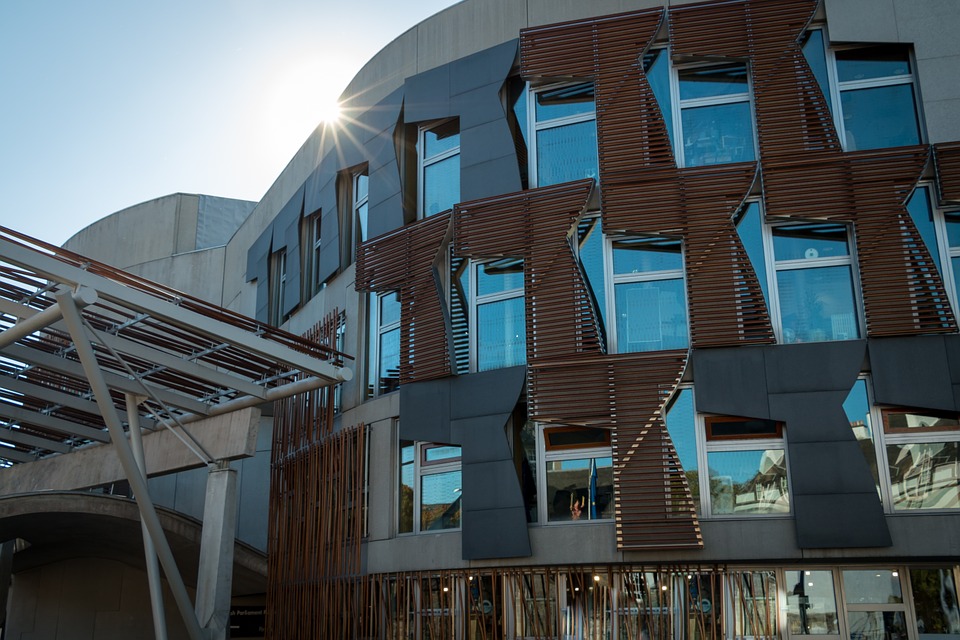
    Scottish Parliament (outside) with partially cloudy sky.

    By Richard Wood

    The appointment of David Cameron to UK foreign secretary via appointment to the House of Lords raises an interesting question about the relationship between the executive and the legislature. Primarily at Westminster but also at Holyrood.

    The big issue in Westminster is the absurdity of the (by convention) only route for people to become ministers who aren’t MPs is through being appointed to the House of Lords. For life. There’s then the issue that these ministers can’t appear before MPs to be held to account. The situation is frankly absurd and in need of reform. Rishi Sunak’s appointment puts a spotlight on this bizarre route to government. If we are to allow people who aren’t legislators to join the executive – and there’s a strong case to allow that to be the case in line with plenty of other democrscies around the world – then we need to fix this bizarre Westminster process.

    READ MORE: By-elections for defecting MSPs: does Wales offer a solution?

    So, what’s the situation in Scotland? Currently, only MSPs can become cabinet secretaries in the Scottish Government. It’s right that most ministers come from the elected Scottish Parliament but with just 129 MSPs, there is a good case for enabling cabinet secretaries to be appointed from outside the legislature. Such a rule would strengthen the diversity of talent within the Scottish Government. But any rule should have democratic accountability.

    Crucially, if we are to go down this road then MSPs appointed to cabinet should be approved by the Scottish Parliament. This would be a similar nominations and vote process to that of the Cabinet of the United States and other democracies, ensuring that such cabinet secretaries are accountable to parliament.

    Furthermore, that accountability should be strengthened by enabling such cabinet secretaries to make statements and answer questions in parliament. MSPs should be able to directly question any and all cabinet secretaries, including those chosen from outside parliament.

    There could even be a limit on the number of people non-MSP cabinet secretaries appointed to ensure that the majority of cabinet members come from the legislature, if that’s a concern.

    This is hardly the most pressing reform that could improve Scottish democracy – Holyrood needs better Proportional Representation, fixed four-year terms and restrictions on second jobs and dual mandates – but reform in this area is worth considering in light of former Prime Minister David Cameron’s appointment to the role of UK Foreign Secretary.

    READ MORE: How proportional are Scottish, Welsh and Northern Irish elections?

    5 reasons to ban MSP-MP dual mandates

    New Zealand and Scotland – proportional but imperfect voting systems

    How proportional are Scottish, Welsh and Northern Irish elections?

    By Richard Wood

    A system of Proportional Representation (PR) is one that ensures that how people vote at the ballot box is reflected in parliament. Unlike Westminster elections, in which the unrepresentative First Past the Post is used system to elect MPs (PR), the Scottish Parliament, Welsh Senedd and Northern Irish Assembly all use a form of PR to elect their legislators.

    However, just because a legislature uses a PR system, doesn’t mean that results are purely proportional. The extent of proportionality depends on the type of system used and various parameters such as district magnitude and the ratio of list seats to single-member electorates if applicable. When it comes to PR elections within the UK, proportionality is a question of extent for these reasons.

    Scottish Parliament

    The Scottish Parliament uses the Additional Member System (AMS) to elect MSPs. Voters get two votes: one for their local constituency representative (using a First Past the Post voting system) and one for the regional list. Constituency votes are counted and seats allocated first. Party votes in each region are then added together to allocate regional MSPs. Crucially, regional MSPs are allocated by taking into account the number of MSPs won by each party in the constituencies to ensure broadly proportional results overall.

    So, how proportional are Scottish Parliament elections?

    One of the best ways to answer this question is to look at the Gallagher Index for Scottish Parliament elections. Simply put, a Gallagher Index for any election is a measure of proportionality that can be used to compare elections across time and between countries. The lower the score for an election, the more proportional it is.

    For context, the Gallagher Index for the 2019 UK General Election was 11.8. Canada also uses First Past the Post and had a score of 13.39 in 2019. These are fairly disproportional results.

    In contrast, the Scottish Parliament’s scores are on average considerably lower – meaning more proportional as we would expect with its Additional Member System. On average, Scottish Parliament elections have a Gallagher Index of 7. The vote in 2016 was 5.60 and 2021 was 7.03.

    Overall, Scottish Parliament elections are pretty proportional but the extend of proportionality is limited by the ratio of constituency to list seats and overhangs. While Holyrood is more representative than Westminster, after almost 25 years of devolution, the Scottish Parliament needs reform.

    READ MORE: 7 reforms to improve the Scottish Parliament

    Welsh Senedd

    The Welsh Parliament also uses the Additional Member System to elect its representatives, however, it’s proportionality is even more limited than Holyrood’s. This is mainly due to the fact that the ratio of constituency to list seats is skewed in favour of the former, with just 20 list seats to 40 list seats. Compare that to the 73 list seats and 56 constituency seats in the Scottish Parliament. Furthermore, Welsh electoral regions each only have four representatives compared to the seven in each Scottish region. With fewer MSs per region, the effective threshold for a party getting representatives is significantly higher than in Scotland.

    When it comes to the Gallagher Index, since the institution’s creation in 1999, the six elections have had an average score of 10.57. The most recent Welsh election had a score of 9.36. In that election, Labour won more than half of the single-member constituencies but the additional element of proportionality ensure a more proportional result. However, if you dig a little deeper you will see that votes don’t match seats too well – Labour won 29 of the 60 seats available on just 31.5% of the regional vote.

    Overall, Welsh elections are more representative than those for Westminster but not as representative as those for Holyrood.

    READ MORE: Time is running out for fair local government in Wales

    Northern Ireland

    Unlike the Scottish Parliament and Welsh Senedd, Northern Irish elections use the Single Transferable Vote to elect MLAs.

    Under STV, the province is divided into multi-member constituencies (with five-members each). Voters rank candidates in order of preference resulting in proportional outcomes overall. Since 1998, there have been seven Northern Ireland Assembly elections with an average Gallagher Index of 4.33. However, the most recent election had a score of 7.80, a high in the modern era under STV.

    Overall, Northern Irish elections are very proportional, and as they use STV they don’t have the problems associated with the Additional Member System.

    READ MORE: Northern Ireland Assembly election – the benefits of Proportional Representation

    Source: Gallagher Indexes by country (Michael Gallagher)

    Rutherglen by-election shows case for a Holyrood recall mechanism

    By Richard Wood

    The confirmation of a by-election in Rutherglen and Hamilton West following a recall petition demonstrates the case for a recall mechanism for MSPs.

    The by-election, which will be held some point after parliament returns from summer recess, is the first to take place in Scotland under the Recall of MPs Act (2015). The most recent Westminster by-election to take place in Scotland was in Airdrie & Shotts in May 2021 when the SNP’s Neil Gray switched from Westminster to Holyrood.

    The by-election in Rutherglen and Hamilton West got the go ahead from constituents following over 10% of them signing a recall petition after sitting MP Margaret Ferrier was suspended from the House of Commons for 30 days.

    READ MORE: Scotland’s STV council elections show England a better way of doing local democracy

    The Recall of MPs Act (2015) empowers constituents to kick out suspsended MPs, with appropriate checks and balances to ensure it doesn’t become a political tool.

    The ability to recall MPs in certain circumstances puts powers in the hands of constituents, allowing MPs to be held accountable for their actions.

    The Scottish Parliament must follow Westminster’s lead and introduce a Recall of MSPs act to strengthen accountability in Scottish democracy.

    READ MORE: 5 reasons to support the Removal from Office and Recall Bill

    The upcoming by-election looks set to be a heated contest between Labour and the SNP. A win for Labour would be hailed as a resurgent moment for the party in Scotland.

    Photo credit: Roger Harris – https://members.parliament.uk/member/4386/portrait (CC BY 3.0)