What electoral reform promises did Scotland’s parties make in their 2021 manifestos?

By Richard Wood

As we await the publication of manifestos from the five parties elected to the Scottish Parliament in 2021, it’s worth taking a look back at what each party said in 2021.

Scottish Greens

The Greens were the first of the five main parties to release their manifesto, launching their plan for Scotland on Wednesday 14 April 2021. The manifesto focused on green issues, restructuring the economy and Scottish independence. It also had a section on “Local democracy and communities” with the party pledging to:

  • Deliver empowered, genuinely local councils (more powers and an overall restructuring)
  • Oppose Ministerial vetoes over local decisions
  • Promote more diverse local representation
  • More local, democratic ownership
  • Additional participatory democracy with citizens assembly to be formalised at both local and national levels

READ MORE: Will the Scottish Parliament change its voting system?

The Scottish National Party (SNP)

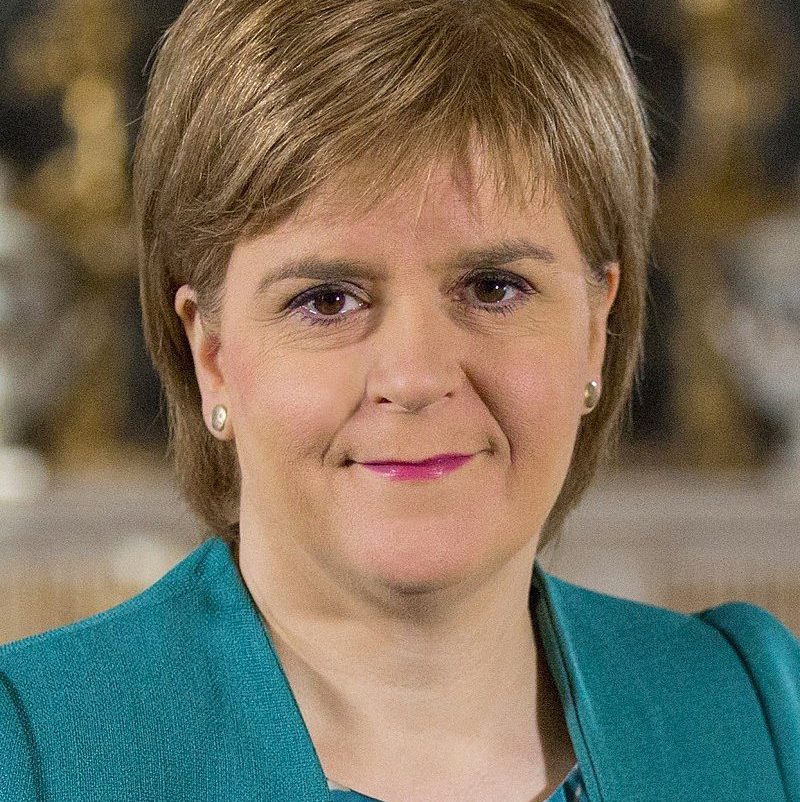
The SNP secured a historic fourth term at Holyrood in 2021, and were second to launch their manifesto (Thursday 15 April 2021). The party pledged to:

  • Create a Citizens’ Assembly for under 16s
  • Extend the entitlement to stand for election to all those entitled to vote
  • Introduce a Local Democracy Bill to further empower local communities and to ensure that decisions are most closest to those who they will impact the most
Scottish Liberal Democrats

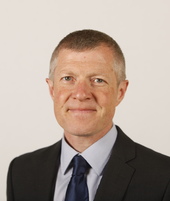
Willie Rennie’s Scottish Liberal Democrats launched their manifesto on Friday 16 April 2021, hoping to build on the five MSPs they won in 2016 but in actual fact lost one seat. In typical Lib Dem fashion party’s 2021 manifesto was full of policies designed to improve Scottish democracy. The party pledged to:

  • Introduce a new fiscal framework to improve council funding, as well as more powers for local councils including the ability to set domestic and business taxation areas
  • Create a New Contempt of Parliament rule so minority governments cannot ignore the Scottish Parliament as a whole
  • Replace the Additional Member System with the Single Transferable Vote for Scottish Parliament elections
  • Return to four-year parliamentary terms
  • Work with other parties to further a culture of respect and use the pandemic experience go make Holyrood more flexible and Family friendly
  • Introduce a recall system for MSPs
  • Strengthen and expand the public’s right to information and introduce a new duty to record so the public can access information on important ministerial meetings
  • Increase usage of Citizens’ Assemblies

Scottish Conservatives and Unionists

The Scottish Conservatives’ launched their own manifesto on Monday 19 April 2021. Their proposal to introduce a recall rule was the most eye-catching of all, but in the end the proposal was flawed and didn’t make it into law. The party proposed to:

  • Introduce a recall rule for MSPs (Mackay’s law) – this would allow the public to re MSPs who have broken the law, grossly undermined trust or failed to contribute to parliament for over six months
  • Retain votes at 16 for all Scottish elections
  • Implement a cross-party commission on improving how the Scottish Parliament operates and to improve Scottish Government scrutiny
  • Explore how to modernise the working practices of the Scottish Parliament to make them more suitable for MSPs with young families
  • Cut the cabinet from 12 to six members and freeze MSP and ministerial pay across the next parliament

READ MORE: Dual mandates ban passed unanimously in Scottish Parliament

Douglas Ross MP (by David Woolfall • CC BY 3.0)

Scottish Labour

Scottish Labour were the last of the main five parties in Scotland to launch their manifesto. Anas Sarwar’s party unveiled their policy priorities on Thursday 23 April and are hoping to take second place from the Scottish Conservatives. The party’s main proposals on Scottish democracy are to:

  • Devolve further powers to Holyrood (borrowing and employment rights)
  • Introduce a Clean Up Holyrood Commission
  • Elect Holyrood committee conveners via the whole Scottish Parliament
  • Give Holyrood committees more powers
  • Further devolve powers to local government
  • Introduce a “Right to Space” to ensure communities have places to meet and funding to build the capacity to participate as active citizens
Source: Scottish Parliament (2017), CC BY 3.0

When will manifestos be published in 2026?

Just one of the six parties expected to win seats at Holyrood this year has published their manifesto. Reform UK unveiled their platform last month alongside their candidates, with many of those candidates no longer in those roles…

Last time, the other five published their manifestos in a tight window mid-April. By the end of April, we will have all major manifesto ahead of the vote on Thursday 7 May.

READ MORE: Reform UK’s manifesto: Malcolm Offord’s party on Scottish democracy

Will the Scottish Parliament change its voting system?

By Richard Wood

Concern is growing ahead of the 2026 election that the result after 7 May will be the most unrepresentative Scottish Parliament vote ever.

Proportionality was one of the founding principles of the design of Scotland’s Additional Member System. It’s not perfect, but since 1999 seats have broadly matched votes. Now, due to a combination of the imbalance of constituency to list seats (73 to 56) and one party expected to do well in constituencies despite falling well short of a majority of the constituency vote, the next Scottish Parliament is likely to fall well short of the proportional standards expected.

READ MORE: Scotland must follow Wales on four-year terms

Are MSPs able to abolish the Additional Member System?

If election projections come true, the next parliament must seize the moment and find consensus to fix Holyrood’s creaking voting system.

The way to do this is through a Bill passed with a supermajority in Holyrood. That’s two-thirds of MSPs. Therefore any change requires broad consensus from multiple parties to meet the magic number of 86 MSPs.

READ MORE: Yet another poll shows Scotland on track for an unrepresentative election due to AMS

Is change likely?

The possibility of electoral reform in Scotland depends on what happens after the election. The bigger the disproportionality, the more pressure there will be on MSPs and ministers to act.

The SNP, Lib Dems and Scottish Greens all support Proportional Representation. And together, they are likely to have a two-thirds majority, but finding agreement on the type of reform will be the challenge – not to mention conflicts in the SNP about maintaining the status-quo for their own advantage versus their commendable party stance on the issue.

There are certainly issues needing ironed out. But there is precedent for this in the devolution era. In Wales, Labour and Plaid Cymru came together to abolish the Additional Member System ahead of their own 2026 vote, and in Scotland, the Lib Dems convinced their coalition partners Labour to introduce STV for Scottish local government.

Holyrood is turning 30 in the next parliament. It’s time to review Scotland’s democratic foundations and reform the voting system once and for all.

READ MORE: Dual mandates ban by 2026 backed by the Scottish Government

The Scottish Parliament should introduce a recall system for MSPs

When it comes to democratic processes, there’s a lot that Westminster can learn from Holyrood but there’s one really obvious improvement Holyrood can make by learning from Westminster.

Despite being stuck in the past, with its unrepresentative voting system, the undemocratic House of Lords and much more, the introduction of a recall process at Westminster was a welcome innovation that has made British democracy more accountable.

Westminster’s recall system was introduced in 2015 by the coalition government. The Recall of MPs Act (2015) provides three circumstances where a recall petition can come into force. If any MP recieves a custodial prison sentence, is suspended from the House or is convicted for providing false or misleading expenses claims, then a recall petition is triggered.

If this happens to an MP, their constituents will be able to sign a petition and if 10% of constituents sign in the set time period, then a by-election will be triggered.

There is no similar provision for MSPs in Scotland despite calls for a recall mechanism during the last parliament.

Only two parties called for the introduction of a recall process during the last election – the Lib Dems and the Conservatives. Here’s what they said:

Scottish Liberal Democrats“Continue to call for the introduction of a recall system for elected
representatives.”

Scottish Conservatives “At Westminster, there are clear rules around recall, allowing a by-election to take place in certain circumstances, but no such rules exist for MSPs. We will introduce Mackay’s Law, allowing the
public to recall MSPs who have broken the law, grossly undermined trust or cailed to contribute to Parliament for more than six months. This will mean that Scotland will never again face the scandal of a disgraced former minister remaining an MSP, earning over £100,000 and failing to represent his constituents.”

READ MORE: Tory MSP calls for better Proportional Representation at Holyrood

That there have been six years since the introduction of the recall process at Westminster gives an opportunity to learn from the legislation in London – as well as from elsewhere.

The House of Commons system ensures that constituents can’t just recall politicans for any reason. There are clearly defined routes to recall – sensibly setting boundaries although there is room for expansion – that can be adapted for the Scottish Parliament.

The case for a recall system is as simple as it is obvious. MSPs who bring the Scottish Parliament into disrepute have no place in the chamber. The exact reasons that would lead to a recall petition (and potential by- election) would need defined but those outlined for MPs at Westminster, as well as the detailed reasons offered in the Scottish Conservative manifesto clearly highlight the need for a such a system. The fact that MSPs can break the law or not turn up to work and keep their job is a democratic outrage. The Scottish Parliament needs to learn from Westminster and adopt a recall process.

Scottish democracy needs an upgrade and the introduction of a recall system would help do just that.

READ MORE: 5 reasons to ban dual mandates

However, there is one practical stumbling block to the introduction of a recall rule. It is worth considering the two different types of MSP at Holyrood (although Upgrade Holyrood supports switching from AMS to a more representative electoral system). Recall would ultimately lead to a by-election for any MSP elected in a single seat constituency, however, the route to recall would be more complex for a regional MSP.

There are some solutions but the answer is far from obvious:

A region-wide by-election (a fascinating prospect but one that throws up questions about the very nature of the Holyrood voting system).

A decision taken by the party that the MSP belongs to over whether to remove the MSP and let the next candidate in the list taking up the post (however, this would give a significant amount of power to parties and take away the electorate’s option to have their say).

A parliamentary vote of confidence. If the MSP loses then they would be expelled from parliament. The next candidate on that party’s list would then take their seat. This might be the most sensible option but there would need to be significant checks to ensure that it wouldn’t be abused.

The correct answer to this is unclear (and there would be similar questions if Scotland adopts the Single Transferable Vote of an Open List PR system with levelling seats), however, introducing a recall mechanism would ultimately improve Scottish democracy.

It’s time to introduce a recall rule. Let’s learn from Westminster and adopt a recall system to improve Scottish democracy.

READ MORE: 12 reasons why the UK needs Proportional Representation

READ MORE: 8 Scottish Liberal Democrat 2021 manifesto pledges to improve democracy

8 Liberal Democrat manifesto pledges to improve Scottish democracy

By Richard Wood

Willie Rennie’s Scottish Liberal Democrats launched their manifesto on Friday 16 April with a key campaign pledge of putting the recovery first.

The party served in coalition government with Scottish Labour after the first two Holyrood elections. Their second stint in coalition led to local government reform in the shape of the Single Transferable Vote replacing First Past the Post voting system for council elections. This was a big win for democracy campaigners that would not have been possible without the party.

In 2007 the Lib Dems stayed out of government as the SNP took charge and in 2011 they dropped to just five MSPs due to backlash against the Westminster coalition. Five years later, the party kept steady with five MSPs and are going into the election with the hope of building on that total.

READ MORE: Scottish Labour MSP “sympathetic” to Holyrood electoral reform

Manifesto pledges

The party’s manifesto is brimming with policies designed to improve Scottish democracy. The party has pledged to:

  1. Introduce a new fiscal framework to improve council funding, as well as more powers for local councils including the ability to set domestic and business taxation areas
  2. Create a New Contempt of Parliament rule so minority governments cannot ignore the Scottish Parliament as a whole
  3. Replace the Additional Member System with the Single Transferable Vote for Scottish Parliament elections
  4. Return to four-year parliamentary terms
  5. Work with other parties to further a culture of respect and use the pandemic experience go make Holyrood more flexible and family friendly
  6. Introduce a recall system for MSPs
  7. Strengthen and expand the public’s right to information and introduce a new duty to record so the public can access information on important ministerial meetings
  8. Increase usage of Citizens’ Assemblies

Analysis

The party’s manifesto commits the Scottish Lib Dems to a number of pledges that chime with the main focuses of Upgrade Holyrood.

Replacing the Additional Member System with a fairer alternative is a welcome pledge as is a return to four-year parliamentary terms. The Scottish Lib Dems are the only main party with these pledges but the SNP support STV in principle so electoral reform in that shape could be on the table. Although it is worth noting that such a change would require a two-thirds majority.

Using lessons learnt from the pandemic to make Holyrood more flexible is also welcome as it hints at the continuance of a hybrid parliament even when we return for normality. The Scottish Conservatives have also hinted at this in their manifesto. Such a change would be beneficial for constituents as well as the MSPs representing them.

Further citizens’ asemblies and a recall rule for MSPs are also welcome as they would empower citizens and improve accountability of the legislature.

The Scottish Liberal Democrat 2021 election manifesto can be viewed here.

READ MORE: These 5 reforms will improve Scottish democracy

Scottish election manifestos: democratic reform pledges compared

Scotland’s five main political parties have unveiled their manifestos for the 2021 Scottish Parliament election. Upgrade Holyrood is committed to improving Scottish representative democracy but what have each of the main political parties pledged to do on this issue?

Scottish Greens

The Greens were the first of the five main parties to release their manifesto, launching their plan for Scotland on Wednesday 14 April. The manifesto focuses on green issues, restructuring the economy and Scottish independence. It also has a section on “Local democracy and communities” with the party pledging to:

  • Deliver empowered, genuinely local councils (more powers and an overall restructuring)
  • Oppose Ministerial vetoes over local decisions
  • Promote more diverse local representation
  • More local, democratic ownership
  • Additional participatory democracy with citizens assembly to be formalised at both local and national levels

The Scottish National Party (SNP)

The SNP are expected to remain the largest party at Holyrood and were second to launch their manifesto (Thursday 15 April 2021). The party is pledging to:

  • Create a Citizens’ Assembly for under 16s
  • Extend the entitlement to stand for election to all those entitled to vote
  • Introduce a Local Democracy Bill to further empower local communities and to ensure that decisions are most closest to those who they will impact the most

Scottish Liberal Democrats

Willie Rennie’s Scottish Liberal Democrats launched their manifesto on Friday 16 April, hoping to build on the five MSPs they won in 2016. The party’s manifesto is brimming with policies designed to improve Scottish democracy. The party has pledged to:

  • Introduce a new fiscal framework to improve council funding, as well as more powers for local councils including the ability to set domestic and business taxation areas
  • Create a New Contempt of Parliament rule so minority governments cannot ignore the Scottish Parliament as a whole
  • Replace the Additional Member System with the Single Transferable Vote for Scottish Parliament elections
  • Return to four-year parliamentary terms
  • Work with other parties to further a culture of respect and use the pandemic experience go make Holyrood more flexible and Family friendly
  • Introduce a recall system for MSPs
  • Strengthen and expand the public’s right to information and introduce a new duty to record so the public can access information on important ministerial meetings
  • Increase usage of Citizens’ Assemblies

Scottish Conservatives and Unionists

Scottish Conservatives’ launched their own manifesto on Monday 19 April. The proposal to introduce a recall rule is the most eye-catching of all. The party proposes to:

  • Introduce a recall rule for MSPs (Mackay’s law) – this would allow the public to re MSPs who have broken the law, grossly undermined trust or failed to contribute to parliament for over six months
  • Retain votes at 16 for all Scottish elections
  • Implement a cross-party commission on improving how the Scottish Parliament operates and to improve Scottish Government scrutiny
  • Explore how to modernise the working practices of the Scottish Parliament to make them more suitable for MSPs with young families
  • Cut the cabinet from 12 to six members and freeze MSP and ministerial pay across the next parliament
Douglas Ross MP (by David Woolfall • CC BY 3.0)

Scottish Labour

Scottish Labour were the last of the main five parties in Scotland to launch their manifesto. Anas Sarwar’s party unveiled their policy priorities on Thursday 23 April and are hoping to take second place from the Scottish Conservatives. The party’s main proposals on Scottish democracy are to:

  • Devolve further powers to Holyrood (borrowing and employment rights)
  • Introduce a Clean Up Holyrood Commission
  • Elect Holyrood committee conveners via the whole Scottish Parliament
  • Give Holyrood committees more powers
  • Further devolve powers to local government
  • Introduce a “Right to Space” to ensure communities have places to meet and funding to build the capacity to participate as active citizens

Analysis

Upgrade Holyrood is committed to improving representative democracy in Scotland. This blog supports a better voting system for the Scottish Parliament, an end to dual mandates and restrictions on second jobs for MSPs, a return to four-year parliamentary terms, more local democracy and a permanent hybrid parliament even after the pandemic ends, as well as more deliberative democracy where appropriate.

Only the Scottish Liberal Democrats commit to upgrading Scotland’s Additional Member System by replacing it with the Single Transferable Vote. However, it is worth noting that the Greens and the SNP do favour STV as a fairer alternative to AMS.

The Scottish Lib Dems are also the only party committing to a return to four-year parliamentary terms in order to improve frequent democratic accountability.

No parties have pledged to abolish dual mandates although as shown by dual mandate restrictions for Wales and Northern Ireland, this was done by the House of Commons highlighting that this would be a responsibility of Westminster. Therefore such a pledge would likely be out of the scope for manifestos for the Scottish Parliament. That said, the Scottish Lib Dems oppose dual mandates and the SNP’s Alyn Smith MP has proposed a bill on banning dual mandates from Westminster.

The parties all generally pledge to give more powers to local government or reform the way local government operates, which is most welcome, however, this varies from party to party.

Other welcome commitments include recall rules for MSPs in extreme cases (as proposed by the Lib Dems and the Conservatives), as well as more deliberative democracy in the form of citizens assemblies (the Lib Dems, Greens and SNP).

Overall, there are a range of welcome policy proposals from across the parties but whether they will be delivered remains to be seen.