
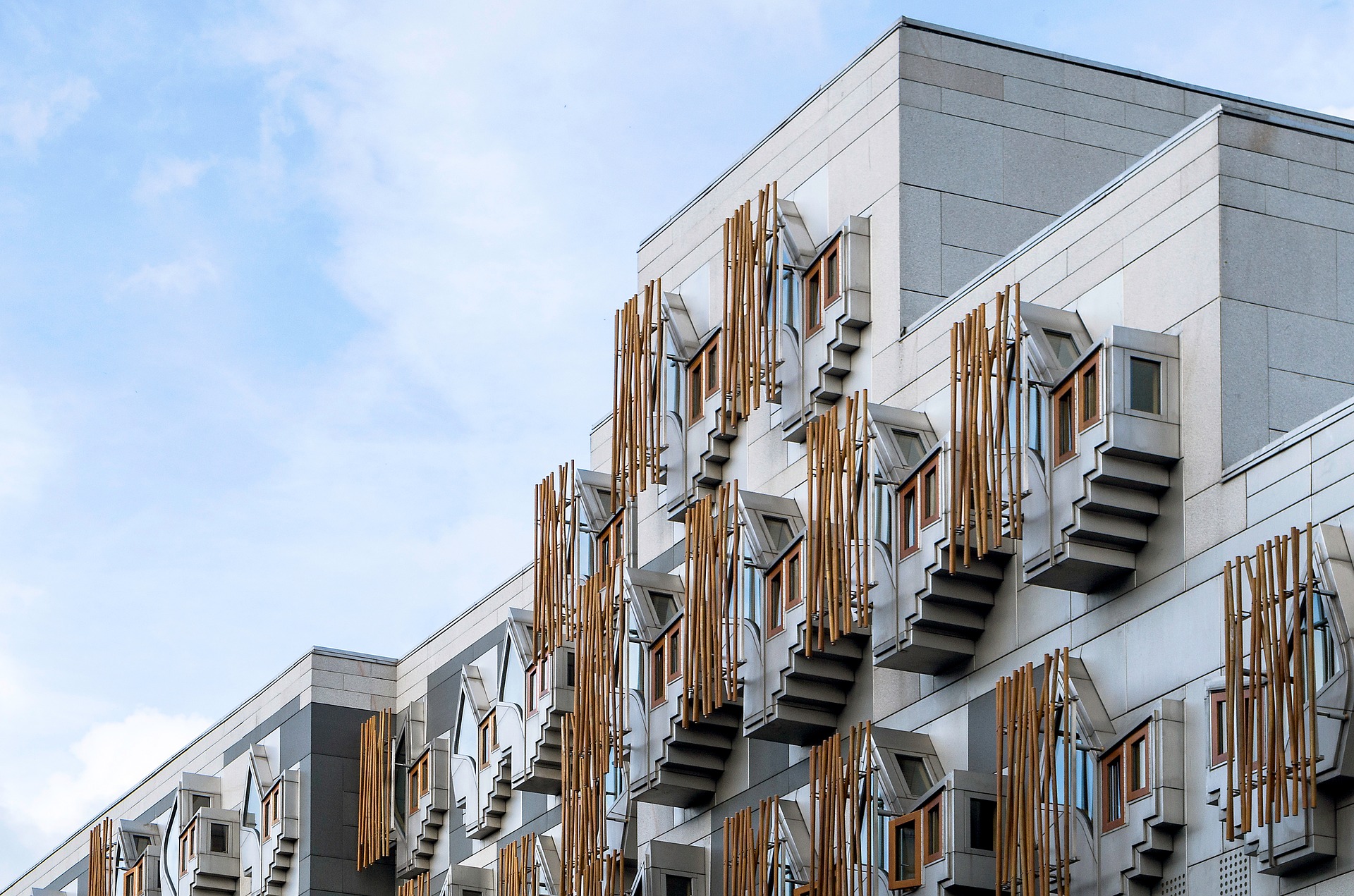
What does Reform UK’s 2026 manifesto say on reforming Holyrood and the constitution?

By Richard Wood

Reform UK launched their 2026 manifesto on Thursday 19 March ahead of the Scottish Parliament election on May.

Polling suggests the party has a chance of coming third or even second in the upcoming election.

Former Conservative minister Malcolm Offord, now Reform UK’s Scottish leader launched the manifesto alongside Nigel Farage.

READ MORE: What are the Scottish Parliament’s new dual mandate rules for MSPs?

What does the party pledge on reforming the Scottish Parliament?

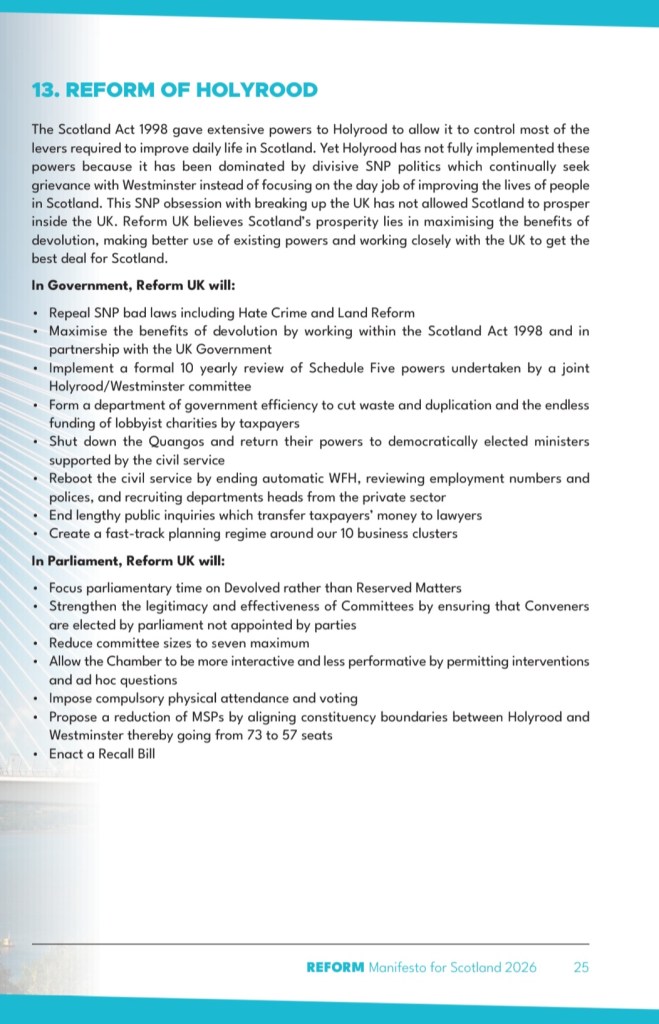
  1. REFORM OF HOLYROOD


In Government, Reform UK will:

The Scotland Act 1998 gave extensive powers to Holyrood to allow it to control most of the levers required to improve daily life in Scotland. Yet Holyrood has not fully implemented these powers because it has been dominated by divisive SNP politics which continually seek grievance with Westminster instead of focusing on the day job of improving the lives of people
in Scotland. This SNP obsession with breaking up the UK has not allowed Scotland to prosper inside the UK. Reform UK believes Scotland’s prosperity lies in maximising the benefits of devolution, making better use of existing powers and working closely with the UK to get the
best deal for Scotland.


Repeal SNP bad laws including Hate Crime and Land Reform

Maximise the benefits of devolution by working within the Scotland Act 1998 and in partnership with the UK Government

Implement formal 10 yearly review of Schedule Five powers undertaken by a joint
Holyrood/Westminster committee
Form a department of government efficiency to cut waste and duplication and the endless funding of lobbyist charities by taxpayers

Shut down the Quangos and return their powers to democratically elected ministers
supported by the civl service

Reboot the civil service by ending automatic WFH, reviewing employment numbers and
polices, and recruiting departments heads from the private sector

End lengthy public inquiries which transfer taxpayers’ money to lawyers

Create a fast-track planning regime around our 10 business clusters

In Parliament, Reform UK will:

Focus parliamentary time on Devolved rather than Reserved Matters

Strengthen the legitimacy and effectiveness of Committees by ensuring that Conveners
are elected by parliament not appointed by parties

Reduce committee sizes to seven maximum

Allow the Chamber to be more interactive and less performative by permitting interventions and ad hoc questions

Impose compulsory physical attendance and voting

Propose a reduction of MSPs by aligning constituency boundaries between Holyrood and Westminster thereby going from 73 to 57 seats

Enact a Recall Bill
READ MORE: Reform UK’s manifesto: Malcolm Offord’s party on Scottish democracy

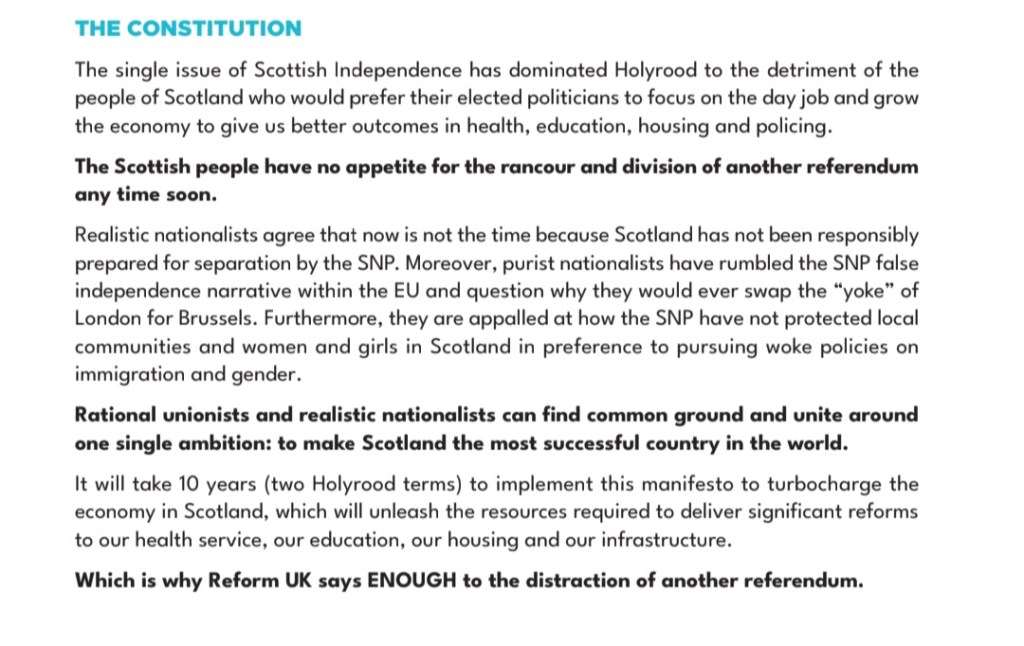
What has the party said on the constitution?

The single issue of Scottish Independence has dominated Holyrood to the detriment of thepeople of Scotland who would prefer their elected politicians to focus on the day job and grow the economy to give us better outcomes in health, education, housing and policing.

The Scottish people have no appetite for the rancour and division of another referendumany time soon.

Realistic nationalists agree that now is not the time because Scotland has not been responsibly prepared for separation by the SNP. Moreover, purist nationalists have rumbled the SNP falseindependence narrative within the EU and question why they would ever swap the “yoke” of London for Brussels. Furthermore, they are appalled at how the SNP have not protected local communities and women and girls in Scotland in preference to pursuing woke policies onimmigration and gender.

Rational unionists and realistic nationalists can find common ground and unite aroundone single ambition: to make Scotland the most successful country in the world.

It will take 10 years (two Holyrood terms) to implement this manifesto to turbocharge theeconomy in Scotland, which will unleash the resources required to deliver significant reformsto our health service, our education, our housing and our infrastructure.Which is why Reform UK says ENOUGH to the distraction of another referendum.
READ MORE: Yet another poll shows Scotland on track for an unrepresentative election due to AMS
Reform UK’s manifesto: Malcolm Offord’s party on Scottish democracy

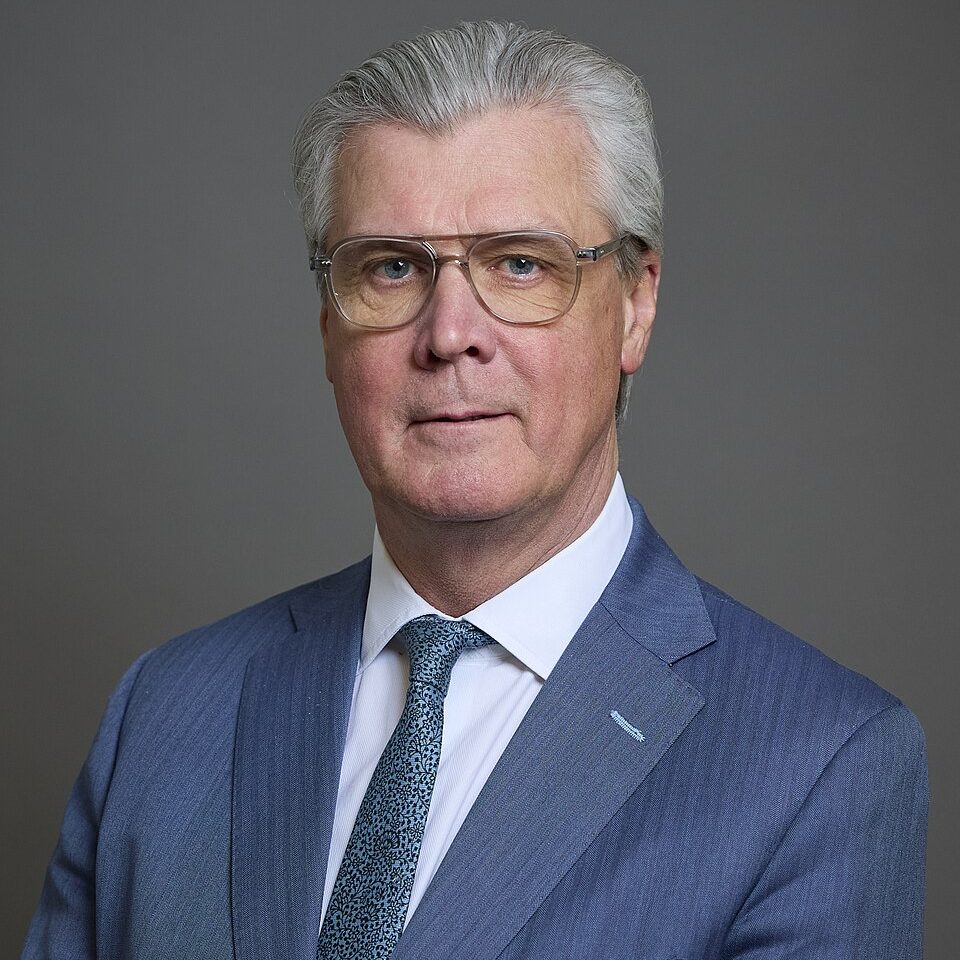
Malcolm Offord, leader of Reform UK in Scotland, poses for a formal portrait.

By Richard Wood

Reform UK is the first of Scotland’s six main parties to launch a manifesto ahead of the Scottish Parliament election on 7 May.

Its recently appointed leader Malcolm Offord, who defected from the Conservatives earlier this year, unveiled the document on Thursday 19 May. The party also revealed its candidates for the election.

The manifesto includes a series of pledges relating to democracy and the constitution. While there are some welcome ideas, notably a recall rule for MSPs, overall the party’s pledges are not right for improving Scottish democracy — and in some cases deeply troubling. Not to mention, there is a considerable lack of detail on numerous pledges and what they will mean in practice.

Here’s what Nigel Farage’s party wants to see on the issue of democracy in Scotland.

1. Reducing the number of MSPs

The manifesto includes a proposal to reduce the number of MSPs by linking Holyrood constituency boundaries with Westminster, which would cut the number of constituency MSPs from 73 to 57 seats. This would leave a total of 113 MSPs if list MSPs were all retained.

While this could arguably increase proportionality at Holyrood by addressing the imbalance of constituency seats to list seats, that is clearly not the purpose here.

Instead, it appears that the intent of this is to weaken Holyrood; the Scottish Parliament has gained significant powers in recent years, and if anything, it should increase its number of MSPs alongside electoral reform to improve proportionality.

READ MORE: New Zealand and Scotland – proportional but imperfect voting systems

2. A recall rule

The party proposes a recall rule for MSPs, something that has existed in Westminster now for over a decade under a very specific set of circumstances.

A similar process is being established in Wales.

If designed well, a recall rule is welcome. But there is no detail on how such a rule would operate in Malcolm Offord’s manifesto.

3. Cutting Quangos

The manifesto puts the party’s support behind cutting Quangos, with the intention of returning “powers to democratically elected ministers supported by the civl service”.

While there is possibly some potential for valid savings and spending money better elsewhere, the detail of what this would mean is far from clear.

READ MORE: Scotland’s new MSPs shouldn’t have to pledge allegiance to the King

4. Devolved issues focus

The party says it would focus parliamentary time on devolved rather than reserved matters. While it’s difficult to calculate the exact figures, the vast majority of time spent in the Chamber at Holyrood is certainly focused on devolved matters, and rightly so.

But there’s also a place for focusing some time on reserved issues. It would be an odd spectacle for ministers and MSPs not to address matters of UK-wide and worldwide importance on some level.

READ MORE: Will the Scottish Parliament change its voting system?

5. Committee reform

The party supports having committee Conveners elected by MSPs rather than appointed by parties and reducing committee sizes to seven.

Ensuring Conveners are elected could strengthen accountability. As for reducing committee sizes, there could be practical benefits of this, however, this would reduce diversity of parties represented on committees. Not to mention this is probably a consequence of the party’s pledge to cut MSP numbers.

READ MORE: Dual mandates ban passed unanimously in Scottish Parliament

6. Devolution reviews

The party also pledges to review devolved powers every ten years. This is deeply worrying and adds to concerns from Reform’s plans to cut MSP numbers.

Devolution must be protected and promoted against these threats. The Scottish Parliament has its faults, yes, but those should be fixed to strengthen its foundations rather than exploited to undermine it.

7. No to independence

Lastly, the party has reaffirmed its commitment to the union, stating firm opposition to independence.

What about the other parties?

The SNP, Scottish Labour, Scottish Conservatives, Scottish Greens and Scottish Liberal Democrats are expected to publish their respective manifestos in the coming weeks.

Upgrade Holyrood will publish similar articles in the coming weeks — outlining each party’s stance on democracy.

IMAGE: Attribution: © House of Lords / photography by Roger HarrisCreative Commons Attribution 3.0 Unported.

READ MORE: Yet another poll shows Scotland on track for an unrepresentative election due to AMS

The full manifesto is available here.