
New Scottish poll shows why it’s time to ditch Holyrood’s voting system

By Richard Wood

The latest poll from Ipsos shows why it’s time to ditch the Additional Member System used to elect MSPs.

The company’s latest survey grabbed the headlines for placing Reform second, behind the SNP, on the constituency vote. Neither Nigel Farage’s rising party, nor UKIP before it, have even won seats at Holyrood so this result would be a seismic shift in political behaviour.

However, beneath the headlines of Reform’s surge, the polling numbers alongside seat projections tell a different story. One of a creaking electoral system past its best.

The poll puts the SNP on 35% and 28% for constituency and list vote shares respectively. According to projections by Ballot Box Scotland, that is estimated to give the party 60 seats. That’s almost 47% of seats available.

The difference is staggering. Under AMS where seats are meant to match list vote share, BBS projects that the party would likely win around 40 seats. That’s still above the 28% of seats they would be entitled to under a fully proportional system (usual caveats about different voting systems impacting voting intention).

The biggest difference here is with the SNP. The party has lost significant support since 2021 but benefits from a fragmented unionist vote, with four parties competing for anti-independence voters – namely the Lib Dems, Labour, Conservatives and Reform.

BBS projects Scottish Labour would win 19 seats if Scotland voted like this. That’s 4 fewer than if a more proportional AMS was used (23).

Reform lose out the most, projected to win 6 short of the 23 they would win in a “better AMS”.

The Greens are projected to win 17 seats (AMS ideal: 21), the Conservatives 11 (AMS ideal: 14) and the Lib Dems 5 (compared to 8 under AMS ideal).

READ MORE: Dual mandates ban passed unanimously in Scottish Parliament

This result would mark a major shift in Scottish party politics, and a major decline in support for the Westminster duopoly. But that change risks not being fully shown in terms of seats.

Next year marks 27 years of devolution and the sixth Scottish election. Wales has reviewed and changed its fairly disproportional voting system for something somewhat better. Scotland’s sixth parliament should legislate to do the same.

READ MORE: Scotland’s STV council elections show England a better way of doing local democracy

The risk of 2021 was Alex Salmond’s Alba gaming the system to win a disproportionate independence supermajority. As we know, that outcome never emerged. This time, the threat of a seriously disproportionate election result comes from something much more likely. If the results in May look something like this, let’s hope they’re a wake-up call to our new legislators.

By-elections for defecting MSPs: does Wales offer a solution?

By Richard Wood

Edinburgh Eastern MSP Ash Regan defected from the SNP to Alex Salmond’s Alba party on Saturday 24 October 2023. This immediately prompted an age-old question, one that was also asked following the surprise defection of Lisa Cameron MP to the Conservatives earlier in the month. How do we solve a problem like defecting parliamentarians?

An obvious solution is a by-election – one that’s often called for by the party that an MSP or MP has left. How dare these representatives defect from the party banner that they were elected under? – so the argument goes. That’s one answer but it quite quickly conflicts with reality: an MSP wanting to leave their party but keep their position as an elected politician (which let’s be honest they’d be unlikely to want to give up) results in them being trapped in a party machine they oppose, creating an inherent conflict of interest. Maybe our politicians should have stronger principles in general and under such a system do the right thing and resign, but realpolitik suggests that’s not the case. What’s more, politicians are human – like voters they are allowed to change their minds.

READ MORE: 7 reforms to improve the Scottish Parliament

The immediate triggering of a by-election is one possible answer for constituency MSPs (and MPs) but what about list MSPs? By-elections are impossible in this case, so the answer is they would just have to resign and let the next person on the list move up. Again we hit the same problem of political ambition and MSPs. Of course, Holyrood’s voting system needs replaced but until then this problem remains.

So what’s the answer? It’s not perfect, but Wales offers a solution.

The compromise position is a mechanism that allows MSPs to show dissatisfaction with their party but doesn’t insult the voters that elected them (to an extend at least).

One of the measures likely to be adopted by the Welsh Senedd, according to the BBC, is a possible answer. Cardiff is introducing a ban on MSs defecting from one party to another. However, they will be allowed to leave and sit as independents.

READ MORE: Time is running out for fair local government in Wales

Had these rules been in place in the Scottish Parliament, Ash Regan would have been allowed to leave the SNP but she would have to sit as an independent not an Alba MSP. Of course, there’d be nothing stopping her declaring allegiance to Alba and attending their conference committed to championing their values in parliament. But it might be the best solution to a perennial problem.

While there’s no right answer that squares every circle, this solution strikes a fair balance between party and individual interests and would maintain some credibility with voters. The Scottish Parliament is overdue reform. When reform happens, this should be considered.

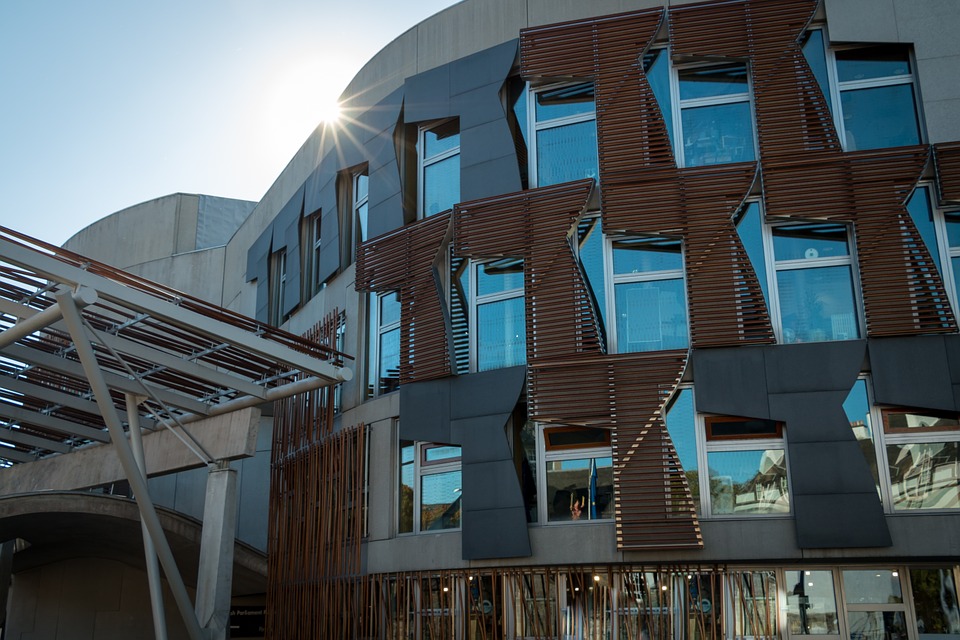
IMAGE SOURCE: Scottish Government (2021) (CC 2.0 generic license)