New Scottish poll shows why it’s time to ditch Holyrood’s voting system

By Richard Wood

The latest poll from Ipsos shows why it’s time to ditch the Additional Member System used to elect MSPs.

The company’s latest survey grabbed the headlines for placing Reform second, behind the SNP, on the constituency vote. Neither Nigel Farage’s rising party, nor UKIP before it, have even won seats at Holyrood so this result would be a seismic shift in political behaviour.

However, beneath the headlines of Reform’s surge, the polling numbers alongside seat projections tell a different story. One of a creaking electoral system past its best.

The poll puts the SNP on 35% and 28% for constituency and list vote shares respectively. According to projections by Ballot Box Scotland, that is estimated to give the party 60 seats. That’s almost 47% of seats available.

The difference is staggering. Under AMS where seats are meant to match list vote share, BBS projects that the party would likely win around 40 seats. That’s still above the 28% of seats they would be entitled to under a fully proportional system (usual caveats about different voting systems impacting voting intention).

The biggest difference here is with the SNP. The party has lost significant support since 2021 but benefits from a fragmented unionist vote, with four parties competing for anti-independence voters – namely the Lib Dems, Labour, Conservatives and Reform.

BBS projects Scottish Labour would win 19 seats if Scotland voted like this. That’s 4 fewer than if a more proportional AMS was used (23).

Reform lose out the most, projected to win 6 short of the 23 they would win in a “better AMS”.

The Greens are projected to win 17 seats (AMS ideal: 21), the Conservatives 11 (AMS ideal: 14) and the Lib Dems 5 (compared to 8 under AMS ideal).

READ MORE: Dual mandates ban passed unanimously in Scottish Parliament

This result would mark a major shift in Scottish party politics, and a major decline in support for the Westminster duopoly. But that change risks not being fully shown in terms of seats.

Next year marks 27 years of devolution and the sixth Scottish election. Wales has reviewed and changed its fairly disproportional voting system for something somewhat better. Scotland’s sixth parliament should legislate to do the same.

READ MORE: Scotland’s STV council elections show England a better way of doing local democracy

The risk of 2021 was Alex Salmond’s Alba gaming the system to win a disproportionate independence supermajority. As we know, that outcome never emerged. This time, the threat of a seriously disproportionate election result comes from something much more likely. If the results in May look something like this, let’s hope they’re a wake-up call to our new legislators.

How many MSPs are retiring in 2026? Is it a record number?

By Richard Wood

UPDATE: There are now 35 MSPs stepping down in 2026 following the announcement by Deputy First Minister Kate Forbes.

The late June announcement of Presiding Officer Alison Johnstone’s retirement from Holyrood means that 34 MSPs are stepping down from the Scottish Parliament in 2026.

This figure matches the number of retiring MSPs in 2021. That was the record-high number, meaning that any further announcements will ensure that 2026 has the highest number of retiring MSPs in Holyrood history. Considering the last retirement announcements for 2021 were in March that year, it’s almost certain that 2026 will mark a new record.

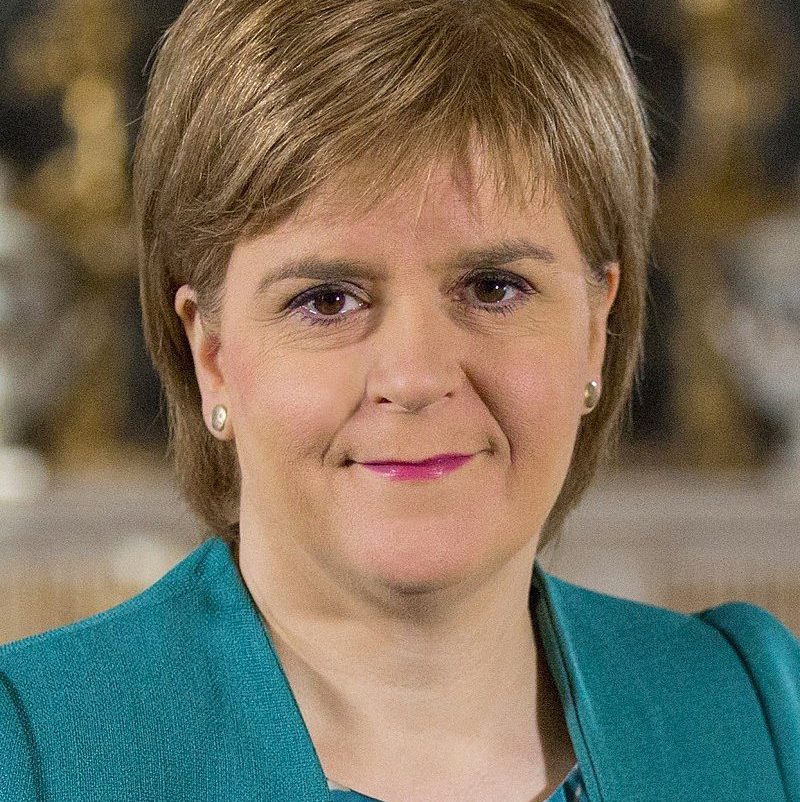
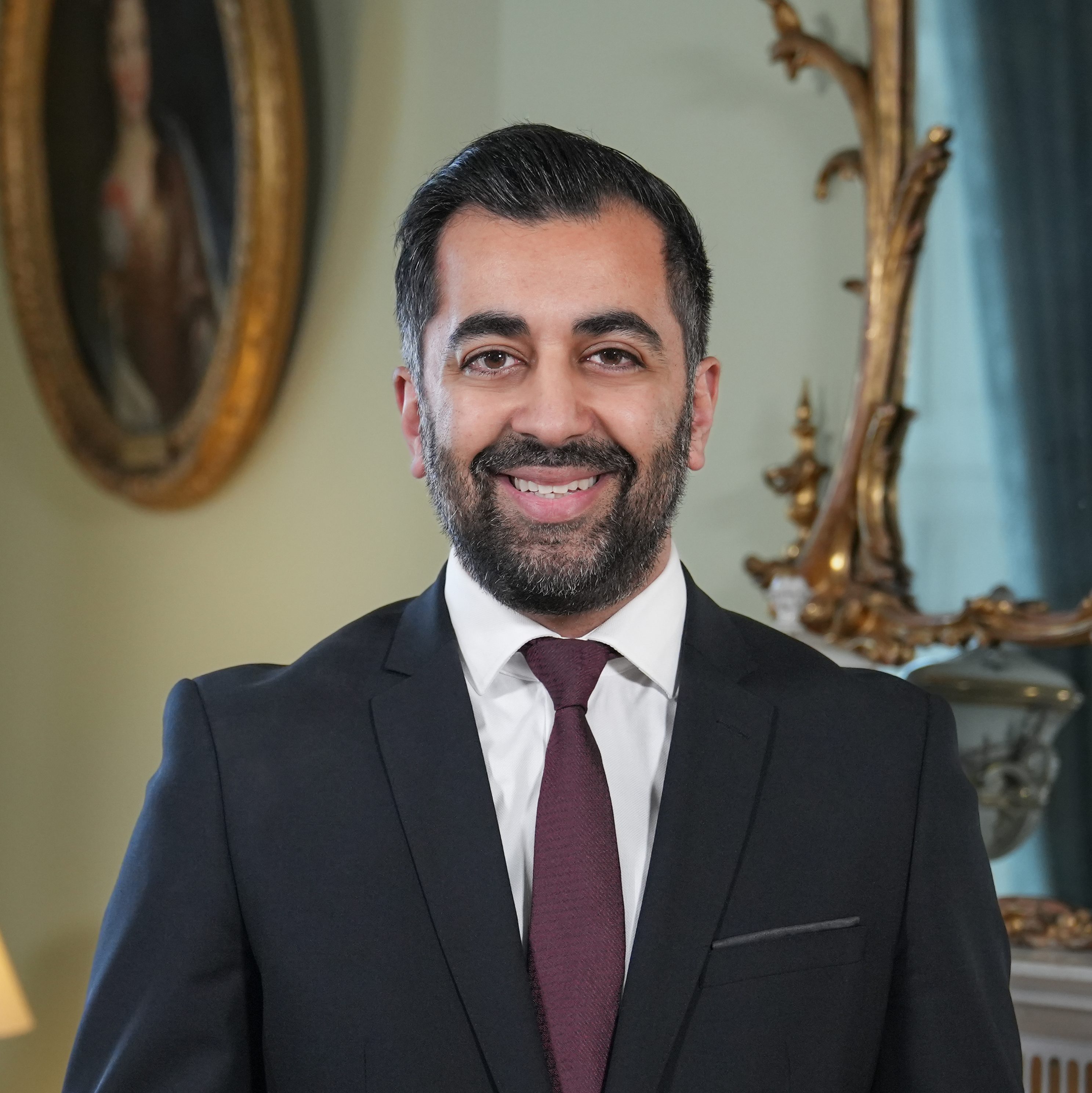
That’s perhaps not surprising, with the number of long-standing MSPs from the so-called 1999 club calling it a day, including Nicola Sturgeon, Richard Lochead, Rhoda Grant, Fiona Hyslop and Christine Graeme all stepping down. But it also includes newer MSPs including Humza Yousaf, Mairi Gougeon and Beatrice Wishart.

Age plays a role for some of these MSPs in both categories. As does arguably scandal, with Michael Matheson set to retire as well. Then there’s the wholly valid reason of some MSPs saying they want to spend time raising their young families, away from the demanding nature of a parliamentary role.

READ MORE: Minority mayors and unrepresentative local government: England can learn from Scottish councils

How many MSPs have stood down at each election?

So far, the total for 2026 is 34 MSPs (as of 3 July 2025). This matches the previous high of 34 in 2021, which included former Scottish Conservative leader Ruth Davidson.

And back in 2016, there were 25 MSPs who stood down (23 who retired and 2 who were deselected by their parties). Among the retirees at this election were former First Minister Alex Salmond, former Scottish Conservative leader Annabelle Goldie and the Presiding Officer Tricia Marwick.

A similar number stepped down at the election before. Among the 20 who retired in 2011 were former Deputy First Minister Nichol Stephen and former Scottish Green co-convenor.

Just 13 MSPs retired in 2007 including independent MSP Dennis Canavan and former Deputy First Minister Jim Wallace.

And in 2003, there were 10 MSPs who stepped down including our shortest-serving First Minister Henry McLeish and Westminster’s 1967 Hamilton by-election winner, the SNP’s Winnie Ewing.

Each year the number has gone up.

  • 2026 – 34*
  • 2021 – 34
  • 2016 – 25
  • 2011 – 20
  • 2007 – 13
  • 2003 – 10
  • 1999 – N/A

*As of July 2025.

READ MORE: Dual mandates ban passed unanimously in Scottish Parliament

Which MSPs are stepping down in 2026?

As of late June 2026, the following 32 MSPs are stepping down:

SNP

Annabelle Ewing, Audrey Nicoll, Bill Kidd, Christine Grahame, Elena Witham, Evelyn Tweed, Fergus Ewing, Fiona Hyslop, Gordon MacDonald, Graeme Dey, Humza Yousaf, James Dornan, Joe FitzPatrick, Mairi Gougeon, Michael Matheson, Michelle Thomson, Natalie Don-Innes, Nicola Sturgeon, Richard Lochead, Rona Mackay, Ruth Maguire, Shona Robinson, Willie Coffey.

Conservatives

Douglas Ross, Edward Mountain, Liz Smith, Maurice Golden, Oliver Mundell.

Labour

Alex Rowley, Richard Leonard.

Liberal Democrats

Beatrice Wishart.

Greens

Alison Johnstone.

Independents

John Mason.

What about 2031?

We’re still along way from the election after 2026. Much will depend on the make-up of the new parliament – with big questions still to be answered like how well will Reform do next year? Will there be a coalition or a confidence and supply arrangement? And if John Swinney emerges as First Minister will he step down before 2031 (when he’ll be 67)?

But with so many of the 1999 club now having left Holyrood’s benches, there’s a decent chance that 2031 will be the first election where the number of retiring MSPs is lower than the previous one.

READ MORE: Scotland’s STV council elections show England a better way of doing local democracy

Minority mayors and unrepresentative local government: England can learn from Scottish councils

By Richard Wood

This year’s local elections showed the unfairness of First Past the Post in action. A third of England went to the ballot box this May, but seats ultimately failed to reflect votes thanks to the unrepresentative voting system.

Unrepresentative local government

As with the House of Commons elections, English councils are elected via First Past the Post. And of course, the same problems persist at the local level: citizens aren’t fairly represented. Take, Kent County Council where Reform won a majority of seats on 37% of the vote. Our Shropshire where the Lib Dems took a majority of seats on a minority of votes.

England’s local electoral system is not first for purpose. Especially in the age of multi-party politics.

There’s a lesson here to be learnt from Scotland. Local authorities from Dumfries & Galloway to Shetland have successfully used STV to elect councillors since 2017. STV ensures that how Scots vote is reflected in local councils, so why not England? The upcoming elections Bill strikes as a clear opportunity to push this issue.

READ MORE: Scotland’s STV council elections show England a better way of doing local democracy

Minority mayors

Unlike Scotland, England also has a number of directly elected executive mayors. This year six mayoralities were up for grabs, now all elected using First Past the Post having either previously been voted via the Supplementary Vote or brand new mayors. All mayors were elected with less than half the vote. The worst culprit here was the West of England where Labour’s candidate won on 25% of the vote.

Greater Lincolnshire: Andrea Jenkyns (Reform): 42.0%

Hull and East Yorkshire: Luke Campbell (Reform ) 35.8%

Doncaster: Ros Jones (Labour): 32.6%

North Tynside: Karen Clark (Labour): 30.2%

Cambridgeshire and Peterborough: Paul Bristow (Conservative): 28.4%

West of England: Helen Godwin (Labour): 25.0%

With such weak mandates, while there are flaws with single-member executive positions, if we are to have them in England they should be elected via preferential voting (the Alternative Vote also known as ranked choice voting).

The current system of low votes is unsustainable.

Similarly, while Scotland doesn’t have mayors currently, if they are introduced after the Holyrood elections they should be elected via such a preferential method.

English local government needs reform. Scotland had the answers.

READ MORE: 3 tests Anas Sarwar’s Scottish metro mayor plans must meet

IMAGE VIA PIXABAY

Carney’s Liberals win in Canada a decade on from Trudeau’s promise to abolish FPTP

By Richard Wood

Before the return of Donald Trump, Canada’s Conservative looked set to sail to power in 2025, ending a decade of Liberal rule. But a maverick president and his trade war have shifted the dial dramatically, resulting in Liberal Mark Carney returning as Prime Minister, having called an early election just weeks into the job. The Conservative leader even lost his seat.

There are of course significant geopolitical implications flowing from this development as the world grapple with an emboldened President Trump, but it’s important to examine Canada’s election through the lens of electoral reform.

The flaws of First Past the Post exposed once again

Like the UK, Canada uses the unrepresentative First Past the Post system to elect MPs. As in 2024’s UK General Election, Canada has been given a parliament that doesn’t fairly reflect how people vote.

The Liberals have likely won just shy of a majority of seats on around 43% of the vote (although with some places still counting a majority government is still technically possible). Their vote share is the party’s largest in decades but that doesn’t legitimise the country’s unfair voting system and shouldn’t lead them to winning almost half the seats available.

The Conservatives have in fact won a vote share roughly proportional to the number of seats they won, but that is a rarity in FPTP politics and doesn’t mitigate the fact that millions of Canadians voted Conservative but are without direct Conservative representation.

Then there’s the NDP. The party have suffered at the hands of their former voters turning on them and backing Carney to oppose Poilievre and Trump. The party has been reduced to just 2% of seats on 6% of the vote, significantly fewer than if seats matched votes.

Of course, while the NDP stand across Canada and Bloc Québécois in only one province, the parties won similar vote shares but notably different numbers of seats (the Bloc doing better by winning over 20 seats).

READ MORE: Dual mandates ban passed unanimously in Scottish Parliament

Two wrong-winner elections

Carney’s win follows two elections (2019 and 2021) where the Liberals under Justin Trudeau won the most seats, forming minority governments, but on fewer votes than the Conservatives.

While Canadians have avoided a third wrong-winner election in a row, seats overall still don’t match votes and voters are stuck with single-member ridings where MPs can’t fairly represent all their constituents.

READ MORE: Quebec’s 2022 election – First Past the Post strikes again

Canada’s missed opportunity for Proportional Representation

Most campaigners for electoral reform across the English speaking world will know that Trudeau famously promised to abolish First Past the Post ahead of the 2015.

His party leapfrogged from third to first-place, forming a government with a majority of seats, then U-turned, making no effort to reform the voting system despite a decade in power.

Frustratingly, as in the UK, First Past the Post remains in place to this day. Voting reform didn’t even get a mention in Carney’s 2025 manifesto.

Canada, like the UK has a strong case to give FPTP the boot and embrace Proportional Representation.

READ MORE: How proportional are Scottish, Welsh and Northern Irish elections?

(IMAGE: licensed under the Creative Commons Attribution 2.0 Generic license)

3 tests Anas Sarwar’s Scottish metro mayor plans must meet

By Richard Wood

Leader of the Scottish Labour Party Anas Sarwar has called for Scottish metro mayors in a speech marking 25 years of devolution.

The remarks follow his party winning all but one metro mayoral seats up for election south of the border this May, the most notable of which was Richard Parker’s win against incumbent Conservative Mayor Andy Street.

The main appeal of metro mayors is their ability to champion the areas they represent on scale not quite seen by constituency MPs. There’s little denying that Andy Burnham is able to grab media and government attention in a unique way suited to our current news and political landscape. Not to mention that to many voters elected mayors are seen as more accountable than a largely unnoticed council cabinet committee.

Furthermore, a metro mayor equivalent for Dundee for example could give different parts of Scotland the political attention they deserve, shifting focus away from the central belt.

READ MORE: Scottish Tory Murdo Fraser supports electoral reform at Holyrood

However, metro mayors are far from a panacea. Despite the profile brought by the likes of Andy Burnham and Sadiq Khan, the elections that put them in power are characterised by low turnout.

On top of that, elected mayors mark a shift away from deriving local government executives from elected councils. Concentrating such powers in one individuals would be a major jump from the culture of consensus set out with the set-up of the Scottish Parliament and shift to STV for local authorities, pushing Scotland in a more majoritarian direction.

Additionally, Scottish local government has far bigger problems such as funding and structural issues that imposing elected mayors or provosts won’t fix.

Any discussion about moving to a metro mayor system must be open, honest and frank. Crucially, three tests must be met if Scotland were to go down the path of introducing metro mayors.

READ MORE: Scottish Labour MSP “sympathetic” to Scottish electoral reform

1. Checks and balances

    Elected mayors put a significant amount of power in the hands of one individual. Yes, they have a team that do much of the day to day work but ultimately directly elected executive mayors arguably give mayors too much power. A simple truth about democracy is that despite best intentions, one individual cannot fairly represent the views of all their constituents. Any elected mayors would need to be accountable to voters at elections and to elected councils – proportionately elected and with real powers of scrutiny – throughout their term.

    2. Preferential voting

    The UK government’s Election Act changed the voting system for directly elected executive mayors from the Supplementary Vote to First Past the Post. The Supplementary Vote was far from perfect but it at least gave a broader mandate to elected mayors as opposed to FPTP. If Scotland follows England, we should learn from the mistakes of the Elections Act and use the Alternative Vote to elect mayors. A preferential voting system would empower voters and give mayors the broad mandates they need to lead.

    3. Referendum

    Lastly, directly elected executive mayors should not be imposed on a populace without consent, whether that be by any new Scottish Government or local authorities themselves. Any proposals should be subject to a significant consultation process and conclude with a referendum to determine whether they are the right decision for each community. Likewise, communities should be able to vote to revert to a cabinet system for local government if they choose.

    READ MORE: Scottish election manifestos: democratic reform pledges compared

    The adoption of directly elected executive Scottish mayors is an intriguing prospect but it would have significant downsides, notably the concentration of executive power in one pair of hands and a major shift away from the consensus-building democracy that has characterised Scotland in the age of devolution.

    There are of course potential benefits as seen in England but any concrete proposals for reform should be carefully examined and criticised where appropriate.

    If Scottish Labour, or any other party, do ever introduce elected mayors then their implementation must pass the three tests outlined above. However, lawmakers should in the first instance focus on more pressing issues facing local authorities as opposed to looking south for flashy reforms that aren’t necessarily what they seem. Anas Sarwar should consider all this if introducing metro mayors is ever something he gets the powers to do.

    IMAGE SOURCE: This work contains Scottish Parliamentary information licensed under the Open Scottish Parliament Licence.

    Wales has just changed its voting system. Scotland must follow

    By Richard Wood

    The Welsh Parliament has just approved the Senedd Cymru (Members and Elections) Bill which will reform the voting system used to elect MSs.

    The change, which comes into force for the 2026 elections replaces the Additional Member System with a Closed List Proportional Representation system. Under the reforms, the Senedd will increase from 60 to 96 members, made up of 16 multi-member constituencies of six MSs each.

    READ MORE: 7 reforms to improve the Scottish Parliament

    While the Senedd uses a voting system aimed to deliver proportionality, the ratio of constituency MSs to list MSs negates much of this intent. At the 2021 election, Mark Drakeford’s Welsh Labour Party secured 30 out of 60 seats on 36.2% of the list vote (39.9% for the constituency), showing the mismatch between seats and votes.

    The change to a party list system aims to address some of this, however, the proposed new system has its own flaws. In particular, the closed list element limits the say voters have over individual candidates. However, the change opens up a simple route to easily switch this change to an Open List PR system or the Single Transferable Votes if the Senedd sees fit.

    The change in Wales highlights the need for reform at the Scottish Parliament as well. Scotland suffers a similar problem with its own Additional Member System although not to the same extent as Wales due to the slightly better ratio between constituency and list MSPs.

    This year marks 25 years of devolution. And while Scotland’s voting set-up is more representative than Westminster’s chaotic First Past the Post system, the Scottish Parliament must follow Wales and commit to electoral reform.

    READ MORE: Scotland must follow Wales on four-year terms

    End the FM merry-go-round: automatic early elections could improve Scottish Government accountability

    By Richard Wood

    When Humza Yousaf was elected as SNP leader by party members then first minister by MSPs early last year, the prospect of another change in first minister before the next election was seen as only a fringe possibility. Not anymore. The first minister’s unilateral decision to tear up the Bute House Agreement with the Scottish Greens could very well lead to his political downfall.

    The Greens are furious. Alba are opportunistic. The SNP are divided.

    Instead of adding more speculation to the state of play above, I want to address the mechanics of Holyrood’s democracy and how we can improve the status quo.

    A change in government leader during a parliamentary term isn’t uncommon. And in theory it shouldn’t significantly alter the trajectory of a government if parties base their government policy on their most recent manifesto. But as much as we may want to keep the personality out of politics, the real world renders this impossible. We do not have a presidential system but voters do often cast their ballots with party leaders in mind, especially in the age of televised debates, the 24-hour news cycle and social media. Furthermore, when the leader of a government is replaced, in practice this can lead to significant policy changes, deviating from manifesto promises, without any citizen input. The most extreme example of this in modern times is the rise and fall of disgraced former Prime Minister Liz Truss. The Truss government set out to chart a very different course to the one her party was elected to deliver.

    READ MORE: 3 alternatives to Scotland’s proportional but flawed voting system

    We live in a representative democracy where citizens elect a legislature which determines the government. Thankfully, MSPs do elect the first minister in parliament, unlike the chaotic conventions at Westminster. But when government leaders change, and crucially change policy direction from that set during the post-election government formation period (without any direct citizen input) we have to consider how accountable to voters this really is.

    A province across the Atlantic offers a democratic mechanism that could be replicated at Holyrood, and indeed Westminster. The Canadian province of Newfoundland and Labrador has a landmass larger than the UK but a population smaller than Glasgow’s. Its House of Assembly has 40 members usually elected once every four years. However, when a premier is replaced between elections, an election is automatically triggered to take place within a year of the change. This happened most recently in 2021 after Liberal Andrew Fury took over from outgoing premier Dwight Ball.

    Now there are drawbacks to this solution. Voter apathy resulting from multiple elections in a short space of time would be a possibility, not to mention costs of mandated additional elections. But a safeguard such as this would ensure that a change in government leadership has some input from the voters.

    Of course, a third first minister in one parliamentary term has happened before. The death of Donald Dewar then the downfall of Henry MacLeish led to Jack McConnell becoming Scotland’s third first minister only a couple of years into devolution. The solution being proposed arguably would have added a layer of unnecessary chaos to the situation but it may have been less necessary back then. The Scottish Parliament had limited powers in those days and was still in its experimental phase. But now things are different. Devolution is a necessary part of our democracy, one to be protected and improved when necessary. Not to mention, the Scottish Parliament and Scottish Government both have real teeth and should be held accountable by voters when there are major leadership changes.

    And while we’re on the subject of accountability, Holyrood’s five-year terms are too long. Scotland switched away from four-year terms to avoid clashes with Westminster votes under the Fixed-term Parliaments Act. With the act now repealed, Holyrood should follow Wales and return to four-year terms.

    READ MORE: Scotland must follow Wales on four-year terms

    The events taking place this week may very well lead to an extraordinary general election later this year. That would be an extraordinary development but if we do end up with our third first minister in just over a year then an election would give much needed input from citizens.

    What happens in Newfoundland and Labrador would need tweaking for a Scottish context. It’s not perfect and I’m not wholly committed to it as a solution, but it recognises the need to strike a balance between accountability and stability. With Holyrood currently tilted away from stability, an election trigger in the event of a changed first minister might just be a long-term solution.

    Image source: Scottish Government (CC by 2.0)