
End the FM merry-go-round: automatic early elections could improve Scottish Government accountability

By Richard Wood

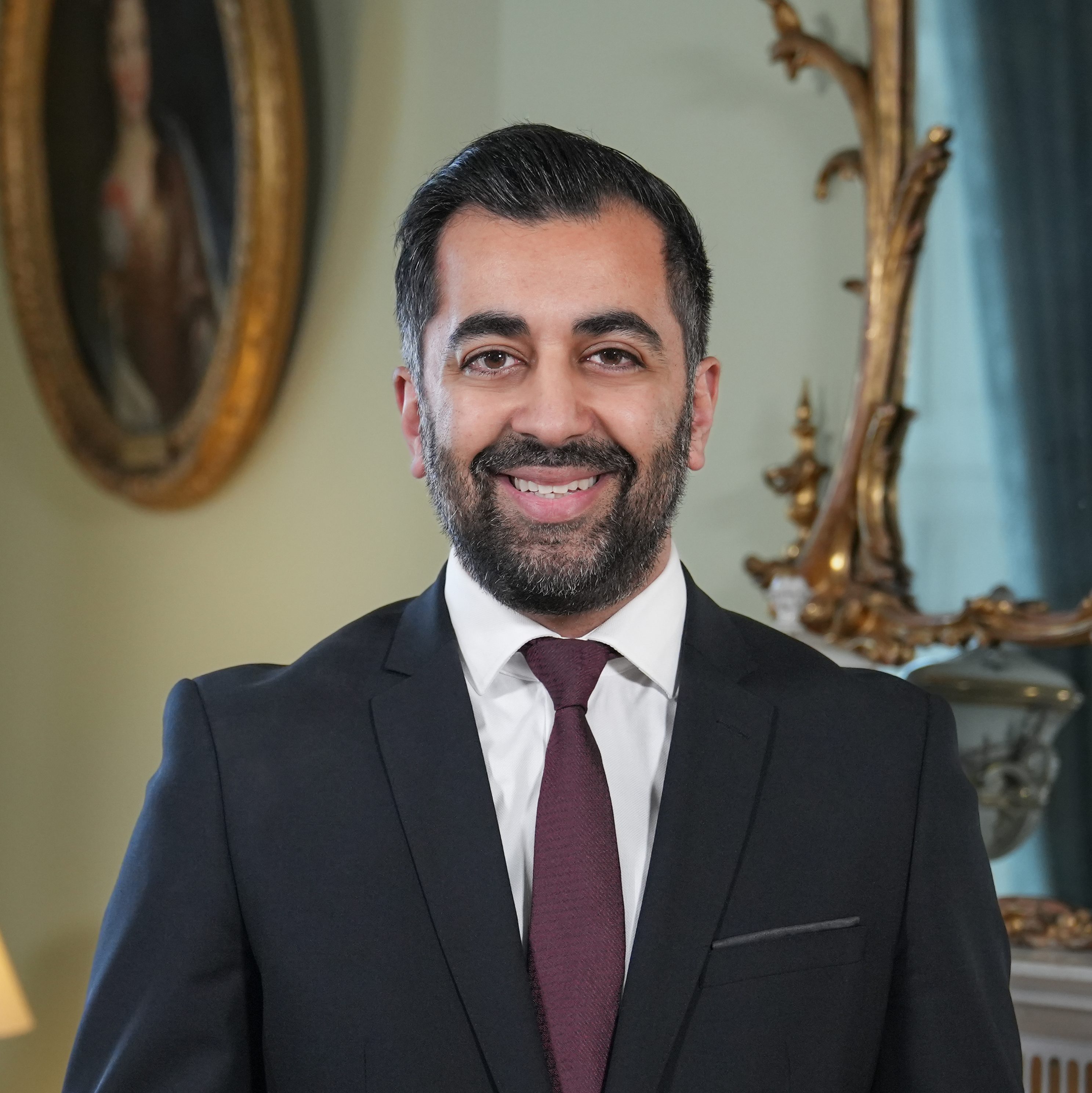
When Humza Yousaf was elected as SNP leader by party members then first minister by MSPs early last year, the prospect of another change in first minister before the next election was seen as only a fringe possibility. Not anymore. The first minister’s unilateral decision to tear up the Bute House Agreement with the Scottish Greens could very well lead to his political downfall.

The Greens are furious. Alba are opportunistic. The SNP are divided.

Instead of adding more speculation to the state of play above, I want to address the mechanics of Holyrood’s democracy and how we can improve the status quo.

A change in government leader during a parliamentary term isn’t uncommon. And in theory it shouldn’t significantly alter the trajectory of a government if parties base their government policy on their most recent manifesto. But as much as we may want to keep the personality out of politics, the real world renders this impossible. We do not have a presidential system but voters do often cast their ballots with party leaders in mind, especially in the age of televised debates, the 24-hour news cycle and social media. Furthermore, when the leader of a government is replaced, in practice this can lead to significant policy changes, deviating from manifesto promises, without any citizen input. The most extreme example of this in modern times is the rise and fall of disgraced former Prime Minister Liz Truss. The Truss government set out to chart a very different course to the one her party was elected to deliver.

READ MORE: 3 alternatives to Scotland’s proportional but flawed voting system

We live in a representative democracy where citizens elect a legislature which determines the government. Thankfully, MSPs do elect the first minister in parliament, unlike the chaotic conventions at Westminster. But when government leaders change, and crucially change policy direction from that set during the post-election government formation period (without any direct citizen input) we have to consider how accountable to voters this really is.

A province across the Atlantic offers a democratic mechanism that could be replicated at Holyrood, and indeed Westminster. The Canadian province of Newfoundland and Labrador has a landmass larger than the UK but a population smaller than Glasgow’s. Its House of Assembly has 40 members usually elected once every four years. However, when a premier is replaced between elections, an election is automatically triggered to take place within a year of the change. This happened most recently in 2021 after Liberal Andrew Fury took over from outgoing premier Dwight Ball.

Now there are drawbacks to this solution. Voter apathy resulting from multiple elections in a short space of time would be a possibility, not to mention costs of mandated additional elections. But a safeguard such as this would ensure that a change in government leadership has some input from the voters.

Of course, a third first minister in one parliamentary term has happened before. The death of Donald Dewar then the downfall of Henry MacLeish led to Jack McConnell becoming Scotland’s third first minister only a couple of years into devolution. The solution being proposed arguably would have added a layer of unnecessary chaos to the situation but it may have been less necessary back then. The Scottish Parliament had limited powers in those days and was still in its experimental phase. But now things are different. Devolution is a necessary part of our democracy, one to be protected and improved when necessary. Not to mention, the Scottish Parliament and Scottish Government both have real teeth and should be held accountable by voters when there are major leadership changes.

And while we’re on the subject of accountability, Holyrood’s five-year terms are too long. Scotland switched away from four-year terms to avoid clashes with Westminster votes under the Fixed-term Parliaments Act. With the act now repealed, Holyrood should follow Wales and return to four-year terms.

READ MORE: Scotland must follow Wales on four-year terms

The events taking place this week may very well lead to an extraordinary general election later this year. That would be an extraordinary development but if we do end up with our third first minister in just over a year then an election would give much needed input from citizens.

What happens in Newfoundland and Labrador would need tweaking for a Scottish context. It’s not perfect and I’m not wholly committed to it as a solution, but it recognises the need to strike a balance between accountability and stability. With Holyrood currently tilted away from stability, an election trigger in the event of a changed first minister might just be a long-term solution.

Image source: Scottish Government (CC by 2.0)

What if Scotland used the Netherlands’ voting system

By Richard Wood

This week the Netherlands went to the polls to elect members of its House of Representatives. The far-right Party for Freedom (PVV) secured the highest vote share (23.6%) and subsequently the most seats (37 out of 150). This is a deeply worrying development for European politics but it’s worth remembering that over three-quarters of voters didn’t back the PVV. I understand that Wilders gets the first shot at forming a government, but other parties can lock him out of power.

The Dutch parliament is incredibly fragmented due to the specific voting system it uses. Rather than having multiple multi-member constituencies as is the case with most proportional electoral systems, elections in the Netherlands use a single constituency to elect representatives.

With 150 seats up for grabs, the effective threshold for a seat is 0.67% of the vote. This results in an incredibly fragmented party system – fifteen parties won seats in 2023’s election. Consequently, this also leads to political instability and prolonged coalition negotiations. Israel uses a similar system, albeit with a legal rather than effective threshold.

READ MORE: Scottish Labour MSP “sympathetic” to Scottish electoral reform

To be clear, there are no mainstream electoral reform advocates arguing for such a system to replace First Past the Post (FPTP) and the Additional Member System (AMS) in Westminster and Holyrood respectively (feel free to correct me if I’m wrong!). A proportional system must strike a balance between overall proportionality and local representation. The Netherlands’ system fails to do that.

It’s no wonder that the newly formed New Social Contract party, which surged from nowhere to win 20 seats, has a plan to adopt a more Scandinavian system of PR.

A Netherlands-style PR system would be a step in the wrong direction for the Scottish Parliament but let’s see what would have happened if Holyrood went Dutch. Of course, this comes with the usual caveat the voting systems are a factor in how people vote and how elections play out so this is purely hypothetical.

Here’s how the Scottish Parliament would look (based on regional vote share, the standard 129 seats, with changes from the 2021 election in brackets).

PartySeats
SNP54 (-10)
Conservatives31 (-)
Labour24 (+2)
Green11 (+3)
Lib Dems6 (+2)
Alba2 (+2)
All for Unity1 (+1)
Quota = 21,019.33 votes, Hare quota

READ MORE: 7 reforms to improve the Scottish Parliament

The Scottish Parliament under the Dutch system would have a familiar feel but a few key distinctions. The SNP would lose out the most while Labour and the Greens would make marginal gains. The Lib Dems would be up two seats while Alex Salmond’s Alba would enter parliament with two seats and George Galloway’s All for Unity would narrowly get a seat.

Had I gone even further and used the 150 seats of the Dutch Parliament rather than the 129 at Holyrood, the same number of parties would have won seats (with slightly different total shares) and the Scottish Family Party would be within an inch of having won a seat. If Holyrood did adopt such a system, Holyrood would likely drift to a party system with more elected parties due to the low effective threshold.

As stated, the Dutch system’s main flaw is that it leads to extremely fragmented party politics and lengthy coalition negotiations. That said, the Scottish Parliament needs reform. But not this one. AMS is flawed by not being as proportional as it could be, has the two-vote problem and limits voter choice. An alternative such as the Single Transferable Vote (STV) or a Scandinavian-style PR system would be preferable.

READ MORE: German election 2021: a comparison with Scotland’s voting system

READ MORE: There’s a better way to elect France’s president. Here’s the answer

READ MORE: How proportional was Norway’s election? Lessons for Westminster

Image source: Pixabay

By-elections for defecting MSPs: does Wales offer a solution?

By Richard Wood

Edinburgh Eastern MSP Ash Regan defected from the SNP to Alex Salmond’s Alba party on Saturday 24 October 2023. This immediately prompted an age-old question, one that was also asked following the surprise defection of Lisa Cameron MP to the Conservatives earlier in the month. How do we solve a problem like defecting parliamentarians?

An obvious solution is a by-election – one that’s often called for by the party that an MSP or MP has left. How dare these representatives defect from the party banner that they were elected under? – so the argument goes. That’s one answer but it quite quickly conflicts with reality: an MSP wanting to leave their party but keep their position as an elected politician (which let’s be honest they’d be unlikely to want to give up) results in them being trapped in a party machine they oppose, creating an inherent conflict of interest. Maybe our politicians should have stronger principles in general and under such a system do the right thing and resign, but realpolitik suggests that’s not the case. What’s more, politicians are human – like voters they are allowed to change their minds.

READ MORE: 7 reforms to improve the Scottish Parliament

The immediate triggering of a by-election is one possible answer for constituency MSPs (and MPs) but what about list MSPs? By-elections are impossible in this case, so the answer is they would just have to resign and let the next person on the list move up. Again we hit the same problem of political ambition and MSPs. Of course, Holyrood’s voting system needs replaced but until then this problem remains.

So what’s the answer? It’s not perfect, but Wales offers a solution.

The compromise position is a mechanism that allows MSPs to show dissatisfaction with their party but doesn’t insult the voters that elected them (to an extend at least).

One of the measures likely to be adopted by the Welsh Senedd, according to the BBC, is a possible answer. Cardiff is introducing a ban on MSs defecting from one party to another. However, they will be allowed to leave and sit as independents.

READ MORE: Time is running out for fair local government in Wales

Had these rules been in place in the Scottish Parliament, Ash Regan would have been allowed to leave the SNP but she would have to sit as an independent not an Alba MSP. Of course, there’d be nothing stopping her declaring allegiance to Alba and attending their conference committed to championing their values in parliament. But it might be the best solution to a perennial problem.

While there’s no right answer that squares every circle, this solution strikes a fair balance between party and individual interests and would maintain some credibility with voters. The Scottish Parliament is overdue reform. When reform happens, this should be considered.

IMAGE SOURCE: Scottish Government (2021) (CC 2.0 generic license)