
Carney’s Liberals win in Canada a decade on from Trudeau’s promise to abolish FPTP

By Richard Wood

Before the return of Donald Trump, Canada’s Conservative looked set to sail to power in 2025, ending a decade of Liberal rule. But a maverick president and his trade war have shifted the dial dramatically, resulting in Liberal Mark Carney returning as Prime Minister, having called an early election just weeks into the job. The Conservative leader even lost his seat.

There are of course significant geopolitical implications flowing from this development as the world grapple with an emboldened President Trump, but it’s important to examine Canada’s election through the lens of electoral reform.

The flaws of First Past the Post exposed once again

Like the UK, Canada uses the unrepresentative First Past the Post system to elect MPs. As in 2024’s UK General Election, Canada has been given a parliament that doesn’t fairly reflect how people vote.

The Liberals have likely won just shy of a majority of seats on around 43% of the vote (although with some places still counting a majority government is still technically possible). Their vote share is the party’s largest in decades but that doesn’t legitimise the country’s unfair voting system and shouldn’t lead them to winning almost half the seats available.

The Conservatives have in fact won a vote share roughly proportional to the number of seats they won, but that is a rarity in FPTP politics and doesn’t mitigate the fact that millions of Canadians voted Conservative but are without direct Conservative representation.

Then there’s the NDP. The party have suffered at the hands of their former voters turning on them and backing Carney to oppose Poilievre and Trump. The party has been reduced to just 2% of seats on 6% of the vote, significantly fewer than if seats matched votes.

Of course, while the NDP stand across Canada and Bloc Québécois in only one province, the parties won similar vote shares but notably different numbers of seats (the Bloc doing better by winning over 20 seats).

READ MORE: Dual mandates ban passed unanimously in Scottish Parliament

Two wrong-winner elections

Carney’s win follows two elections (2019 and 2021) where the Liberals under Justin Trudeau won the most seats, forming minority governments, but on fewer votes than the Conservatives.

While Canadians have avoided a third wrong-winner election in a row, seats overall still don’t match votes and voters are stuck with single-member ridings where MPs can’t fairly represent all their constituents.

READ MORE: Quebec’s 2022 election – First Past the Post strikes again

Canada’s missed opportunity for Proportional Representation

Most campaigners for electoral reform across the English speaking world will know that Trudeau famously promised to abolish First Past the Post ahead of the 2015.

His party leapfrogged from third to first-place, forming a government with a majority of seats, then U-turned, making no effort to reform the voting system despite a decade in power.

Frustratingly, as in the UK, First Past the Post remains in place to this day. Voting reform didn’t even get a mention in Carney’s 2025 manifesto.

Canada, like the UK has a strong case to give FPTP the boot and embrace Proportional Representation.

READ MORE: How proportional are Scottish, Welsh and Northern Irish elections?

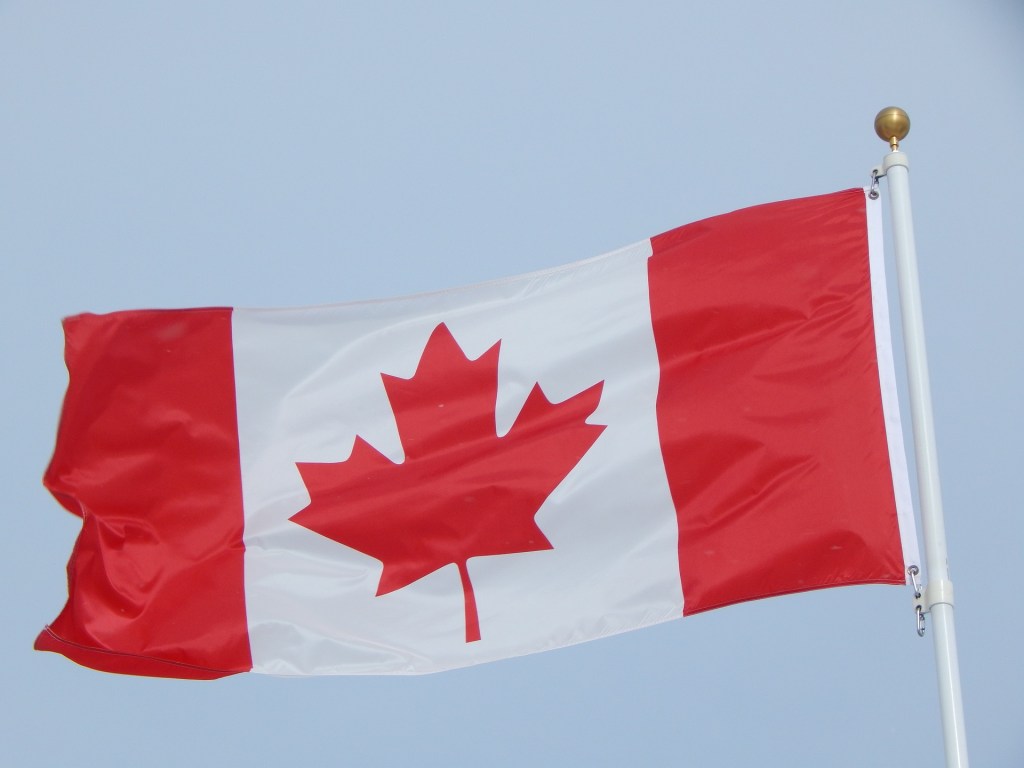
(IMAGE: licensed under the Creative Commons Attribution 2.0 Generic license)
Manitoba’s election set to be third FPTP failure in Canada this year

By Richard Wood

The Canadian province of Manitoba is going to the polls October in what is set to be the third First Past the Post failure in Canada this year, following elections in Prince Edward Island and Alberta.

Manitoba, along with the rest of Canada’s provinces and territories, uses the First Past the Post voting system to elect its legislator. The system is also used to elect MPs to the Canadian parliament. Why is this important to know? First Past the Post ultimately skews the link between seats and votes, resulting in unrepresentative legislatures.

What happened in the last Manitoban election?

The previous Manitoban election took place in 2019 – the Progressive Conservatives retained their majority of seats, which they won on less than half the vote (47%). The opposition New Democratic party made modest gains but not enough to take the top spot from the right. Meanwhile, the Liberals won 15% of the vote but only 3 out of 57 seats while the Greens secured 6.5% of the vote but no seats across the entire province.

Overall, the election was pretty unrepresentative of how Manitobans actually voted.

SEE ALSO: Canada’s 2021 election – the striking failures of First Past the Post exposed

How representative will the election be this time? What does polling currently say?

This time, polling suggests that the NDP and Progressive Conservatives are neck and neck when it comes to votes. However, thanks to First Past the Post the way the province actually votes is unlikely to be reflected by seats won in the legislature. The NDP may pull ahead on the day but there’s no guarantee that winning the most votes will result in a party winning the most seats – a feature of First Past the Post known as wrong-winner elections.

Put simply, as with previous Manitoban elections First Past the Post will distort how people vote at the ballot box. Whatever happens, seats are unlikely to match votes.

Manitoba follows Prince Edward Island and Alberta this year

Prince Edward Island held its election on 3 April, earlier than the election scheduled for October, a gamble that paid off for the province’s premier Dennis King. King’s Progressive Conservatives ultimately gained seats, taking 55.9% of the vote and an overwhelming majority of seats (22 of 27, 81.5% of those in the chamber). The party did win an overall majority of the vote but their seat share is an excessive overrepresentation.

The only other parties elected were the Liberals and the Greens. However, while the Liberals became the second largest part (with just 3 seats to the Greens’ 2), they won fewer votes than the Greens overall. Considering that the Liberals won 17.2% of seats to the Greens 21.6%, this was hardly a fair election.

The following month Alberta went to the polls. The province has very much evolved into having a two-party system: the United Conservatives took 49 seats on 53% of the vote took 38 on 44%. Due to the dominance of two parties, this election did in fact have seat shares that roughly reflected vote shares (56% and 43% respectively), however, just because seats matched votes on this level doesn’t mean the system didn’t fail Alberta. Single-member districts are a massive flaw of First Past the Post.

In every Albertan riding (constituency), a significant minority of voters are represented by candidates they didn’t vote for. Take the riding of Calgary-Fish Creek: the United Conservative candidate won 54% of the vote, however, 44% voted New Democratic and 1.5% voted Liberal. Almost 1 in 2 voters are not represented by someone they wanted to represent them.

Under a system of PR with multi-member districts, seats will closely match votes across the legislature and most voters will be represented by at least one represented by a party they gave their support to.

SEE ALSO: Oh no not again – Prince Edward Island election exposes FPTP flaws

Like the UK, Canada has a democratic deficit thanks to its use of First Past the Post.

It’s up to those in Canada to make the case for Proportional Representation but this latest election demonstrates the need for fair votes in all democracies such as the UK and highlights the unfairness of the distorting nature of the status-quo.

SEE ALSO: Quebec’s 2022 election – First Past the Post strikes again

Oh no not again – Prince Edward Island election exposes FPTP flaws

By Richard Wood

The general election for the Canadian province of Prince Edward Island has yielded yet another unrepresentative election. The province, like the rest of Canada, uses First Past the Post to elect Members of the Legislative Assembly. The case for Proportional Representation has raised its head yet again.

What happened last time? The 2019 election

Back in 2019, Dennis King’s Progressive Conservatives ousted the governing Liberal Party winning 13 of 27 seats (just one short of a majority) on a mere 36.7% of the vote.

The Greens, with only a limited presence at Canada’s federal level secured 30.6% of the vote, significantly up on their previous total. They took eight seats, only coincidently a seat share (29.6%) close to their vote share.

The Liberals took just six seats (22.2%) on 29.4% of the vote.

Overall, the election was moderately disproportional, largely shown by the inflated seat share won by King’s Progressive Conservatives.

READ MORE: Quebec’s 2022 election – First Past the Post strikes again

And this time? The 2023 election results

The next election wasn’t due until October 2023 but King called an early election for Monday 3 April 2023.

In terms of fair representation, the results were worse than the previous vote.

The Progressive Conservatives gained seats, taking 55.9% of the vote and an overwhelming majority of seats (22 of 27 – 81.5% of those in the chamber). True, they won an overall majority of the vote but their seat share is an excessive overrepresentation.

The only other parties elected were the Liberals and the Greens. However, while the Liberals became the second largest part (with just 3 seats to the Greens’ 2), they won fewer votes than the Greens overall.

The Liberals won 17.2% of seats to the Greens 21.6%.

Overall, Canada’s latest provincial election was highly unrepresentative due to First Past the Post. Time and time again this system of voting undermines the link between seats and votes.

It’s up to those in Canada to make the case for Proportional Representation but this latest election demonstrates the need for fair votes in all democracies such as the UK and highlights the unfairness of the distorting nature of the status-quo.

READ MORE: Canada’s 2021 election – the striking failures of First Past the Post exposed

Image via Pixabay

Quebec’s 2022 election – First Past the Post strikes again

Source: Pixabay

By Richard Wood

Voters in Quebec went to the polls on 3 October 2022 to elect all 125 Members of the province’s National Assembly. As with Canadian federal elections, as well as votes in the other nine provinces and the three territories, the election was held under First Past the Post, resulting in another outcome where seats didn’t match votes.

State of play before the election

The previous election took place in October 2018 at which the Liberals lost over half their seats, and with it their governing majority. The party lost a staggering 16.7 percentage points. Meanwhile the nationalist, conservative Coalition Avenir Québec gained support across the province, taking a majority of seats (74 out of 125) on just 37.4% of the vote.

The independence supporting Parti Québécois lost votes and seats while the social democratic Québec solidaire gained votes and seats.

The outcome resulted in the Coalition Avenir Québec leader François Legault becoming premier of the province. Polls since then showed the Coalition consistently in the lead and on course to emerge the largest party in 2022 yet again, however, they have also shown a significant increase in support for the Conservative Party of Quebec who won just 1.5% in 2018.

READ MORE: Canada’s 2021 election – the striking failures of First Past the Post exposed

A missed opportunity for Proportional Representation

It’s worth highlighting here that the Coalition Avenir Québec went into the 2018 election promising to change the province’s voting system to one of Proportional Representation. The government even brought forward a bill to introduce a mixed-member proportional system with 80 members elected via First Past the Post ridings and 45 elected via regional lists.

This proposed system closely reflects Scotland’s current Additional Member System, which has 73 constituency MSPs and 56 regional MSPs, which would result in broadly proportional outcomes. Similar systems are also used in the likes of Wales, Germany and New Zealand.

However, the legislation to enact this change was never passed despite the Coalition Avenir Québec majority. According to CBC, after the election Quebec’s premier changed position to supporting a referendum on reform rather than just implementing a system switch. And since then that referendum proposal was scrapped, with the minister responsible blaming the pandemic for the shifting timetable.

It remains to be seen whether there will be any reforms after the 2022 election.

READ MORE: How proportional was the 2021 Scottish Parliament election?

How did Quebec vote in 2022 and how representative was it?

As widely expected, the governing Coalition Avenir Québec remained the largest party at the 2022 election. The party took 40.96% of the vote , resulting in them winning 90 out of 125 seats. As usual, First Past the Post has rewarded the largest party by inflating their representation in the legislature. CAQ won 72% of seats available on just 4 in 10 votes. The over-representation of CAQ clearly shows how unrepresentative First Past the Post truly is.

On top of that, the results for the four other main parties show just how messed up FPTP can be. The rest of the vote split four ways. Here’s what happened.

The once governing Liberals came in fourth with 14.37% of the vote, however, because of the wild nature of the voting system used, they ended up the second largest party, taking 21 seats (17% of those in the National Assembly).

Québec Solidaire won more votes than the Liberals (15.2%) but only took 11 seats. Parti Québécois did the same (14.6%) but won a mere 3 seats out of 125.

What’s more, the Conservative Party of Quebec won 12.92% of the vote yet failed to win any seats, a result reminiscent of UKIP taking 13% of the vote at the 2015 election and only returning with one seat.

Overall, the results were extremely unrepresentative:

  1. The most popular party won a massive majority on just 41% of the vote.
  2. The fourth most popular party came second in terms of seats.
  3. Four parties came within 3 percentage points of each other, all with wildly different results.
  4. A party that took almost 13% of the vote came away with no seats.
  5. The election did not fully reflect how people voted.

Quebec’s 2022 general election is yet another example of the striking flaws First Past the Post. Four years ago there was a real possibility that 2022 would be the last Quebec election held under FPTP but that feels almost impossible now. This should be a warning to campaigners in the UK if Labour wins a majority with a promise to reform the electoral system. There is a real possibility that such a government would go back on its pledge, like Labour did in 1997, similar to what happened with Canada’s Justin Trudeau in 2015 and most recently in Quebec.

READ MORE: How do elections work in the Baltics? Lessons for Holyrood and Westminster

Canada’s 2021 election – the striking failures of First Past the Post exposed

By Richard Wood

On Monday 20 September Canadians went to the polls after Prime Minister Justin Trudeau called a snap election, hoping to turn his Liberal minority governement into a majority one.

The Conservatives soon took the lead in the polls but by the end of the campaign both parties were neck and neck.

In the end, Canada’s House of Commons now looks very similar to the one before it as only a handful of seats changed hands and the parties ended up roughly where they started in terms of seats and votes. The Liberals won the most seats and Justin Trudeau remains prime minister.

Despite this somewhat underwhelming result, the election serves to highlight some of the major flaws of First Past the Post.

Another wrong-winner election

In 2015, the Liberals won a majority of seats on a minority of the vote – while also getting the highest number of votes across the country (but nowhere even near the 50% mark). In 2019 they fell short of a majority of seats, won the most seats but actually secured fewer votes than the Conservatives. Two years later this has happened again.

For the second time in a row, the Conservatives have won more votes than the Liberals but ended up with fewer seats.

First Past the Post distorts the link between seats and votes, sometimes resulting in the party with the highest number of votes coming second overall. This is known as a wrong-winner election. Canada’s voting system has exaggerated the support of the Liberals at the expense of the Conservatives and other parties, giving them an artifically leading place in the House of Commons.

Wrong-winner elections most recently happened in 1951 and February 1974 in the UK. Such elections are not representative at all but at least serve to weaken the argument that First Past the Post provides clear winners that can be easily kicked out.

The second wrong-winner election in a row is bad news for Canadian democracy.

READ MORE: How proportional was Portugal’s election? Lessons for the UK’s broken democracy

Inflated representation of the larger parties

First Past the Post consistently subsidises the two largest parties by inflating their seat share well above their vote share. The Liberals may have fallen short of a majority of seats but they won 47% of seats available (158/358) on just 32% of the vote. The Conservatives also slightly benefitted, securing 35% of seats (119) available on 34% of the vote. In the past they have benefited more by securing overall majorities on minority vote shares.

This exaggeration of support is seen over and over in countries that use First Past the Post. At the 2019 UK General Election, the Conservatives won a majority of seats on just 43% of the vote. In 2005, Labour won a majority on an even smaller share of the vote – just 35% of the vote.

Canada’s 2021 election is no different. First Past the Post one again perpetuates the dominance of a country’s largest parties.

Smaller parties punished by FPTP

The flipside of this is that by subsidising the representation of the larger parties in parliament, smaller parties are unfairly punished. Canada’s National Democratic Party, the NDP, secured just 7% of the seats available (25 seats) on almost 18% of the vote.

The Greens also suffered, winning only two seats but a vote share of 2%.

This underrepresentation of smaller parties is key feature of UK elections as well. In 2015, UKIP secured 13% of the vote but only won one seat. The Liberal Democrats are consistently punished by this as are the Greens. In 1983, the SDP-Liberal Alliance won just 25 seats on 25% of the vote – almost displacing Labour as the country’s second largest party by vote share yet coming nowhere near in terms of seats.

First Past the Post distorts democracy by subsidising larger parties at the expense of smaller ones. Under the status-quo, votes aren’t equal. The Canadian election highlights this once again through the squeezing out of the NDP and the Greens.

Wasted votes

The nature of First Past the Post means that countless votes are wasted in the process of electing MPs. In any Canadian riding, because there is only one member elected, votes going to other parties and votes above and beyond the amount to elect each MP are wasted.

Canada’s 2021 election is no different. The dominance of the Liberals and Conservatives at the expense of the NDP and other parties means wasted votes across the country.

As far as I can tell no one has done exact calculation, but once they’re up they will be added here – I’m sure Fair Vote Canada will be on the case!

First Past the Post exposed

Canada’s 2021 election highlights some of the major flaws of FPTP. The country has a very similar parliament to before, one that does not accurately reflect how people vote.

Like the UK, Canada needs Proportional Representation. It’s time to make votes matter and enact electoral reform.

READ MORE: Canadian and German elections put contrasting voting systems in the spotlight

An opportunity for Proportional Representation – a minority government, the NDP and lessons from New Zealand

The one silver lining is that the election certainly puts Canada’s unrepresentative electoral system in the spotlight. Voting reform isn’t the main concern of most ordinary voters but when two wrong-winner elections in a row take place, the issue is certainly given a second glance by ordinary voters. There is an inherent unfairness that cannot be ignored.

The Liberals went into the 2015 election supporting Proportional Representation. It is a disappointing misstep of history that Justin Trudeau did not keep his promise to abolish First Past the Post. However, change could still happen in the near future. The emboldened NDP and the ambitious Greens support electoral reform – and with the voting system in the spotlight, there is an opportunity for the pro-reform parties to take advantage of the Liberal minority and push for a democratic upgrade.

Two wrong-winner elections in a row helped pave the way for electoral reform in New Zealand. Could Canada be next? And will the UK also one day adopt Proportional Representation?

We must certainly hope so.

READ MORE: Scottish Conservative MSP supports electoral reform