Yet another poll shows Scotland on track for an unrepresentative election due to AMS

By Richard Wood

A new poll suggests that the Scottish Parliament is on track for a highly unrepresentative election despite Holyrood’s supposedly proportional voting system.

The Ipsos Scotland Political Pulse poll for STV puts the SNP first in terms of list votes, constituency votes and projected seats.

PartyConstituency %List vote %
SNP36%26%
Labour20%19%
Green7%16%
Reform UK19%14%
Conservatives9%11%
Lib Dems10%10%

In a properly proportional system, seats should broadly match votes cast. But seat projections for this poll indicate a staggering mismatch between seats and votes.

PartySeat countSeat %
SNP6046.5%
Labour2015.5%
Green1612.4%
Reform1310.1%
Conservatives107.8%
Lib Dems107.8%

The biggest divergence between seats and votes here is with the SNP. Support for the party has fallen dramatically to 26% of list votes and 36% of seats. But projections indicate they are on track for 60 seats – almost half of those available.

READ MORE: Dual mandates ban passed unanimously in Scottish Parliament

The main driver behind this mismatch is driven by the dominance of First Past the Post seats used in Scotland’s Additional Member System, an imbalanced ratio of 73 to 56. This makes it theoretically possible for a party to win a majority on constituency seats alone.

The SNP is doing better than other competitive parties on the constituency ballot, and due to their success, they are on track to win the vast majority of constituency seats and close to a majority of seats overall.

The SNP is set to win more seats than they are entitled to if Holyrood had a mechanism to address parties winning more seats than they proportionally should on the constituency vote. In fact, Ballot Box Scotland estimates that the poll puts them on a staggering 22 seats more than what they should win if seats were determined by the proportional ballot alone in different Scottish regions.

Ipsos 19-25 Feb seat projection (vs last poll / vs 2021 on new boundaries); AMS Ideal seats:SNP ~ 60 (nc / -3); 38Lab ~ 20 (+1 / -1); 25Grn ~ 16 (-1 / +6); 22RUK ~ 13 (-4 / +13); 18Con ~ 10 (-1 / -21); 14LD ~ 10 (+5 / +6); 12(Projection caveats: ballotbox.scot/projections)

Ballot Box Scotland (@ballotbox.scot) 2026-03-04T12:14:19.995Z

Scotland’s new Parliament is likely going to be highly disproportionate. Holyrood’s new MSPs should address this with electoral reform.

Full details of the poll from STV can be read here.

READ MORE: Scotland must follow Wales on four-year terms

Kate Forbes is stepping down in 2026. A record number of MSPs aren’t standing again

By Richard Wood

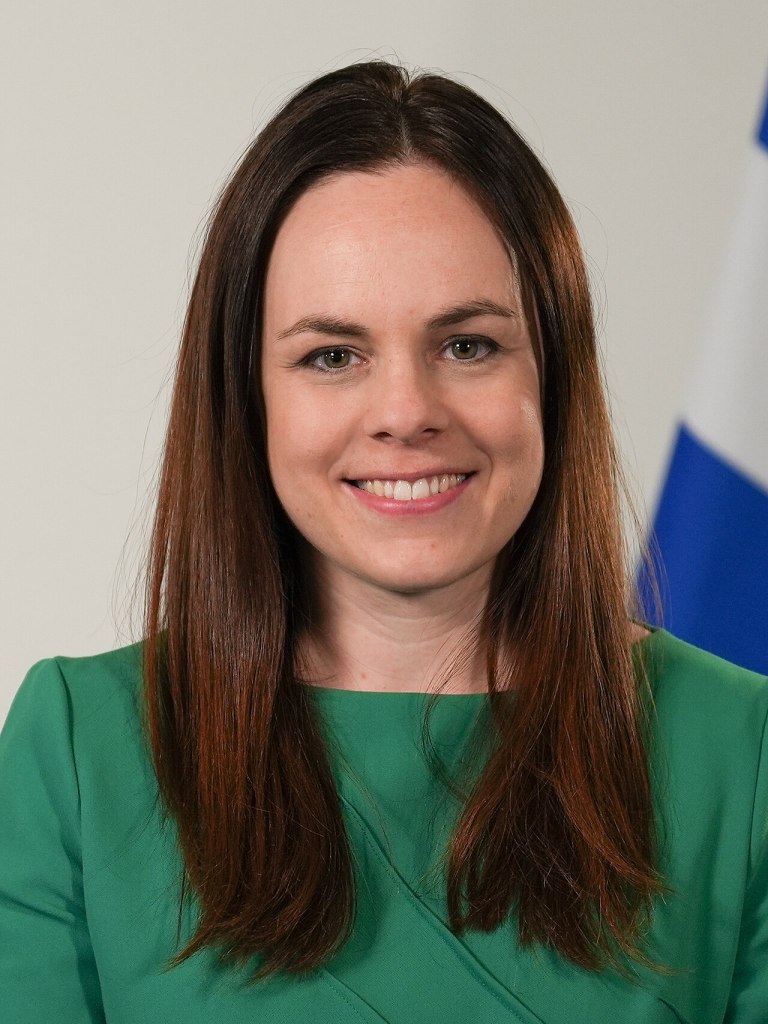
Deputy First Minister Kate Forbes is stepping down as an MSP at the next Scottish Parliamentary election.

Her upcoming departure marks a record number of MSPs standing down at any Holyrood election.

The announcement came as a shock to much of the Scottish political scene after she contested the 2023 SNP leadership election and secured Scotland’s second top job under First Minister John Swinney last year.

In a letter to the FM on 4 August 2025, the DFM said she does not wish to “miss any more of the precious early years of family life.

READ MORE: Minority mayors and unrepresentative local government: England can learn from Scottish councils

How many MSPs have stood down at each election?

So far, the total for 2026 is 35 MSPs (as of 8 July 2025). This beats the previous high of 34 in 2021, which included former Scottish Conservative leader Ruth Davidson.

And back in 2016, there were 25 MSPs who stood down (23 who retired and 2 who were deselected by their parties). Among the retirees at this election were former First Minister Alex Salmond, former Scottish Conservative leader Annabelle Goldie and the Presiding Officer Tricia Marwick.

A similar number stepped down at the election before. Among the 20 who retired in 2011 were former Deputy First Minister Nichol Stephen and former Scottish Green co-convenor.

Just 13 MSPs retired in 2007 including independent MSP Dennis Canavan and former Deputy First Minister Jim Wallace.

And in 2003, there were 10 MSPs who stepped down including our shortest-serving First Minister Henry McLeish and Westminster’s 1967 Hamilton by-election winner, the SNP’s Winnie Ewing.

Each year the number has gone up:

2026 – 35

2021 – 34

2016 – 25

2011 – 20

2007 – 13

2003 – 10

READ MORE: Dual mandates ban passed unanimously in Scottish Parliament

IMAGE: Via Scottish Government (lisence)

How many MSPs are retiring in 2026? Is it a record number?

By Richard Wood

UPDATE: There are now 35 MSPs stepping down in 2026 following the announcement by Deputy First Minister Kate Forbes.

The late June announcement of Presiding Officer Alison Johnstone’s retirement from Holyrood means that 34 MSPs are stepping down from the Scottish Parliament in 2026.

This figure matches the number of retiring MSPs in 2021. That was the record-high number, meaning that any further announcements will ensure that 2026 has the highest number of retiring MSPs in Holyrood history. Considering the last retirement announcements for 2021 were in March that year, it’s almost certain that 2026 will mark a new record.

That’s perhaps not surprising, with the number of long-standing MSPs from the so-called 1999 club calling it a day, including Nicola Sturgeon, Richard Lochead, Rhoda Grant, Fiona Hyslop and Christine Graeme all stepping down. But it also includes newer MSPs including Humza Yousaf, Mairi Gougeon and Beatrice Wishart.

Age plays a role for some of these MSPs in both categories. As does arguably scandal, with Michael Matheson set to retire as well. Then there’s the wholly valid reason of some MSPs saying they want to spend time raising their young families, away from the demanding nature of a parliamentary role.

READ MORE: Minority mayors and unrepresentative local government: England can learn from Scottish councils

How many MSPs have stood down at each election?

So far, the total for 2026 is 34 MSPs (as of 3 July 2025). This matches the previous high of 34 in 2021, which included former Scottish Conservative leader Ruth Davidson.

And back in 2016, there were 25 MSPs who stood down (23 who retired and 2 who were deselected by their parties). Among the retirees at this election were former First Minister Alex Salmond, former Scottish Conservative leader Annabelle Goldie and the Presiding Officer Tricia Marwick.

A similar number stepped down at the election before. Among the 20 who retired in 2011 were former Deputy First Minister Nichol Stephen and former Scottish Green co-convenor.

Just 13 MSPs retired in 2007 including independent MSP Dennis Canavan and former Deputy First Minister Jim Wallace.

And in 2003, there were 10 MSPs who stepped down including our shortest-serving First Minister Henry McLeish and Westminster’s 1967 Hamilton by-election winner, the SNP’s Winnie Ewing.

Each year the number has gone up.

  • 2026 – 34*
  • 2021 – 34
  • 2016 – 25
  • 2011 – 20
  • 2007 – 13
  • 2003 – 10
  • 1999 – N/A

*As of July 2025.

READ MORE: Dual mandates ban passed unanimously in Scottish Parliament

Which MSPs are stepping down in 2026?

As of late June 2026, the following 32 MSPs are stepping down:

SNP

Annabelle Ewing, Audrey Nicoll, Bill Kidd, Christine Grahame, Elena Witham, Evelyn Tweed, Fergus Ewing, Fiona Hyslop, Gordon MacDonald, Graeme Dey, Humza Yousaf, James Dornan, Joe FitzPatrick, Mairi Gougeon, Michael Matheson, Michelle Thomson, Natalie Don-Innes, Nicola Sturgeon, Richard Lochead, Rona Mackay, Ruth Maguire, Shona Robinson, Willie Coffey.

Conservatives

Douglas Ross, Edward Mountain, Liz Smith, Maurice Golden, Oliver Mundell.

Labour

Alex Rowley, Richard Leonard.

Liberal Democrats

Beatrice Wishart.

Greens

Alison Johnstone.

Independents

John Mason.

What about 2031?

We’re still along way from the election after 2026. Much will depend on the make-up of the new parliament – with big questions still to be answered like how well will Reform do next year? Will there be a coalition or a confidence and supply arrangement? And if John Swinney emerges as First Minister will he step down before 2031 (when he’ll be 67)?

But with so many of the 1999 club now having left Holyrood’s benches, there’s a decent chance that 2031 will be the first election where the number of retiring MSPs is lower than the previous one.

READ MORE: Scotland’s STV council elections show England a better way of doing local democracy