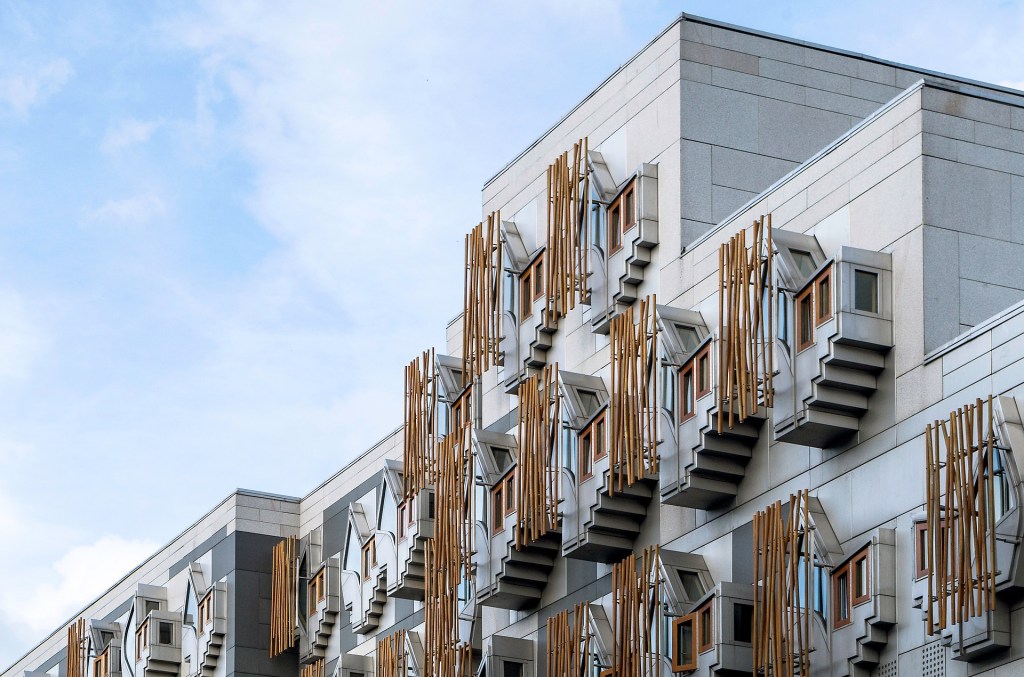
7 reforms to improve the Scottish Parliament

By Richard Wood

Next year marks 25 years since the establishment of the devolved Scottish Parliament. In that time we’ve had six first ministers, six elections and a seismic shift in voting patterns best illustrated by the once dominant Labour now in third place and a pro-independence majority at Holyrood.

With a quarter of a century of devolution fast approaching, a full review of Scotland’s democratic apparatus is surely needed. Democracy is a process not an event; likewise our democratic institutions need to evolve and keep up with democratic best practice.

1. Better Proportional Representation

When it comes to the link between how people vote at the ballot box and how seats are distributed in the legislature, the Scottish Parliament is significantly fairer than the House of Commons (let alone the unelected House of Lords). The introduction of the Additional Member System (AMS) to elect MSPs from the outset, rather than the unrepresentative First Past the Post (FPTP) system, has ensured diverse representative parliaments where seats won broadly reflect votes cast.

That said, the benefits of AMS should not be overstated. The system has a number of flaws which should be addressed and remedied. Holyrood needs electoral reform as well as Westminster.

AMS is only partially proportional. A majority of seats are elected via FPTP and the proportional list seats are allocated on a regional basis leading to only regional proportionality and a risk of overhangs with no mechanism to correct them. Furthermore, the FPTP constituencies as an integral (and majority) part of AMS result in safe seats, retain a major drawback of FPTP.

There’s also the two-vote problem – having two types of votes can lead to divergence between constituency and list votes cast, messing with the ended outcome of proportionality. As part of that, the system can be gamed: although unsuccessful, in 2021 Alba tried to game the list vote to create a supermajority for independence, going against the spirit of a system designed to represent as many views as possible – as accurately as possible. This is compounded by the fact that there are two types of MSP, constituency and list, which while in theory have the same roles in practice can be rather different.

AMS is superior to FPTP but its flaws demonstrate the need to reform. The Scottish Parliament needs a system like the Single Transferable Vote to empower voters, deliver better proportionality and end the two vote/MSP problem.

SEE MORE: 3 alternatives to Scotland’s proportional but flawed voting system

2. An end to dual mandates

Dual mandates occur when an individual holds elected office for two positions. In the Scottish context, this can be any combination of MP, MSP, Councillor or Peer. Scotland needs fair and accountable representation, through dedicated parliamentarians. We need to end dual mandates.

The main argument against dual mandates is one of two connected parts. In principle, parliamentarians are elected to serve their constituents at either Holyrood or Westminster. Each role has different responsibilities, and representatives owe it to their constituents to solely focus on representing constituents in one clear capacity. Dual mandates mean this cannot happen.

Related to that is the practical element. Being an MP or MSP is a full-time job and carrying out the duties of both roles to the same extent as a representative for one job is simply impossible. Constituents deserve better than that.

The only current MSP to hold a dual mandate is Scottish Conservative Leader Douglas Ross. That said, it’s worth flagging that while Labour MSP Katy Clark is also a member of the House of Lords she has stepped down active duty in that role while in the Scottish Parliament. Furthermore, until the 2022 Scottish council elections, 18 newly elected MSPs also held dual mandates from their roles as councillors they won before the 2021 Scottish Parliament elections.

SEE MORE: 5 reasons to ban MSP-MP dual mandates

3. Restrictions on second jobs

In a similar spirit to the above reform, the Scottish Parliament needs to restrict MSPs from having second jobs. The problem is a big one at Westminster, with MPs in safe seats taking advantage of that job security and focusing time and energy into other pursuits. While not as a significant issue in the Scottish Parliament, there are no restrictions on MSPs taking additional employment. Constituents deserve 100% focus on them – MSPs having second jobs just doesn’t cut it.

There is of course a debate over to what exact reach any restrictions on second jobs should have. Clearly any jobs even relating to public affairs and lobby should be to prevent any conflicting motivations. Full-time jobs should also definitely face a ban. While at the other end of the scale there’s a case to doctors and similar professionals to work limited hours in that capacity to retain licenses.

There is of course a middle ground between those two ends and while it’ll be up to policy-makers to decide where the line is drawn, anything that takes up a significant portion of an MSPs time should be banned.

SEE MORE: Polling suggests most Scots oppose dual mandates and second jobs for politicians

4. A return to four-year parliamentary terms

The Scottish Parliament was founded with fixed-term four-year parliamentary terms as shown by the 1999, 2003, 2007 and 2011 elections. Regular fixed elections ensure frequent accountability and democratic input from the voters. Westminster’s fixed-term parliament Act wasn’t perfect but it ensured a level playing field in normal times – all parties knew when the election was scheduled for. The reality was of course quite different due to Brexit and political upheaval but the principle is solid and is borne out in practice in much of the democratic world. In different times, the benefits would have been realised. The current uncertainty as to when the next Westminster election will take place is frustrating and places an obvious advantage in the hands of the incumbent prime minister.

With the principle of fixed elections established, it then follows how frequent these should be?

There is no right answer but the move to five-year Holyrood terms means just two elections a decade, less accountability and “zombie parliaments” at the end of a parliamentary term.

Two year parliaments, as seen in the USA with the House of Representatives, face the opposite problem: too much accountability leading to constant electioneering and voter fatigue. New Zealand and Australia have three year parliaments, which are popular over there but would be a radical shift in the UK and perhaps lead to the same voter fatigue seen during the Brexit crisis.

There is however, a happy middle that would ensure a fair balance between accountability and effective government. Four year terms would enable that – and it’s time for Holyrood to return to its roots.

SEE MORE: Frequent fixed elections and why they matter

5. A recall rule for lawbreaking and absent MSPs

During the last parliamentary session a disgraced former minister was able to claim his salary and expenses while not even turning up to the Scottish Parliament to represent his constituents. The minister brought the parliament into disrepute but there was no mechanism to remove him as an MSP.

Holyrood should learn from Westminster and introduce a recall rule to address this democratic deficit. A recall petition – that can lead to a by-election – is triggered if an MP receives a custodial prison sentence, is suspended from the House or is convicted of providing false or misleading expenses claims. A similar mechanism should be adopted at Holyrood, ideally as part of a new, fairer voting system, and built upon to include MSPs who don’t turn up and other actions that don’t live up to what is expected of MSPs.

The Westminster system is designed for FPTP so modifications would be required for AMS at Holyrood, especially the list element or any future better alternative. That said, whatever voting system is used it’s clear that there should be a mechanism to remove lawbreaking and absent MSPs. Anything less is an insult to democratic accountability.

SEE MORE: 5 reasons to support the Removal from Office and Recall Bill

6. More MSPs

The idea of more politicians will be off-putting for many but a moderate increase in the size of the Scottish Parliament would be a proportionate response to the increased powers held by the chamber. Furthermore, with around a fifth of MSPs on the government payroll (as ministers and junior ministers) an increase in members will improve overall accountability and scrutiny. MSPs also often sit on multiple committees in addition to party spokesperson roles and their work as constituency MSPs, a point recently made in the Herald.

Scottish representatives need the space to become experts in different areas. Freeing up time to limit multi-tasking would result in just that, further improving scrutiny.

An increase in MSPs would also allow greater flexibility when designing a new voting system for the Scottish Parliament. Sticking to 129 would place limitations on the exact make-up of any new election system.

7. Better ballot access

Better ballot access isn’t something that Upgrade Holyrood has directly advocated before but it’s a reform that’s well worth considering as part of a wider package of upgrading Scottish democracy. To stand for election at either Holyrood or Westminster, one must pay a deposit of £500, only returnable upon winning 5% of the vote. This has become such a normalised part of our politics it blurs into the background and is regularly accepted without question.

Yet is should be questioned. Requiring a £500 deposit to stand for election places an immediate barrier on potential candidates. Of course there should be a barrier to minimise non-serious candidates to only the most persistent but the nature of the £500 is a financial barrier which has obvious consequences for accessibility and equality.

Championed by Ballot Box Scotland, one alternative would be combination of entitlements and subscriptions, which are used in other democracies. Parties and/or candidates who win seats in the most recent elections would be entitled to automatically stand again if they wish. However, new parties or independent candidates would be required to gather signatures of say 0.1% of the electorate to demonstrate a level of support. This would result in a system with no financial barriers, only the barrier of proving that a party or candidate has a small but provable level of support and reduce frivolous candidates.

BONUS – Further powers for local councils and local democracy reforms

This isn’t strictly a reform of the Scottish Parliament, but to wider Scottish democracy. Decisions should be made as close to the people as possible at the level of governance most appropriate as possible. While the Scottish Parliament has gained powers since its formation, local councils have only seen some moderate increases in powers while power in Scotland has been increasingly centralised at Holyrood. Local councils surely deserve more of a say in how local areas are run.

SEE MORE: Scottish Labour MSP “sympathetic” to Scottish electoral reform

Image via Pixabay

First Past the Post fails English local democracy – this time it’s different

By Richard Wood

Another set of local elections in England has left a bad taste in the mouths of better democracy campaigners. Yet this time is slightly different. This time – instead of the same old story of unrepresentative councils across the country – we have taken a significant step backwards when it comes to local democracy.

We can debate the merits of directly elected executive mayors another time but if we are to have them – which England does – they should have broad mandates. Until the Elections Act (2022), these mayors were elected via the Supplementary Vote (SV) system.

The SV system isn’t perfect but it gave mayors broad mandates, a crucial check on directly elected executive positions. Instead of making positive reforms, the Conservatives’ regressive Elections Act scrapped this system and imposed First Past the Post on mayoralties across England.

SEE MORE: Elected mayors in Scotland: is now the time for Aberdeen’s Andy Burnham?

The effects of this regressive reform are now being seen following 2023’s local election results.

Voters in Bedford, Leicester, Mansfield and Middlesbrough all elected mayors under First Past the Post for the First time:

  • The new Bedford mayor, Conservative challenger Tom Wooton, was elected on just 33.1% of the vote.
  • Leicester mayor, Labour incumbent Peter Soulsby, was elected on just 39.3% of the vote.
  • Mansfield mayor, Labour incumbent Andy Abrahams, was elected on just 45.1% of the vote.
  • Middlesborough mayor, Labour challenger Chris Cooke, was elected on just 40.2% of the vote.

SEE MORE: 5 reasons to ban MSP-MP dual mandates

The situation will be far worse in 2024 when metro mayors and Police and Crime Commissioner elections are scheduled. Crucially, 2024 will see the first London mayoral election held under First Past the Post.

Again, the Supplementary Vote wasn’t perfect but it allowed for successful candidates to secure their mandates with broad support. Instead of imposing First Past the Post on mayoralties, the government should have improved the system by implementing the Alternative Vote for mayoral positions. AV would allow voters to rank candidates in order of preference and give directly elected executive mayors broad mandates.

Instead, this development comes on top of the usual story of unrepresentative councils thanks to First Past the Post. Right across England councils were elected with seat shares not reflective of vote shares. English local democracy should be upgrade more widely via the introducing of the Single Transferable Vote (STV) for council elections.

The Lib-Lab coalition of 2003 – 2007 did this in north of the border. Scottish local democracy’s success story since 2007 is undeniable. The country no longer has “one-party state” councils and has a vibrant multi-party democracy at the local level where how people vote at the ballot box is reflected in local councils.

Northern Irish local elections take place in two weeks time using STV. These elections will be a welcome contrast to those we saw in England at the start of the month.

A Conservative government at Westminster isn’t going to upgrade English local democracy any time soon. But the next Westminster power arrangement – possibly some combination of Labour and Liberal Democrat MPs – should look to the Scottish and Northern Irish success stories and upgrade England’s local politics. Preferential voting for both mayors and councillors would be a major leap forward. This year’s elections once again show that change is needed.

SEE MORE: Scotland’s STV council elections show England a better way of doing local democracy

Image via Pixabay

Oh no not again – Prince Edward Island election exposes FPTP flaws

By Richard Wood

The general election for the Canadian province of Prince Edward Island has yielded yet another unrepresentative election. The province, like the rest of Canada, uses First Past the Post to elect Members of the Legislative Assembly. The case for Proportional Representation has raised its head yet again.

What happened last time? The 2019 election

Back in 2019, Dennis King’s Progressive Conservatives ousted the governing Liberal Party winning 13 of 27 seats (just one short of a majority) on a mere 36.7% of the vote.

The Greens, with only a limited presence at Canada’s federal level secured 30.6% of the vote, significantly up on their previous total. They took eight seats, only coincidently a seat share (29.6%) close to their vote share.

The Liberals took just six seats (22.2%) on 29.4% of the vote.

Overall, the election was moderately disproportional, largely shown by the inflated seat share won by King’s Progressive Conservatives.

READ MORE: Quebec’s 2022 election – First Past the Post strikes again

And this time? The 2023 election results

The next election wasn’t due until October 2023 but King called an early election for Monday 3 April 2023.

In terms of fair representation, the results were worse than the previous vote.

The Progressive Conservatives gained seats, taking 55.9% of the vote and an overwhelming majority of seats (22 of 27 – 81.5% of those in the chamber). True, they won an overall majority of the vote but their seat share is an excessive overrepresentation.

The only other parties elected were the Liberals and the Greens. However, while the Liberals became the second largest part (with just 3 seats to the Greens’ 2), they won fewer votes than the Greens overall.

The Liberals won 17.2% of seats to the Greens 21.6%.

Overall, Canada’s latest provincial election was highly unrepresentative due to First Past the Post. Time and time again this system of voting undermines the link between seats and votes.

It’s up to those in Canada to make the case for Proportional Representation but this latest election demonstrates the need for fair votes in all democracies such as the UK and highlights the unfairness of the distorting nature of the status-quo.

READ MORE: Canada’s 2021 election – the striking failures of First Past the Post exposed

Image via Pixabay

25 years of devolution in 2024: Holyrood needs an upgrade

By Richard Wood

Next year marks 25 years of devolution following the re-establishment of the Scottish Parliament in 1999. After some bumps along the way, the Scottish Parliament is undeniably a success story. However, while its use of a broadly proportional voting system makes it more representative than the parliament in Westminster (what with FPTP in the Commons and the continued existence of the House of Lords), the Scottish Parliament needs reform. Put simply, Holyrood needs an upgrade.

Upgrade Holyrood champions better democracy in Scotland. With next year marking a quarter of a century of devolution, it will be the perfect time to reflect, assess and improve upon the democratic mechanisms of the Scottish Parliament.

First things first, Scotland’s voting system sounds great at first glance but there is significant room for improvement. The Additional Member System (AMS) ensures broad proportionality but only goes so far as having a mechanism for regional proportionality. What’s more it fails to address overhangs, retains single-member districts and leaves open the possibility for parties to “game the system” as seen with Alba’s failed attempt to win a “supermajority” for independence at the 2021 Scottish Parliament election. Furthermore, voters still have limited powers over individual candidates.

SEE MORE: 3 alternatives to Scotland’s proportional but flawed voting system

The system is significantly more proportional than First Past the Post but alternatives do exist – and those alternatives must be examined and adopted. There are three likely routes that the Scottish Parliament could take on this issue: AMS with modifications, Open List PR or the Single Transferable Vote.

Tinkering around the edges by adopting a German style mixed-member voting system to address overhangs and ensure national party proportionality would be a minor improvement but it would cause some headaches of it’s own – Germany’s Bundestag is growing with each election. The Scottish public are likely to be approving of significantly more politicians. What’s more such a system would retain single-member constituencies.

Open List PR with levelling seats – as in Denmark, Sweden or Iceland – this would improve proportionality, give voters power over individual candidates and crucially end single-member districts. This would be one option for the Scottish Parliament that’s worth considering. If we were to go down this route then we would to ensure that any lists are regional, open for voters to enhance their power and have levelling seats to ensure both regional and national proportional representation.

The final alternative is often seen as the gold-standard voting system (if implemented properly) – the Single Transferable Vote. Already used to elect councillors in Scotland, STV would provide proportionality (depending on district sizes), give voters an enormous amount of power at elections and provide voters with multi-party representation. What’s more, the system is backed by the SNP, Lib Dems, as well as some Labour and Conservative MSPs. The Scottish Greens recently supported it before backing Open List PR.

The Scottish Parliament must therefore examine its voting system in any 25-year review of devolution.

SEE MORE: New Zealand and Scotland – proportional but imperfect voting systems

But it’s not just the electoral system where the Scottish Parliament needs improvements.

Holyrood needs to end dual mandates – primarily for joint MSP-MPs and MSP-Lords but also place restrictions on MSP-councillors. Dual mandates are unfair on voters who deserve fully-committed representatives. On top of that, there also needs to be a restriction on second jobs for MSPs, again for similar reasons.

We also need a return to four-year parliamentary terms. It’s right that election terms are fixed – as they give a level playing field to all parties and candidates – but five-year terms are too long and are only something the Scottish Parliament slipped into during the last decade as a result of Westminster’s very brief adoption of fixed five-year terms.

What’s more, the Scottish Parliament also needs a recall rule. Holyrood is ahead of Westminster on many fronts but the lack of ability for constituents to recall MSPs is a major flaw. In practice this will be difficult to achieve due to the mixed-member system and by-election blueprint for recalls at Westminster but any review of the functioning of the Scottish Parliament should include a reform of this nature.

SEE MORE: What do Scotland’s parties say about Holyrood’s voting system? The route to electoral reform

2024 will be a milestone year for Scotland – 25 years of devolution have undoubtedly changed the Scottish political landscape forever.

Devolution works and what’s more it works well. This should be celebrated. But with that success comes room for improvement. There will be time to take stock next year and assess a way to move forward on these reforms – hopefully with cross-party support. It’s time to upgrade Holyrood.

SEE MORE: Douglas Ross’ call to implement Mackay’s Law for absent MSPs is right but hypocritical

The USA is moving towards Proportional Representation – one step at a time

By Richard Wood (Founder of Upgrade Holyrood, electoral reform campaigner)

The big stories of this year’s US elections were the Republican wave failing to materialise – thanks to the Democrats holding the Senate – and a razor-thin win for Republicans in the House. But November 2022 should also be remembered as a significant time for electoral reform in the USA.

Before getting into the details here, it’s worth framing the nature of electoral reform in the US. American reform movements by and large make the case for Ranked Choice Voting (RCV). In the case of single-member districts, RCV is simply the Alternative Vote (used in the Australian House of Representatives) whereas multi-member RCV districts are simply the Single Transferable Vote (used for Scottish local councils, as well as elections in Ireland, Malta and the Australian Senate).

Fair Vote USA (a 30-year-old organisation) and new campaign Fix Our House both advocate for proportional US elections.

READ MORE: Canada’s 2021 election – the striking failures of First Past the Post exposed

The biggest win for Proportional Representation in November 2022 was the outcome of a referendum where people voted to adopt proportional multi-member Ranked Choice Voting.

Voters in Portland, Oregon backed wide-ranging proposals to reform the city’s charter including a provision to abolish First Past the Post voting and instead introduce multi-member districts with candidates ranked in order of preference. In 2024, the city of around 650,00 people will now have its first elections conducted under proportional Ranked Choice Voting. This is a massive win for better democracy campaigns and credit should be given to the Portland for Change campaign group who backed the reforms.

On top of that, on the other side of the country Portland, Oregon’s namesake Portland, Maine (with a population of 68,000) also voted for STV.

It’s also worth highlighting that other places voted to replace First Past the Post with RCV in single-member districts. The Alternative Vote is far from perfect for electing multi-member bodies but in the American context this is an exciting development. According to Fair Vote USA, the places that did this are: Nevada; Seattle, WA; Portland, OR; Multnomah County, OR; Fort Collins, CO; Evanston, IL; Portland, ME; and Ojai, CA.

The USA is unlikely to adopt Proportional Representation at a national level any time soon, but progress is being made in the right direction. That the US’ 26th largest city voted in favour of PR should not be underestimated.

READ MORE: Scotland’s STV council elections show England a better way of doing local democracy

READ MORE: Quebec’s 2022 election – First Past the Post strikes again

Image from Pixabay (source)

Time is running out for fair local government in Wales

Source: Pixabay

By Richard Wood

The previous Welsh government, an effective coalition between Labour, the Liberal Democrats and an independent, introduced legislation that gives Welsh local councils the opportunity to switch from First Past the Post to the Single Transferable Vote. But time is running out for councils to adopt it before the next set of local elections.

The Local Government and Elections (Wales) Act 2021, which enables councils to make changes, was a great step forward as it allows the opportunity for significant upgrades to Welsh local democracy.

Of course, it’s disappointing that there wasn’t an automatic switch for all 22 councils, like in Scotland due to the Labour-Lib Dem coalition (2003 – 2007). Instead, individual councils have to make the decision themselves. But we are where we are.

READ MORE: 3 alternatives to Scotland’s proportional but flawed voting system

There are real opportunities for change. However, the decks are stacked against reform campaigners. The Local Government and Elections (Wales) Act 2021 sets a deadline for reform ahead of the next elections. The legislation says the following:

“A resolution to exercise the power has no effect unless it is passed before 15 November of the year that is three years before the year in which the next ordinary election of the council is due to be held.”

With the next local elections due in May 2027, the deadline for reform is 15 November 2024, three years ahead of the elections. That’s now just two years away.

That may seem like a while away, but it’ll be November 2024 before we know it. Electoral reform campaigners in Wales will be very much aware of that.

READ MORE: Scotland’s STV council elections show England a better way of doing local democracy

How popular is the monarchy in Scotland?

Source: Pixabay

By Richard Wood

Following the Queen’s passing and the King’s ascension, discussions about the future of the monarchy are taking place across the Commonwealth realms.

There are currently 15 countries where King Charles III has become head of state by virtue of his birth. It’s almost certain several of these countries will become republics in the coming years and decades. The question is when. Australia’s relatively new government has a Minister for the Republic (although any moves away from the monarchy are unlikely to take place in this current parliament) while polling in Jamaica suggests strong support for a republic.

In the UK, the Queen was undeniably a popular figure. What remains to be seen is how much support for the monarchy in the UK is dependent on support for the Queen as an individual and her role as figurehead, rather than the institution of the Crown itself. That will become apparent in the coming years.

READ MORE: What do each of Scotland’s political parties say on the monarchy and republicanism?

How popular is the monarchy in Scotland?

Polling can give an indication of the level of support for the monarchy and a possible republic.

The most recent major poll on the issue, by think-tank British Future, suggests that 58% of Brits think the UK should keep the monarchy for the foreseeable future. In contrast, 25% of those polled said they think the UK should become a republic after the Queen’s passing. Note that the poll was conducted in May 2022, four month’s before the monarch’s passing.

A further 6% said neither while 11% said they don’t know.

As for Scotland, support for a republic is stronger than across the UK overall. Less than half of Scots polled (just 45%) said they support the monarch remaining head of state. While over a third (36% support) favour becoming a republic after the Queen’s passing.

Scottish support for the monarchy is significantly weaker than across the rest of the country.

The UK is unlikely to abolish the monarchy any time soon, but there is no place for an hereditary head of state in the 21st century. The Queen was undeniably a giant and a well-respected figure on the world-stage. And while the UK becoming a republic isn’t the most important democratic upgrade we need, we should certainly strive for it.

READ MORE: New Zealand and Scotland – proportional but imperfect voting systems

Quebec’s 2022 election – First Past the Post strikes again

Source: Pixabay

By Richard Wood

Voters in Quebec went to the polls on 3 October 2022 to elect all 125 Members of the province’s National Assembly. As with Canadian federal elections, as well as votes in the other nine provinces and the three territories, the election was held under First Past the Post, resulting in another outcome where seats didn’t match votes.

State of play before the election

The previous election took place in October 2018 at which the Liberals lost over half their seats, and with it their governing majority. The party lost a staggering 16.7 percentage points. Meanwhile the nationalist, conservative Coalition Avenir Québec gained support across the province, taking a majority of seats (74 out of 125) on just 37.4% of the vote.

The independence supporting Parti Québécois lost votes and seats while the social democratic Québec solidaire gained votes and seats.

The outcome resulted in the Coalition Avenir Québec leader François Legault becoming premier of the province. Polls since then showed the Coalition consistently in the lead and on course to emerge the largest party in 2022 yet again, however, they have also shown a significant increase in support for the Conservative Party of Quebec who won just 1.5% in 2018.

READ MORE: Canada’s 2021 election – the striking failures of First Past the Post exposed

A missed opportunity for Proportional Representation

It’s worth highlighting here that the Coalition Avenir Québec went into the 2018 election promising to change the province’s voting system to one of Proportional Representation. The government even brought forward a bill to introduce a mixed-member proportional system with 80 members elected via First Past the Post ridings and 45 elected via regional lists.

This proposed system closely reflects Scotland’s current Additional Member System, which has 73 constituency MSPs and 56 regional MSPs, which would result in broadly proportional outcomes. Similar systems are also used in the likes of Wales, Germany and New Zealand.

However, the legislation to enact this change was never passed despite the Coalition Avenir Québec majority. According to CBC, after the election Quebec’s premier changed position to supporting a referendum on reform rather than just implementing a system switch. And since then that referendum proposal was scrapped, with the minister responsible blaming the pandemic for the shifting timetable.

It remains to be seen whether there will be any reforms after the 2022 election.

READ MORE: How proportional was the 2021 Scottish Parliament election?

How did Quebec vote in 2022 and how representative was it?

As widely expected, the governing Coalition Avenir Québec remained the largest party at the 2022 election. The party took 40.96% of the vote , resulting in them winning 90 out of 125 seats. As usual, First Past the Post has rewarded the largest party by inflating their representation in the legislature. CAQ won 72% of seats available on just 4 in 10 votes. The over-representation of CAQ clearly shows how unrepresentative First Past the Post truly is.

On top of that, the results for the four other main parties show just how messed up FPTP can be. The rest of the vote split four ways. Here’s what happened.

The once governing Liberals came in fourth with 14.37% of the vote, however, because of the wild nature of the voting system used, they ended up the second largest party, taking 21 seats (17% of those in the National Assembly).

Québec Solidaire won more votes than the Liberals (15.2%) but only took 11 seats. Parti Québécois did the same (14.6%) but won a mere 3 seats out of 125.

What’s more, the Conservative Party of Quebec won 12.92% of the vote yet failed to win any seats, a result reminiscent of UKIP taking 13% of the vote at the 2015 election and only returning with one seat.

Overall, the results were extremely unrepresentative:

  1. The most popular party won a massive majority on just 41% of the vote.
  2. The fourth most popular party came second in terms of seats.
  3. Four parties came within 3 percentage points of each other, all with wildly different results.
  4. A party that took almost 13% of the vote came away with no seats.
  5. The election did not fully reflect how people voted.

Quebec’s 2022 general election is yet another example of the striking flaws First Past the Post. Four years ago there was a real possibility that 2022 would be the last Quebec election held under FPTP but that feels almost impossible now. This should be a warning to campaigners in the UK if Labour wins a majority with a promise to reform the electoral system. There is a real possibility that such a government would go back on its pledge, like Labour did in 1997, similar to what happened with Canada’s Justin Trudeau in 2015 and most recently in Quebec.

READ MORE: How do elections work in the Baltics? Lessons for Holyrood and Westminster

Italy’s 2022 election – FPTP element distorts final outcome

Source: Pixabay

By Richard Wood

Italy went to the polls on Sunday 25 September 2022 to elect a new Chamber of Deputies as well as a new Senate. The election saw the significant rise in support of the far-right Brothers of Italy, who look set to have their first ever prime minister (leading a right-of-centre bloc). But how proportional was the election? And how does its mixed-member system compare to elections in Scotland’s?

Italy’s electoral systems

The Italian Chamber of Deputies has used a whole series of voting systems in its post-war history (Difford 2021). From 1948 – 1994, the country used an extremely proportional list system with no electoral thresholds. This was followed by three elections using a mixed-member system (known as Mattarellum) with most seats elected via First Past the Post and a quarter by list PR.

This was followed by a system of Porcellum, somewhat similar to the current Greek system, where the largest electoral coalition was given a bonus to provide them with 54% of representation in the chamber. This too didn’t last long and was replaced by the Rosatellum system which has been in place since the 2018 election.

Under Rosatellum, 37% of deputies are elected via First Past the Post while the remaining 63% are elected via party list PR. This results in a parallel voting system (mixed-member majoritarian) where there is no link between the FPTP seats and the PR seats. This is in contrast to mixed-member systems such as those used in Scotland, Germany and New Zealand where there is an explicit link between the two electoral components to strengthen overall proportionality.

The 2022 election saw a decrease in elected deputies, with 400 being elected across the whole of Italy.

Italy has a bicameral political system. In addition to the Chamber of Deputies, the country has an elected Senate with 200 members. Proposals to weaken the power of the Senate were rejected in a 2016 referendum meaning that the Italy remains a true bicameral democracy. Like with the Chamber of Deputies, the Italian Senate has a majority of PR representatives (63%) and a minority of FPTP members (37%).

READ MORE: New Zealand and Scotland – proportional but imperfect voting systems

Italy 2022 election results

This year’s Italian election results have certainly made the headlines.

Far-right Brothers of Italy emerged as the largest party at the 2022 election, taking 26% of the vote and 119 seats (of 400) in the Senate. The coalition of parties they led (including Forza Italy, Lega and Us Moderate) won a majority of seats in both the Chamber of Deputies and the Senate (237 and 115 seats respectively).

The Democratic Party, led by former PM Enrico Letta, came second, but their centre-left coalition only managed to win 85 and 44 seats in the Chamber and Senate respectively.

The results mean that the right-wing coalition has majorities in both chambers. This is likely to lead to the appointment of Brothers of Italy leader Giorgia Meloni becoming the country’s prime minister – Italy’s eleventh since the start of the 21st century – certainly a worrisome prospect for Europe.

READ MORE: Canada’s 2021 election – the striking failures of First Past the Post exposed

How proportional was the 2022 election?

First Past the post has struck once again. While the Italian electoral system has significant proportional elements in both the Chamber of Deputies and the Senate, the election was far from proportional overall.

The right-wing bloc secured just shy of 44% of the Chamber of Deputies vote, however, they ended up with 59% of seats available (237 out of 40).

Brother’s of Italy’s vote count and seat count match up fairly closely. The party secured 26% of the vote and 29% of seats overall.

However, what skews the result in the right-wing’s bloc’s favour was the success of the right-wing populist Lega party in the First Past the Post element. The party won just 8.8% of the vote, however, they took 66 seats overall (16.5% of those available). They managed to do this by taking a whopping 42 First Past the Post seats, just seven fewer than their Brothers of Italy allies.

The overrepresentation of Lega in First Past the Post seats is the driving factor behind the overrepresentation of the right-wing bloc.

On the left, the Democrats were slightly underrepresented, taking 69 of 400 seats (17.25%) on 19.07% of the vote.

A similar story on both sides plays out in the Senate.

Overall, while the proportional element of Italy’s voting system enables a more multiparty system, the fact that almost 4 in 10 seats are determined by First Past the Post, skews the overall results, leading to overrepresentation of some parties and underrepresentation of others.

READ MORE: Sweden’s proportional voting system – an alternative for Scotland?

How does Italy’s voting system compare to Scotland’s?

As already mentioned, while the Italian system is a mixed-member system, there is no link between FPTP seats and list PR seats. In contrast, the Scottish system is designed to ensure an element of proportionality; list seats are allocated taking into account of FPTP won by each party in a region. At the last election, the SNP dominated the FPTP seats leading to Labour and the Conservatives winning more list seats to strengthen overall proportionality.

As there is no such mechanism in Italy, parties can be overrepresented leading to skewed results overall. This is a key factor in the dominance of the right-wing bloc in both chambers, driven by the relative overrepresentation of Lega in FPTP seats.

It’s also worth highlighting that while Scottish voters get two votes (one for the constituency and one for their regional list), Italian voters get just one vote, which counts as their constituency and list vote.

The case is clear: despite a proportional element, First Past the Post has distorted the link between seats and votes in the 2022 Italian election.

READ MORE: Labour conference votes in favour of Proportional Representation

Labour conference votes in favour of Proportional Representation

By Richard Wood

Delegates at the UK Labour Party Conference in Liverpool have today voted in favour of a motion to put changing the UK’s electoral system to one of Proportional Representation (PR) in the next election manifesto.

The vote follows years of hard work from reform activists, notably the Labour for a New Democracy campaign which includes the likes of Make Votes Matter and the Labour Campaign for Electoral Reform.

The successful vote also comes a year after a similar motion was defeated at the previous conference.

It’s worth highlighting that 60% of local Labour parties support PR. A total of 140 sent motions to this year’s conference in favour of reform.

Scottish Labour Leader Anas Sarwar even made the case for PR at the Labour conference. The Scottish Parliament voting system may not be perfect but it does deliver broadly proportional outcomes so it’s great to see MSPs standing up for PR at Westminster too.

READ MORE: 12 reasons to support Proportional Representation

Analysis – what does this mean and what next for Labour?

This is a major step forwards on the road to Proportional Representation. The Labour Party now officially has a policy in favour of upgrading UK democracy with fair votes.

However, it does not guarantee the inclusion of PR at the next election. Reports suggest that the party leadership may opt to exclude a commitment to PR from its 2024 manifesto.

It remains to be seen how this will play out but one thing is certain, this is a significant moment.

Labour for a New Democracy will no doubt keep up the pressure within the Labour Party.

READ MORE: 3 alternatives to the Scottish Parliament’s AMS voting system