Are dual mandates or “double jobbing” banned in Scotland?

By Richard Wood

The issue of dual mandates, which is when a politicians holds two political positions at once such as MP and MSP, has risen its head again.

Currently, there is only one dual mandate holder in the Scottish Parliament: Katy Clark of Scottish Labour. Although in fairness to Clark, she is on leave from her duties as a member of the House of Lords so in practice she essentially holds a single mandate. The problems with the unelected House of Lords are a whole discussion on their own.

But SNP MPs Stephen Flynn and Stephen Gethins have both put forward their names to stand for Holyrood in 2026 and remain MPs.

It is worth highlighting here that the SNP criticised the Conservatives’ Douglas Ross for holding both positions until the 2024 UK General Election when he lost his Westminster seat.

No matter the party, dual mandates are wrong.

Simply put, voters deserve full-time MPs. Not part-timers.

READ MORE: Stephen Flynn MSP-MP in 2026? A dual mandates ban is overdue

Are dual mandates banned in Scotland?

In short, being an MP and MSP is not mutually exclusive as shown by Ross holding a dual mandate until earlier this year. Dual mandates are not banned in Scotland.

That said, momentum is building against them, particularly following Flynn’s 2026 election announcement.

Either the Scottish Parliament or Westminster could legislate on this by setting out the qualifying rules for MPs and MSPs.

There’s already precedent for this in the United Kingdom with both Westminster and the Senedd setting out rules on dual mandates.

READ MORE: The MSPs who hold dual mandates following the 2021 election

The issue of dual mandates is one that should be addressed right now while the impact will be limited. They need banned before 2026.

Will Holyrood or Westminster get there first?

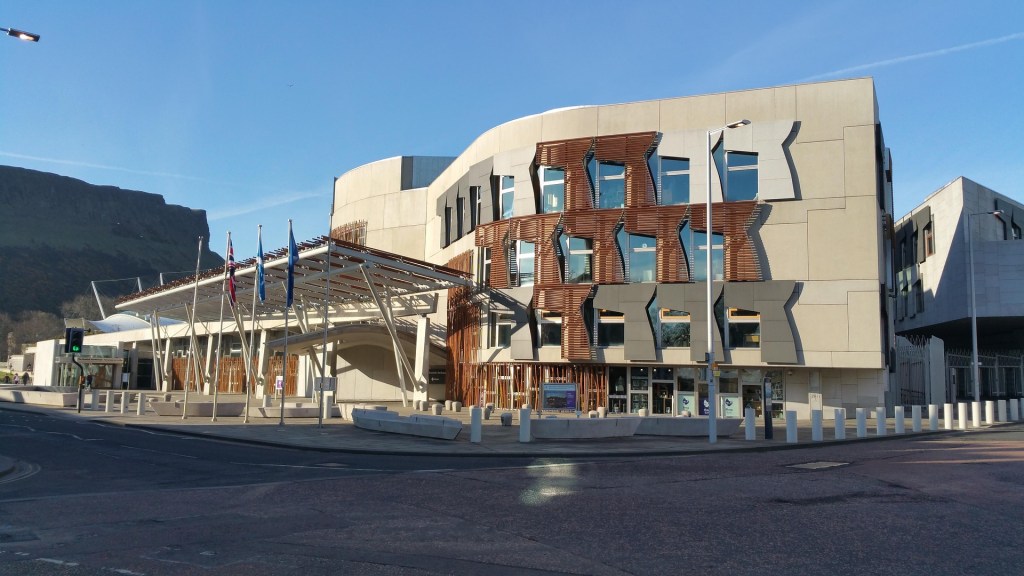
Image via Pixabay

MSP retables amendment to ban dual mandates by 2026

By Richard Wood

A ban on MSPs also being able to serve as MPs has moved one step closer thanks to Conservative MSP Graham Simpson’s retabled amendment to the Scottish Elections (Representation and Reform) Bill.

The amendment follows SNP Westminster leader Stephen Flynn announcing his intentions to stand for Holyrood in 2026 and hold a dual mandate until 2029.

Simpson initially tabled the amendment at stage 2, but didn’t push it after being offered a potential consultation on the matter in the future. He will now retable at stage 3 following the momentum building against “double jobbing” in recent weeks.

Holyrood Magazine reports that Scottish Labour and the Scottish Greens would back the amendment. Liberal Democrats have said in the past they would support a dual mandates ban.

READ MORE: Stephen Flynn MSP-MP in 2026? A dual mandates ban is overdue

What’s wrong with dual mandates?

The roles of MP and MSP are full-time positions. Voters deserve full-time dedicated representatives. Not part-timers.

The case for a dual mandates ban is one of principles and practicalities. For effective representation to happen, not to mention travelling between three locations and handling casework directly relating to two layers of government, MPs and MSPs should focus on the day job of representating constituents in one clear capacity.

Dual mandates should be banned.

What next?

The BBC reports that a vote on the amendment could come before Christmas 2024. If all opposition MSPs unite on the matter, then a dual mandates ban could become a reality.

Parliamentary Business Minster Jamie Hepburn has said he supports a consultation on the issue but there’s a chance the legislation wouldn’t come into force until after 2026 if parliament went down that route.

READ MORE: Westminster’s Modernisation Committee should consider MSP-MP dual mandates ban

Analysis

This shouldn’t be a party political issue. Whether it’s the SNP’s Stephen Flynn, the Conservatives’ Douglas Ross or Labour and Lib Dem MPs and MSPs past, dual mandates fail to meet the standards required to deliver effective representation.

And yet there’s a clear party political slant to the way this is coming about – opposition parties coming together amid an SNP divided on this issue due to one of their own paving to double job despite past party opposition.

It’s also worth highlighting that this probably wouldn’t be happening had Douglas Ross retained his seat in Westminster, as well as his leadership of the party.

Perhaps this change in this way is inevitable with dual mandates not currently being widespread across different parties and Scottish politics being so divided.

That said, a dual mandates ban will be welcome. MSPs should vote for this when the time comes.

READ MORE: 5 reasons to ban MSP-MP dual mandates

Unlock Democracy backs campaign to engage with Modernisation Committee to clean up politics

By Richard Wood

Unlock Democracy has backed my motion to engage with the Modernisation Committee on issues including second job restrictions for MPs and creating job descriptions for parliamentarians.

The Modernisation wants to hear from people about what additional ideas they have for work it could take forward, covering the strategic aims of: driving up standards; improving culture and working practices; and reforming Parliamentary procedures to make the House of Commons more effective.

Policy Motion 1: Working with the Modernisation Committee

Proposer: Richard Wood

Seconder: Rebecca Warren

The AGM notes:

The Government has revived the House of Commons Modernisation Committee. This is a cross-party committee of MPs that will consider ‘reforms to House of Commons procedures, standards, and working practices’.

The Committee’s remit overlaps with aspects of Unlock Democracy’s ‘Cleaning Up Politics’ campaign, such as setting limits on MPs’ second jobs and establishing a job description for MPs. Cleaning up politics was ranked as Unlock Democracy’s second most important campaign by supporters in the 2023 Annual Survey.

Unlock Democracy has started establishing a relationship with the Committee. Director Tom Brake questioned the Committee’s chair, Lucy Powell MP, at the Labour Party Conference about the Committee’s work on MPs’ second jobs.

The Committee has agreed to circulate our paper on MPs second jobs, and has invited us to respond to their call for views from stakeholders later in the year.

The AGM welcomes that:

Unlock Democracy has identified this Committee as important for achieving many of our campaign goals

Unlock Democracy has begun building a relationship with the Committee

Unlock Democracy has compiled a list of campaign asks for the Modernisation Committee to consider

The AGM calls on Unlock Democracy:

To respond to the Committee’s consultation with stakeholders

To get in touch with MPs on the Committee with suggestions for improving the House of Commons’ procedures and standards

To involve Unlock Democracy’s members and supporters in efforts to influence the Committee

To work with other organisations in the democracy sector, where beneficial, to influence the Committee.

What does the Electoral Reform Society say about dual mandates in Scotland?

By Richard Wood

Dual mandates are back in the spotlight again with two sitting SNP MPs, Stephen Flynn and Stephen Gethins, preparing possible bids for joining the Scottish Parliament as MSPs.

Both Douglas Ross (Conservative) and Katy Clark (Labour) have held dual mandates in this parliamentary session at Holyrood.

Double jobbing is bad for representative democracy as the roles of MSP and MP are full-time jobs in and of themselves. Constituents ultimately deserve full-time representatives not part-timers.

Momentum is shifting on the issue with the Scottish Parliament’s Standards, Procedures and Appointments Committee discussing the matter only last week in relation to the Scottish Elections (Representation and Reform) Bill: Stage 2. The Modernisation Committee in Westminster also has scope for discussing the issue in its remit on outside employment.

READ MORE: Stephen Flynn MSP-MP in 2026? A dual mandates ban is overdue

What do the Electoral Reform Society say on the issue?

The Electoral Reform Society, formed in 1884, campaigns for democratic rights and a democracy fit for the 21st century.

The organisation submitted the below response to a request from the Scottish Parliament’s petitions committee in 2023.


Being a councillor and an MP or MSP seems reasonable over a
temporary transition period. However, we are concerned that given the limitations in the capacity of MSPs, ‘double jobbing’ adds an extra strain. Therefore we would like to see the legislation here brought into line with The Senedd where the rules are that when a member is elected and holds a dual mandate they either have eight days to resign as a sitting MP, or they have to take a leave of absence from a seat they hold in the Lords, or if a Regional Councillor they can remain in post provided the expected day of the next Regional Election is within 372 days.

Having a full-time paid job in the Lords, Commons or Holyrood should be mutually exclusive, and we would advise against MSPs being allowed to hold a dual mandate. There are no clear advantages to voters or to the
operation of democratic institutions and one big disadvantage – the
capacity of an individual to fulfil the responsibilities of both roles. Such
an allowance seems to be in the interests of politicians rather than those they represent.

The Electoral Reform Society is right to support abolishing dual mandates. It also recognises the need for a short grace period for MPs or MSPs to pick where they wish to represent their constituents before being removed from the parliament they reject.

READ MORE: 5 reasons to ban MSP-MP dual mandates

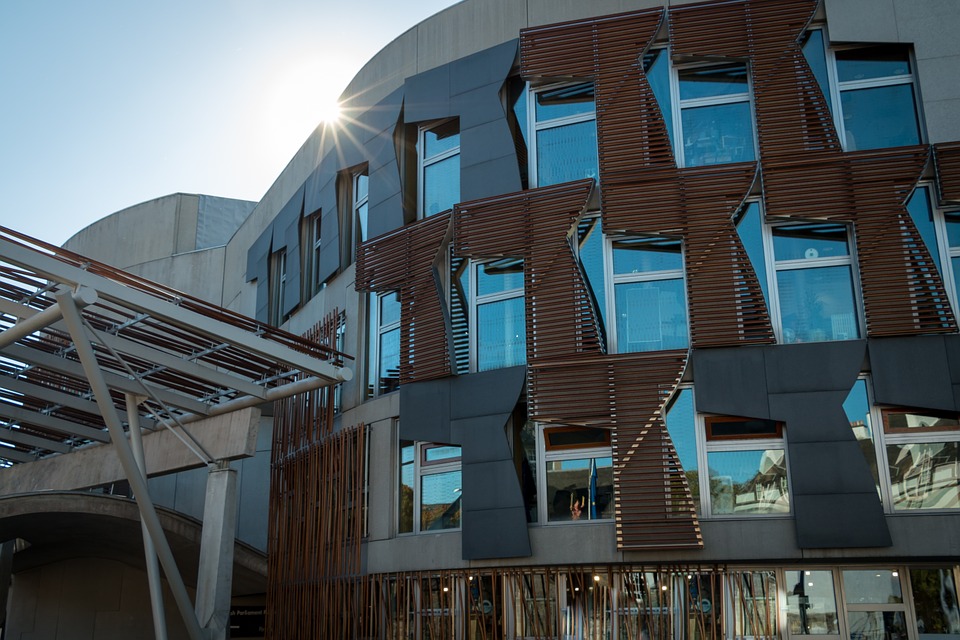
Image free via Pixabay

Stephen Flynn MSP-MP in 2026? A dual mandates ban is overdue

By Richard Wood

Westminster leader Stephen Flynn plans to stand to become an MSP at the 2026 Holyrood elections. Flynn intends to remain an MP, if he wins the Scottish Parliament seat of Aberdeenshire South and North Kincardine, implying he would hold a dual mandate by representing seats in both Holyrood and Westminster until 2029.

Dual mandates – no matter which party holds them, and Scotland’s four main party’s have held them at one time or another – are bad for representative democracy.

Being an MSP or and MP is a full-time job. Constituents deserve representatives working full-time for them, not juggling multiple mandates and travelling across the country all the time. No matter which party they come from, whether it is the Conservatives’ Douglas Ross, the SNP’s Stephen Flynn or any of the former Labour and Lib Dem dual mandates holders at Holyrood.

Westminster has rightly banned MPs from holding elected office in the Northern Irish Assembly. And there is an effective ban of MP-MSs for Wales with exceptions in the case of an impending Senedd election.

More widely, dual mandates are banned in many democracies across the world. Even France, long known for its representatives holding dual mandates – and even triple mandates – has clamped down on the practice in recent years.

Members of the European Parliament are also forbidden from holding roles in their national parliament alongside their MEP roles.

READ MORE: 5 reasons to ban MSP-MP dual mandates

Stephen Flynn MP has every right to stand for the Scottish Parliament. But it’s surprising he’s made the decision to do so while explicitly saying he’s remain an MP if he were to be elected.

Westminster’s Modernisation Committee has an opportunity here to recommend preventing MPs from holding seats in the Scottish Parliament concurrently.

In the meantime, Stephen Flynn MP should reconsider his intentions to hold his Westminster seat if elected to Holyrood.

READ MORE: Douglas Ross’ decision to stand again exposes dual mandates as wrong

READ MORE: Westminster’s Modernisation Committee should consider MSP-MP dual mandates ban

Image by Roger Harris (This file is licensed under the Creative Commons Attribution 3.0 Unported license)

Talk of term limits for list MSPs is nonsense – reform Holyrood’s voting system instead

By Richard Wood

Every now and again someone suggests introducing term limits for list MSPs. The argument being that lost MSPs are supposedly not elected by voters unlike their constituency counterparts.

However, list systems are normal in the democratic world and it is valid for someone to be elected as part of a list. When someone votes on the party list, they aren’t just blindly voting for said party, they are backing a slate of candidates.

READ MORE: 7 reforms to improve the Scottish Parliament

That said, while term limits aren’t the answer, AMS lists aren’t perfect.

The real problem with the list element at Holyrood is two-fold.

First of all lists are closed, meaning voters have no say over what order candidates are ranked in. Tinkering with AMS is one option to improve Holyrood by introducing an open list element as part of the voting process. This is is used in Bavaria’s similar MMP system to empower voters at the ballot box.

But that only takes you so far. The second problem is the two-tier nature of MSPs. Having constituency and list MSPs creates a two-tier system. While in theory the two types of MSPs have the same jobs, this isn’t always the case in practice. Furthermore, it ends up creating attitudes that list MSPs aren’t real MSPs.

Instead of tinkering with AMS, although opening up lists would be a welcome step, Holyrood’s electoral system needs a major overhaul.

READ MORE: New Zealand and Scotland – proportional but imperfect voting systems

AMS provides broadly proportional parliaments but there is significant room for improvement. Switching to the Single Transferable Vote would end the two-tired element, strengthen proportionality (if designed fairly), and empower voters to rank candidates. An open list system where parties are ranked preferentially, and voters can vote for individual candidates within parties is also an alternative.

The Scottish Parliament is now over a quarter of a century old. AMS has done well to ensure that what happens in the ballot box leads to representative outcomes but there are fairer alternatives. The next Scottish Government and Parliament should address the democratic deficits at Holyrood to upgrade Scottish democracy for the next 25 Years and beyond.

READ MORE: By-elections for defecting MSPs: does Wales offer a solution?

STV in local government: the latest from Wales

By Richard Wood

The previous Welsh government, an effective coalition between Labour, the Liberal Democrats and an independent, introduced legislation that gives Welsh local councils the opportunity to switch from First Past the Post to the Single Transferable Vote ahead of the 2027 elections. The deadline for councils to change to Proportional Representation is fast approaching: 15 November 2024.

The Local Government and Elections (Wales) Act 2021, which enables councils to make changes, was a great step forward as it allows the opportunity for significant upgrades to Welsh local democracy. However, unlike when Scottish councils were upgraded to use STV from 2007, there is no automatic switchover in Wales. While this is an imperfect process to reform and reformers are fighting an uphill battle, there is a route to change.

READ MORE: Scotland’s STV council elections show England a better way of doing local democracy

Of the three councils to hold consultations for making the switch, all three consultations show majority support for reform. But what’s next? And are any of the councils actually saying goodbye to First Past the Post?

What happened in Gwynned?

Over 70% of residents who completed the consultation supported switching to the Single Transferable Vote in this Plaid Cymru majority council. A vote followed, and while a majority of councillors backed change, STV will not be adopted in Gwynned as a two-thirds majority was required.

Campaigners have done fantastic work engaging communities and growing support for STV but on this occasion the Gwynned council will not be switching to STV.

READ MORE: Wales has just changed its voting system. Scotland must follow

And what about Powys?

The Lib Dem-Labour-Green run council of Powys has parallels with Gwynned. Over 60% of residents said they favoured STV in the council’s consultation. This should come as no surprise due to the considerable failings of FPTP in the area. However, as in Gwynned, councillors voted to retain the status-quo. A total of 21 voted for STV while 33 backed FPTP.

Ceredigion: the last hope for STV in Wales?

In Ceredigon, 67% of respondents to the consultation backed the Single Transferable Vote. What’s clear is that when people are asked if they want a fair voting system, majorities in Wales are supportive of reform but the bar for reform) change is set very high – a two-thirds majority of councillors elected by a system that favours them.

The Electoral Reform Society reports that Ceredigion councillors will be voting on their electoral system on Thursday 14 November.

UPDATE (14 November 2024): while a majority of councillors backed the motion (18 to 17), the two-thirds majority was not met, meaning that all Welsh councils will use FPTP in 2027).

The Plaid Cymru Council has a chance of becoming the only one of 22 Welsh councils to use STV in the 2027 local elections.

Let’s hope the efforts of electoral reform campaigners in Wales pay off and Ceredigon leads the way for further change across Wales.

Political make up of Ceredigion council:

🟢 PLAID CYMRU 21

⚪ INDEPENDENTS 9

🟠 LIB DEMS 7

⚫ GWLAD 1

Total councillors: 38

Threshold required to switch to STV: 26

Nationally, both the Liberal Democrats and Plaid Cymru support STV as a matter of policy but local factors will also play a role. If all Plaid and Lib Dem councillors back change then STV would be used for the 2027 elections in Ceredigon.

READ MORE: By-elections for defecting MSPs: does Wales offer a solution?

Ireland’s snap election: should Scotland use the Irish voting system?

By Richard Wood

Ireland is going to the polls later this year, highlighting its Single Transferable Vote system which could be used to elect Members of the Scottish Parliament.

STV is a preferential system where voters rank candidates in order or preference in multi-member constituencies. The system is already used to elect Scottish councillors, as well as various electoral chambers in Northern Ireland, Malta and Australia, and can have better outcomes than Holyrood’s Additional System when it comes to voter choice and proportionality (depending on the exact parameters of the STV system used).

The system has been used in the Republic of Ireland since the country’s independence from the United Kingdom. Two attempts have been made to revert to First Past the Post, however, the people of Ireland voted against these in referendums in 1958 and 1968, ensuring the continued use of STV to this day. The upcoming election shows an alternative future to Westminster’s First Past the Post and Holyrood’s broadly proportional, albeit flawed, Additional Member System.

READ MORE: Westminster’s Modernisation Committee should consider MSP-MP dual mandates ban

READ MORE: Scotland’s STV council elections show England a better way of doing local democracy

Will 2031 be the first Scottish election to use STV?

Wales is changing its voting system. Why not Scotland? 2026 will be the first Welsh election not held under AMS. instead MSs will be elected via the more proportional, but less voter empowering, Closed List PR system.

The current Scottish Government has no plans to ditch AMS, meaning a change ahead of 2026 elections is unlikely. But change might be possible next parliament as political winds shift. Two-thirds of MSPs would have to support reform for a change in voting system to be enacted.

Ireland offers an alternative the Scotland’s Additional Member System, however, the Irish system isn’t perfect as constituency sizes range from three to five members, limiting overall proportionality. A Scottish system should account for this and introduce larger multi-member constituencies, similar to Northern Ireland instead.

STV offers an opportunity to strengthen Holyrood’s representation. The next election offers Scotland an opportunity learn from our neighbours and to seize reform.

READ MORE: Wales has just changed its voting system. Scotland must follow

[IMAGE: Generated by AI via WordPress]

Westminster’s Modernisation Committee should consider MSP-MP dual mandates ban

By Richard Wood

The newly formed Modernisation Committee in the House of Commons should consider recommending banning MSP-MP dual mandates as part of its remit concerning MPs’ outside employment.

Labour formed the government on the back of a manifesto pledge to clamp down on paid advisory and consultancy roles. However, the new committee has an opportunity to take those proposals further and tighten restrictions on second jobs more broadly.

Dual mandates, where an individual holds two full-time parliamentary positions at the same time, are bad for representative democracies. This includes MSP-MPs and MSPs-Lords. The phenomenon results in representatives not fully dedicated to their constituents in one clear capacity.

READ MORE: The MSPs who hold dual mandates following the 2021 election

A ban on the practice is long overdue, with the most prominent example in recent years being Douglas Ross being an MP, and MSP and taking on further employment at the same time. That said, this is an issue something all main parties have been of guilty of, especially in the early days of the Scottish Parliament.

The Modernisation Committee should consider the issue as part of their remit.

READ MORE: 5 reasons to ban MSP-MP dual mandates

What did Labour’s 2024 manifesto say?

“Labour will establish a new Modernisation Committee tasked with reforming House of Commons procedures, driving up standards, and improving working practices. The absence of rules on second jobs also means some constituents end up with MPs who spend more time on their second job, or lobbying for outside interests, than on representing them. Therefore, as an initial step,Labour will support an immediate ban on MPs from taking up paid advisory or consultancy roles. We will task the Modernisation Committee to take forward urgent work on the restrictions that need to be put in place to prevent MPs from taking up roles that stop them serving their constituents and the
country.”

READ MORE: 7 reforms to improve the Scottish Parliament

Who is on the Modernisation Committee?

The Committee, chaired by Lucy Powell MP, is made up of nine Labour MPs, three Conservatives MPs and two Lib Dem MPs:

🔴Rt Hon Lucy Powell MP

🔴 Mike Amesbury MP

🔴 Alex Barros-Curtis MP

🔴 Markus Campbell-Savours MP

🟠 Wendy Chamberlain MP

🔵 Sir Christopher Chope MP

🔴 Sarah Coombes MP

🔴 Chris Elmore MP

🔴 Kirith Entwistle MP

🟠 Marie Goldman MP

🔴 Paulette Hamilton MP

🔵Joy Morrissey MP

🔵 Chris Philp MP

🔴 Jo Platt MP

READ MORE: Scotland’s STV council elections show England a better way of doing local democracy

Scottish Conservative leadership election exposes voting systems inconsistency

By Richard Wood

The Scottish Conservatives are using the Alternative Vote to elect their new leader, following the departure of Douglas Ross from the top job. The Alternative Vote is a preferential system for single-seat positions, allowing voters to rank candidates in order of preference to ensure the winner receives a broad base of support.

There’s no denying this system is fairer and more representative than First Past the Post. Indeed with at least six candidates standing to replace Douglas Ross, under FPTP the winner could in theory have been elected with less than 17% of the total vote. However, AV negates this possibility.

The Scottish Conservatives ultimately recognise the absurdity of FPTP hence their use of AV to elect their leaders. Furthermore, the party benefits significantly from the broadly proportional Additional Member System used to elect MSPs. If the Scottish Parliament used, First Past the, the SNP would likely have completely dominated at the 2021 election.

READ MORE: Scottish Labour MSP “sympathetic” to Scottish electoral reform

Yet the Conservatives continue to back First Past the Post for Westminster elections. If preferential voting is good enough for internal elections, it begs the question why not support the Single Transferable Vote for Westminster votes?

In fairness at least one leadership candidate has previously voiced support for STV. Back in 2021 Murdo Fraser outlined his arguments in favour of replacing AMS with STV at Holyrood in an article for the Scotsman.

Of course, the way we elect representatives isn’t going to take centre stage in this election. But it’s worth flagging the mismatch between Conservative support for First Past the Post at Westminster with their rejection of it to elect their own leaders.

Conservatives should consider that when ranking candidates one to six in the coming weeks rather than marking an “x” in the box.

READ MORE: Scottish Tory Murdo Fraser supports electoral reform at Holyrood

Scottish Conservative leadership contest 2024

As of Tuesday 7 August six candidates are standing to replace Douglas Ross as Scottish Conservative leader:

Russell Findlay
Brian Whittle
Meghan Gallacher
Liam Kerr
Jamie Greene
Murdo Fraser

The contest will conclude in September ahead of the UK Conservative contest finishing in November.

READ MORE: Labour’s false “supermajority” and widespread tactical voting expose the flaws of FPTP